

BoJ Governor Ueda Signals Readiness to Tighten Policy Amid Easing Global Headwinds
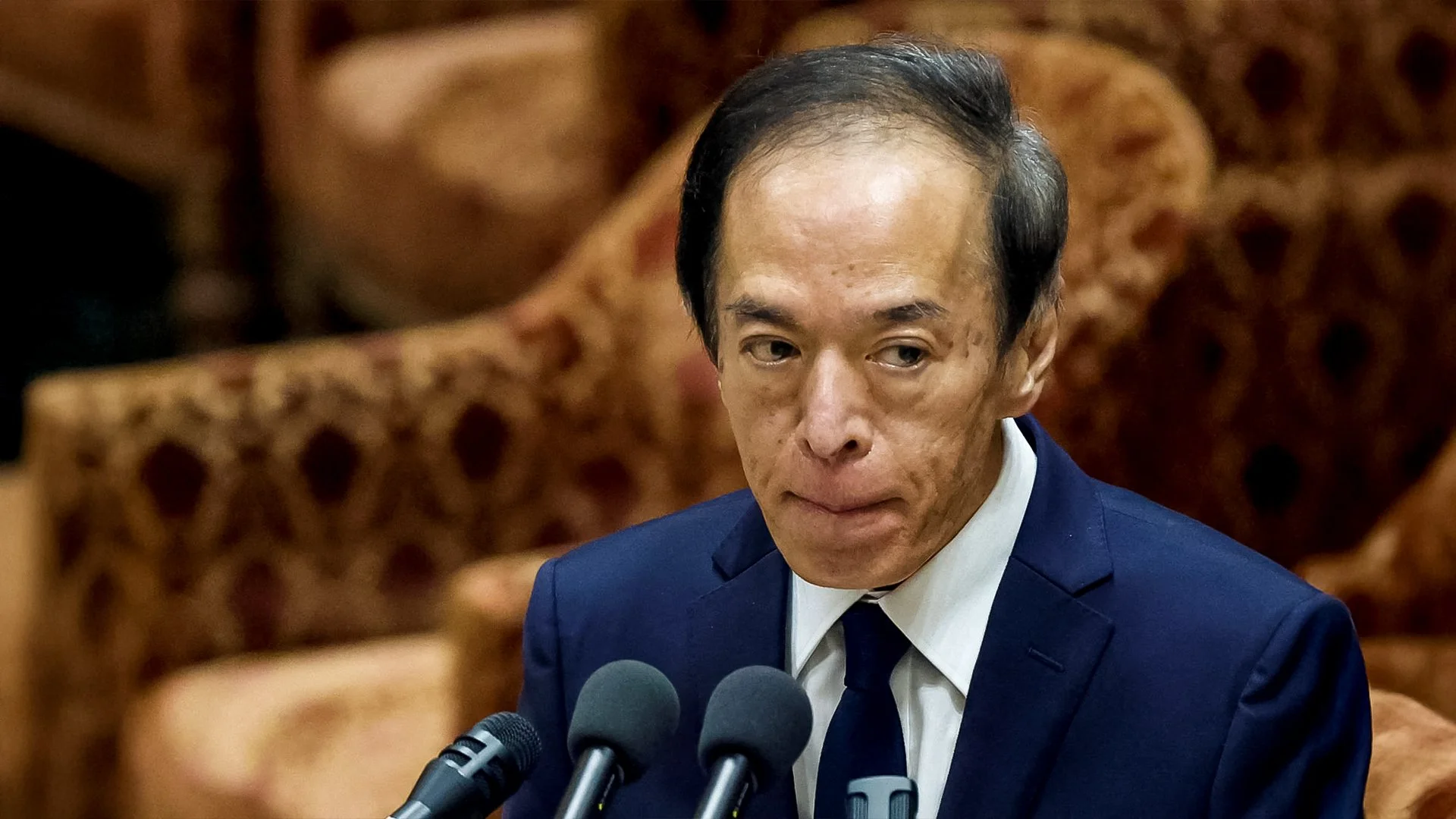
Bank of Japan (BoJ) Governor Kazuo Ueda delivered a significant speech in Nagoya, outlining the central bank's current assessment of domestic and global economic conditions and providing the clearest signals yet regarding the future direction of Japanese monetary policy. While acknowledging temporary weaknesses, Ueda emphasized that the Japanese economy is on track for a moderate recovery, paving the way for the long-awaited adjustment in the degree of monetary accommodation.
Global Economy: Shrugging Off Tariff Fears
Governor Ueda noted that the global economy has grown moderately, despite initial fears regarding the dampening effect of U.S. tariff policies. He attributed the upward revision of global growth forecasts by the IMF to three key factors:
Reduced Uncertainty: Many countries have reached trade agreements with the U.S., reducing uncertainty.
Moderate Pass-Through: In the U.S., the pass-through of tariff costs to consumer prices has been only moderate, supported by high stock prices, which has kept U.S. private consumption solid.
Digital Investment: Strong global investment in AI-related areas and replacement demand for post-pandemic devices (smartphones, PCs) have supported trade and production worldwide.
Ueda acknowledged that corporate profits in the U.S. have been bearing the burden of tariffs, potentially impacting the labor market, but concluded that overall, downside risks to the global economy have decreased.
Japan's Economic Activity: Temporary Dip, Unchanged Outlook
Despite the surprise negative real GDP growth reported for the July-September quarter of 2025 (the first in six quarters), the BoJ Governor insisted that this dip is "only temporary."
Trade Fluctuation: The negative Q3 GDP largely reflects a "reactionary decline" following the front-loading of exports earlier in the year due to tariff changes.
Underlying Strength: Comparing the annualized growth rate of the two preceding six-month periods shows growth at 0.9%, which is above the estimated potential growth rate of around 0.5%.
Corporate Resilience: Corporate profits remain high, and business fixed investment is on a moderate increasing trend, focused on R&D and labor-saving software. Nonmanufacturing firms are seeing profit increases.
Household Resilience: Private consumption has been resilient, supported by an improvement in the employment and income situation and higher summer bonuses, although the burden of price increases on households remains high.
The BoJ maintains its basic assessment that the Japanese economy has recovered moderately.


Inflation Watch: The Road to 2%
The core inflation picture remains central to the BoJ's decision-making process:
Current Inflation: The latest year-on-year rate of increase in the CPI (excluding fresh food) is around 3%, driven significantly by rising food prices (temporary cost-push factors).
Underlying Inflation: Crucially, the pass-through of wage increases to selling prices has continued, causing prices of both goods and services to rise moderately. Ueda noted that the distribution of price changes is "beginning to resemble the situation seen in the first half of the 1990s," when Japan's economy experienced sustained inflation near 2%.
Outlook: While the core CPI is expected to decelerate temporarily below 2% through the first half of fiscal 2026 due to the waning effect of high food prices and government measures (like abolishing the provisional gasoline tax rate), the underlying inflation, driven by labor shortages and rising inflation expectations, is projected to reach a level "generally consistent with the price stability target of 2 percent" in the second half of the projection period.
Monetary Policy Shift: Easing Off the Accelerator
Governor Ueda's discussion on monetary policy was the most significant part of the speech, confirming the BoJ is actively preparing for an adjustment:
Real Interest Rates: Ueda emphasized that real interest rates (nominal policy rate minus inflation) are at "significantly low levels," considerably below the natural rate of interest. This means that raising the policy rate will not be "applying the brakes" but rather "easing off the accelerator"—maintaining accommodative financial conditions while moving toward stable price achievement.
Diminishing Uncertainty: The decline in uncertainties surrounding the U.S. economy and tariffs means the likelihood of the BoJ's baseline scenario being realized is "gradually increasing."
The Wage Test: The key remaining factor is the continuation of firms' active wage-setting behavior, especially confirming the momentum of initial moves toward next year's annual spring labor-management wage negotiations (Shunto). Rengo (labor confederation) has targeted a wage increase of 5% or more, and corporate profits remain high enough to support these hikes.
Ueda concluded that the bank is at the stage where it should examine the "pros and cons of raising the policy interest rate" at the upcoming Monetary Policy Meeting (MPM) on December 18 and 19.
This rhetoric is a strong indicator that the era of ultra-loose monetary policy is reaching its end, signaling that the Japanese Yen (JPY) may be poised for a significant move against the US Dollar (USD) and other counterparts if the BoJ follows through with the widely anticipated December rate hike.
The Educational Angle: Fundamental Currency Drivers
For Forex Trading for Beginners, Governor Ueda's speech is a masterclass in fundamental analysis. It demonstrates that currency valuation—and the direction of pairs like USD/JPY or GBP/JPY—is determined not just by the current inflation number, but by a central bank's nuanced assessment of underlying domestic demand (wages, investment) versus temporary external factors (tariffs, food prices). Professionals at Global Markets Eruditio (GME Academy) study these forward-looking signals to predict the timing of policy adjustments.
Are You Prepared for the Imminent Shift in BoJ Policy?
Governor Ueda’s signals point directly toward a policy adjustment, making the Japanese Yen and related Forex pairs highly volatile and target-rich. Don't wait for the headline; learn to read the fundamental signals now.
Master the art of central bank forecasting and monetary policy analysis.
Join the GME Academy community today and sign up for our FREE Forex Workshop to learn exactly how the BoJ's next move will impact the USD/JPY.
