

Lagarde's Arsenal: How the ECB Fights for Stability as the Euro Faces Global Headwinds
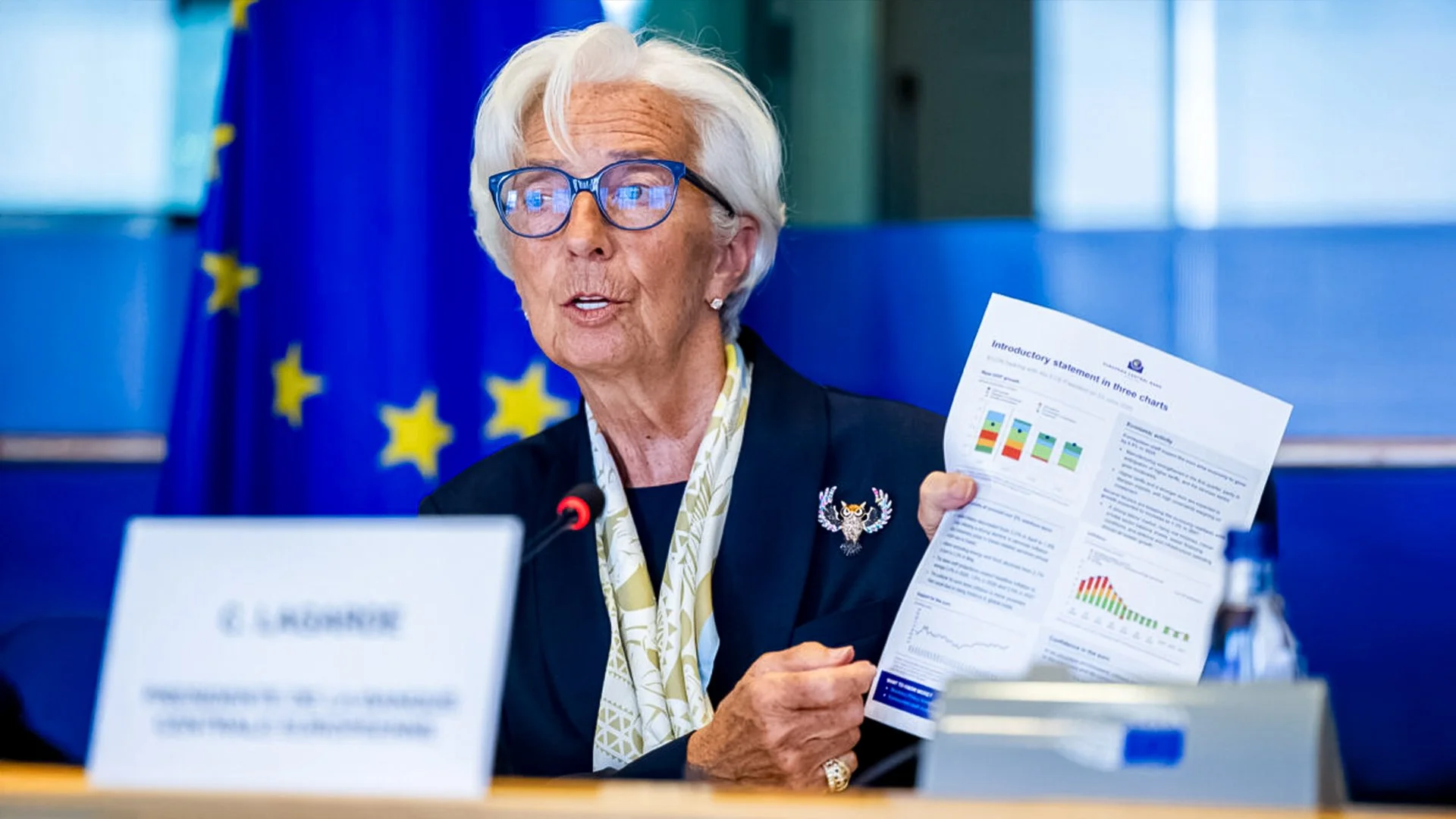
On December 3, 2025, European Central Bank President Christine Lagarde delivered a pivotal speech at the Hearing of the Committee on Economic and Monetary Affairs of the European Parliament. Her address centered on the ECB's comprehensive monetary policy toolkit, set against a backdrop of profound technological, geopolitical, and structural shifts. Lagarde emphasized that these changes underscore the imperative for Europe to not only improve its resilience and competitiveness but also to build "lasting internal economic strength."
For those engaged in Global Markets Eruditio, Lagarde's detailed overview of the ECB's instruments and economic assessment provides crucial insights into the stability of the Eurozone and the future direction of the Euro.
The Euro Area: Domestic Resilience Meets External Pressure
Lagarde presented a nuanced yet cautiously optimistic assessment of the euro area's economic landscape.
Economic Performance and Drivers:
Moderate Growth: The euro area economy expanded by a modest 0.2% in the third quarter of 2025. This growth was notably supported by robust domestic demand.
Service Sector Boom: The services sector emerged as a key engine, boosted by a strong tourism season and a significant pick-up in digital services. This digital acceleration reflects widespread efforts by firms to modernize IT infrastructure and integrate artificial intelligence into operations, hinting at structural shifts.
Manufacturing and Export Headwinds: In contrast, the vital manufacturing and export sectors faced considerable challenges. They were "held back by higher tariffs, still-heightened uncertainty and a stronger euro," illustrating the delicate balance between domestic strength and external pressures.
Balanced Risks and Geopolitical Mitigation:
Looking ahead, Lagarde expects economic activity to benefit from increased household spending and a resilient and more inclusive labour market—which has achieved its highest participation rate since the euro's inception. Significant government spending on infrastructure and defence is also projected to provide support.
Critically, Lagarde noted that risks to the outlook have become "more balanced." This improvement is attributed to several stabilizing geopolitical developments:
The EU-US trade deal solidified over the summer.
A crucial ceasefire in the Middle East.
Positive progress in the ongoing US-China trade negotiations.
Despite these positive developments, the outlook remains subject to uncertainty, primarily due to a volatile global trade environment, potential shifts in financial market sentiment, and persistent geopolitical tensions.
Navigating Inflation: Staying True to the 2% Target
The ECB's unwavering commitment to its 2% medium-term inflation target remains central to its policy.
Inflation Update: According to Eurostat’s flash estimate, inflation slightly edged up to 2.2% in November 2025, driven mainly by higher services and energy inflation. Core inflation (excluding energy and food) remained stable at 2.4%. These figures confirm that inflation remains close to the ECB's target.
Wage Moderation: A key factor supporting the reduction in inflation has been the gradual moderation in wage growth, which has declined from its peak of 5.7% in Q2 2023 to 3.9% in Q2 2025. Forward-looking indicators point to a continued slowdown in wage growth through 2026.
Policy Stance: Given the broadly unchanged inflation outlook, the Governing Council kept the key ECB interest rates unchanged at its October monetary policy meeting. Lagarde reaffirmed a data-dependent and meeting-by-meeting approach, explicitly stating that the ECB is "not pre-committing to a particular rate path." This flexibility is crucial for Forex Trading for Beginners, as it means every new data release can influence the next policy decision, creating volatility in EUR/USD and other currency pairs.

The ECB’s Adaptable Toolkit: Beyond Interest Rates
While the set of three key ECB interest rates remains the primary instrument, the central bank’s toolkit is far more extensive, designed to ensure the smooth functioning of monetary policy transmission across the diverse economic landscapes of the euro area. Lagarde detailed three powerful instruments:
1. Outright Monetary Transactions (OMTs)
Purpose: Activated to address severe distortions in government bond markets, particularly those stemming from unfounded fears about the euro's reversibility (i.e., breakup risk). OMTs are a powerful signal of the ECB's commitment to the euro's integrity.
Conditionality: Strict conditions apply, requiring the participating country to be under an appropriate European Stability Mechanism (ESM) programme, ensuring fiscal discipline.
2. Transmission Protection Instrument (TPI)
Purpose: Introduced in 2022 to counter unwarranted, disorderly market dynamics that impair the effective transmission of monetary policy across member states. It targets deteriorations in financing conditions not justified by country-specific fundamentals.
Assessment Criteria: The Governing Council employs a comprehensive list of criteria to assess eligibility, including compliance with the EU’s fiscal framework and the absence of severe macroeconomic imbalances.
3. Pandemic Emergency Purchase Programme (PEPP)
Purpose: Launched in March 2020 as an extraordinary response to the COVID-19 shock. It played a dual role: supporting market functioning and providing substantial monetary policy easing to counter downside risks to price stability.
Flexibility and Exit: PEPP's flexibility in adjusting the pace and composition of purchases proved critical in stabilizing markets. As circumstances normalized, reinvestments of maturing bonds under PEPP were fully discontinued as of December 2024, contributing to the ECB's balance sheet normalization.
The Call for Deeper European Integration
Lagarde concluded by underscoring that while the ECB's tools are adaptable, the ultimate responsibility for strengthening Europe's prospects and reducing vulnerability to future shocks lies with other policies. She stressed the critical need to activate Europe's full economic potential by truly completing the Single Market.
The President warmly welcomed the European Commission's forthcoming package on capital market integration and supervision, hailing these proposals as essential for "overcoming fragmentation, enhancing the efficiency of capital markets, and fostering innovation." Her message was unequivocal: the solutions exist, and the time for decisive implementation to secure Europe's future is now.
Are You Trading the ECB's Commitment to the Euro?
Lagarde’s detailed explanation of the ECB's powerful toolkit and its unwavering commitment to price stability provides critical insights for trading the Euro. Understanding these instruments and the central bank's policy approach is crucial for navigating pairs like EUR/USD and EUR/GBP.
Don't let complex central bank policy confuse your trades.
Join the GME Academy community today and sign up for our FREE Forex Workshop to master the fundamental analysis that translates central bank rhetoric into high-probability Forex Trading strategies.
