

Trump Highlights Economic Efforts at McDonald’s Meeting: What It Means for Your Wallet and Forex Traders
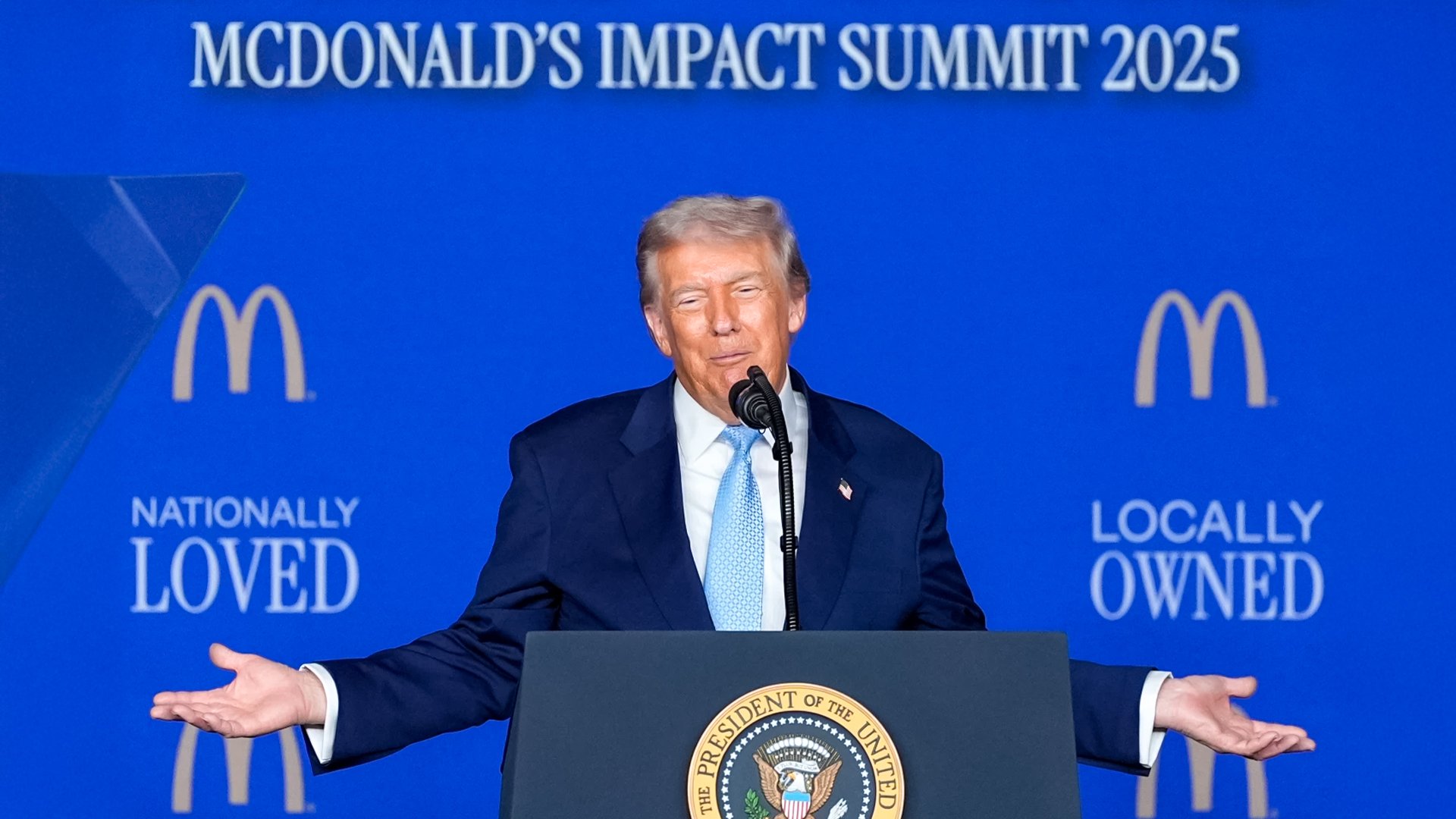
U.S. President Donald Trump recently addressed owners, operators, and suppliers of the fast-food chain McDonald’s, emphasizing his administration’s ongoing efforts to manage inflation and support American businesses. While some of his claims were contested, the discussion sheds light on the broader economic environment and potential implications for Forex trading.
Tackling Inflation: Steps and Challenges
Trump underscored that his administration’s tax cuts and initiatives to bring manufacturing back to the U.S. are aimed at boosting real incomes and stimulating growth. However, he acknowledged that it may take time for these policies to have a tangible impact on consumer costs.
For everyday Americans, inflation has remained a persistent concern. Despite efforts to lower prices, goods like groceries, coffee, and even fast-food meals have continued to climb in cost. The Big Mac Index, a popular measure of purchasing power, shows that a Big Mac in the U.S. averaged $6.01 in July 2025, up from $5.69 the previous year.
From a Forex perspective, inflation trends directly influence the U.S. Dollar (USD). If prices continue to rise faster than wages, the Fed may tighten monetary policy to curb inflation, which can strengthen the USD. Conversely, measures aimed at stimulating growth—like tax cuts or tariff reductions—could have mixed effects on the currency depending on their timing and scale.
Tariffs, Trade, and Consumer Prices
One of Trump’s signature economic policies has been the imposition of tariffs on imported goods. These duties have contributed to higher costs for American consumers, particularly for low- and middle-income households. Recognizing this, Trump recently eliminated tariffs on over 200 food imports, including coffee and bananas, acknowledging that tariffs can raise prices in some cases.
For Forex traders, trade policy and tariffs are key signals. Reductions in tariffs can ease inflationary pressures and potentially weaken the USD if the market expects looser monetary conditions. On the other hand, new trade barriers can support the currency by curbing imports and boosting domestic production.
Consumer Affordability and Economic Sentiment
Trump’s remarks highlighted ongoing concerns about affordability, especially for essential items and housing. He suggested unconventional solutions, such as 50-year mortgages, aimed at making homeownership more accessible, although higher interest costs remain a hurdle. Similarly, discussions about stimulus payments funded by tariffs, like a proposed $2,000 check for lower- and middle-income Americans, remain theoretical without congressional approval.
For ordinary citizens, these policies can affect daily life—from grocery bills to mortgage payments. For Forex traders, understanding consumer sentiment is critical because weaker spending could slow U.S. GDP growth and influence major currency pairs such as EUR/USD, GBP/USD, and USD/JPY.
Fast-Food Economics: More Than Just Burgers
McDonald’s CEO Chris Kempczinski has pointed out that low-income consumers are absorbing significant inflation, prompting the chain to maintain value meal pricing. While Trump reminisced about serving fries during his 2024 campaign, the event underscored how businesses adapt to persistent price pressures.
For Forex trading beginners, the connection may not be obvious—but companies like McDonald’s reflect broader economic trends. Rising operating costs, consumer spending patterns, and supply chain adjustments all feed into inflation metrics and central bank decisions, which ultimately influence currency strength.


Looking Ahead: Political Rallies and Market Reactions
Trump plans to hold rallies in battleground states to highlight his economic record ahead of the midterm elections. These events, while politically motivated, often influence markets by signaling potential fiscal or trade policy directions.
Forex traders can use such cues to anticipate volatility. Political announcements, combined with economic indicators like inflation and GDP growth, can create short-term trading opportunities in USD-related currency pairs.
Why This Matters for Forex Traders and Citizens
Consumers: Track inflation trends and pricing of essential goods to plan household budgets.
Traders: Monitor policy announcements, tariff changes, and economic sentiment to anticipate USD movements.
Beginners: Understanding real-world economic policy helps link macro events to Forex market behavior.
Stay ahead of economic shifts and Forex market opportunities! Join GME Academy’s FREE Forex workshop to learn how U.S. inflation, policy changes, and consumer trends can shape currency trading strategies.
