

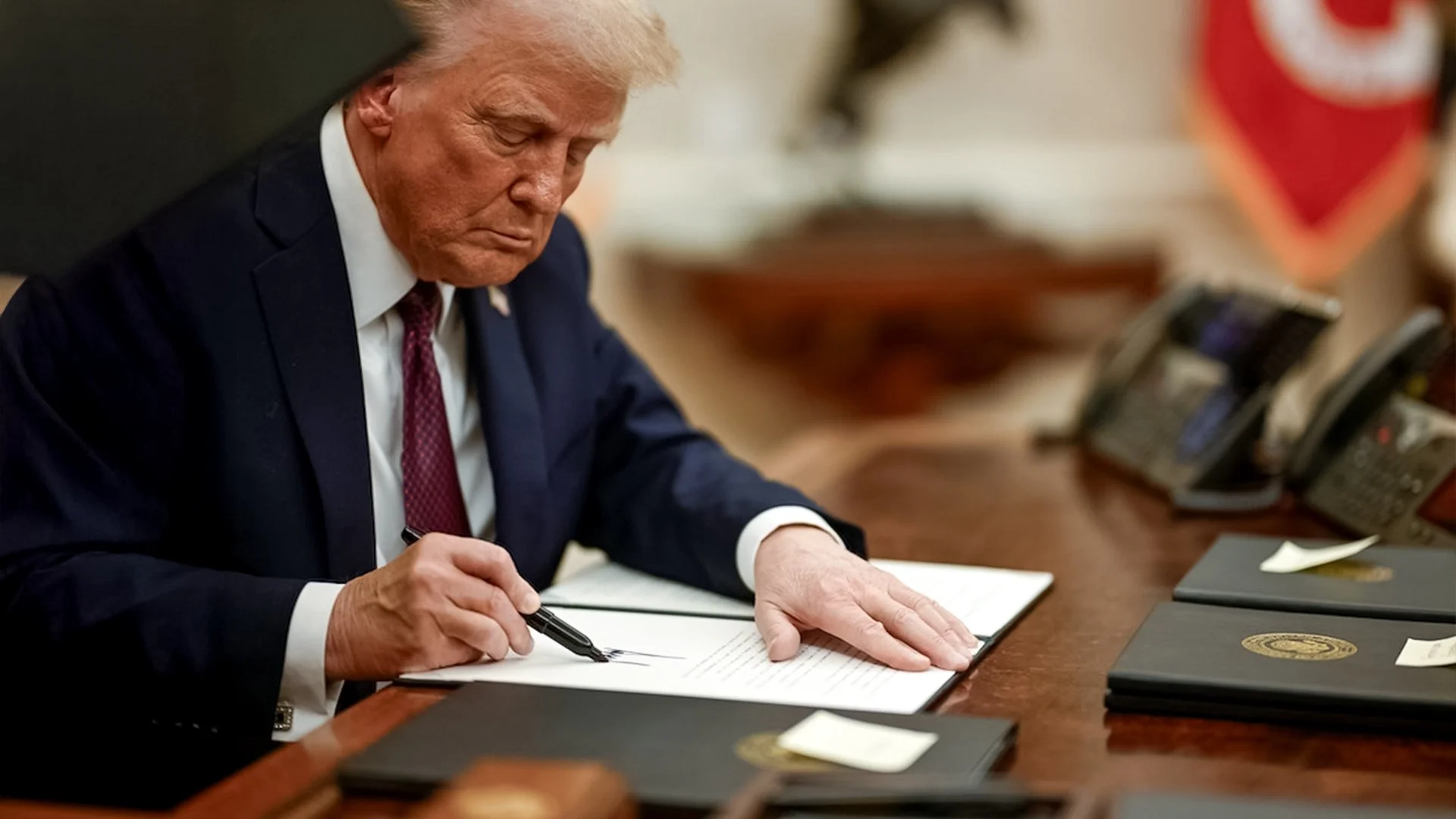
In a move described by the White House as a “win for American families and automakers,” President Donald J. Trump signed an executive action on December 3, 2025, to roll back the costly fuel economy standards implemented by the previous administration. The President argued that the prior standards were not only "unlawful" by exceeding congressional mandates but also served as an "electric vehicle (EV) mandate" that would have unjustly raised consumer costs.
The reset returns CAFE standards to levels that the White House states can be realistically met by conventional gasoline and diesel vehicles. This action is presented as a critical step in the fight against hidden cost-of-living increases and a way to protect the future of U.S. auto manufacturing.
The Economic Case: Saving Consumers Billions and Protecting the Auto Industry
The core justification for the CAFE reset is economic relief and affordability for the American consumer.
1. Cost-of-Living Relief
The Trump administration contends that the aggressive fuel economy targets were virtually impossible to meet with current gasoline vehicle technology. This forced automakers to either pay massive fines or drastically increase the production of expensive EVs, leading to a phenomenon where the cost of developing EVs was subsidized by raising the price of gas cars.
Projected Savings: The White House estimates that had the prior standards remained in place, the average cost of a new car would have been nearly $1,000 higher than the cost under the standards announced today.
Total Savings: The President's actions are projected to save American families a staggering $109 billion in total over the next five years.
2. Regulatory Certainty and Safety
By aligning CAFE standards with conventional vehicle capabilities, the administration aims to stabilize the U.S. auto manufacturing industry and enhance consumer safety. The reset is expected to encourage Americans to purchase newer, safer vehicles, a factor that is projected to save more than 1,500 lives and prevent nearly a quarter-million serious injuries through 2050.
This move is part of a broader regulatory rollback, following previous actions such as:
Ending the California EV Mandates: In June, President Trump signed a resolution to end the California EV mandates, which would have effectively banned new gas car sales by 2035 in that state and others that adopted its rules.
Eliminating Penalties: In July, the Working Families Tax Cuts Act was signed into law, which set the civil penalty for violating CAFE standards to $0, immediately shielding U.S. automakers from significant potential fines.


CAFE Reset and the Forex Trading Environment
The reset of a major US regulation like CAFE, which impacts manufacturing, consumer spending, and energy policy, is a significant fundamental event for those engaged in Global Markets Eruditio.
Impact on the USD
The overall impact on the US Dollar (USD) is complex but generally supportive of a stronger domestic economy:
Positive (Pro-Growth/Inflationary): By reducing the cost of new cars, this action acts as a tax cut for consumers, potentially boosting consumer confidence and spending. Stronger domestic economic activity typically provides underlying support for the USD.
Negative (Anti-Environment/Trade): Policies that reduce environmental regulations or promote less fuel-efficient vehicles can create friction with global trading partners and signal a less globally cooperative stance, which can sometimes introduce long-term market volatility. However, the immediate relief to the auto sector is seen as an immediate benefit to US manufacturing.
Auto Sector and Currency Pairs
The action provides a substantial benefit to the traditional U.S. automakers (like Ford and GM) by lessening the regulatory pressure to invest heavily in unprofitable EV lines, at least in the short term. This regulatory clarity is welcomed by the industry and may be viewed as supportive of U.S. capital investment.
For those interested in Forex Trading for Beginners, it’s essential to watch currency pairs like USD/JPY and EUR/USD. The USD strength against the Japanese Yen (JPY) is often correlated with confidence in U.S. manufacturing and consumer spending. While this CAFE reset is largely domestic, it reinforces a pro-business, lower-regulation economic approach that generally favors the USD by boosting confidence in the near-term economic trajectory.
The Broader War on Regulatory Costs
The CAFE reset is positioned as part of a wider campaign against what the administration deems excessive regulatory costs. The Environmental Protection Agency (EPA) has also released a proposal to rescind the 2009 Endangerment Finding, which underpinned numerous climate regulations. The White House claims this finding has been used to justify over $1 trillion in costs for the American economy.
By resetting CAFE and targeting other regulations, the administration aims to ensure that even if political power shifts, the regulatory landscape is "sensible," ensuring U.S. automakers are not held to infeasible standards and that Americans can afford to own a safe, reliable car.
Are You Trading the Impact of Policy on the US Economy?
Major regulatory shifts, like the CAFE reset, fundamentally alter the cost structure for entire industries and impact billions in consumer spending, directly influencing the US Dollar's value. Understanding the trade-offs between regulatory costs and consumer savings is essential for successful Forex Trading.
Master the analysis of policy-driven market events.
Join the GME Academy community today and sign up for our FREE Forex Workshop to learn how to translate political and regulatory news into high-probability Forex Trading strategies, giving you an edge in trading pairs like EUR/USD.
