

Infrastructure and Choice: House Panel Greenlights 3 Critical Education Reform Bills
In a decisive move to dismantle the "education crisis" gripping the Philippines, the House Committee on Basic Education and Culture approved three priority reform measures on Monday, February 23, 2026. Chaired by Pasig City Rep. Roman Romulo, the committee advanced a legislative package designed to solve the chronic classroom shortage and fix the structural flaws of the Senior High School (SHS) program.
The bills, principally authored by Speaker Ferdinand Martin Romualdez and the Tingog Party-list, represent a shift from "diagnosing" the problem to "disciplined implementation," according to proponents.

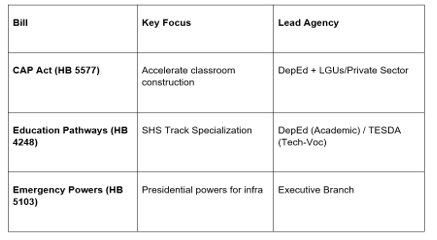
1. The Classroom-Building Acceleration Program (CAP) Act (HB 5577)
The Philippines currently grapples with a staggering backlog of over 165,000 classrooms. This shortage has forced many schools into double or triple shifts, severely compromising the quality of instruction.
LGU & Private Synergy: The CAP Act institutionalizes a mechanism where Local Government Units (LGUs) and the private sector can lead classroom construction in coordination with DepEd.
Funding Access: By allowing partners to access national funding and technical assistance, the bill aims to bypass the bureaucratic bottlenecks that have historically slowed down school infrastructure projects.
2. The Education Pathways Act (HB 4248)
Perhaps the most significant structural change is the proposed overhaul of the K-12 system’s final years. The bill seeks to clarify the "identity crisis" of Senior High School by creating two distinct tracks:
University Preparatory Pathway: Managed by the Department of Education (DepEd), focusing on students intending to pursue higher education.
Technical-Vocational Pathway: Transferred to the oversight of the Technical Education and Skills Development Authority (TESDA), ensuring that students seeking immediate employment graduate with industry-standard certifications.
3. The Emergency Classroom Building Act (HB 5103)
Recognizing that the 165,000-classroom deficit is a national emergency, this bill provides the President with temporary emergency powers.
Expedited Procurement: These powers are intended to slash the "red tape" involved in the construction, rehabilitation, and repair of classrooms nationwide.
Urgency: Rep. Jude Acidre emphasized that better learning outcomes are impossible without the "basic conditions for learning," making rapid infrastructure delivery a prerequisite for all other reforms.
The Road Ahead: From Committee to Plenary
The approval of these bills follows data from EDCOM II (The Second Congressional Commission on Education), which has been vocal about the declining learning outcomes among Filipino students.
With the committee’s nod, these measures now move to the House plenary for consideration. If passed into law, they could represent the most significant reorganization of the Philippine basic education system since the implementation of K-12.


GME Academy Analysis: "Human Capital as a Macro Factor"
At Global Markets Eruditio, we track education reform as a long-term indicator of a country's Potential GDP.
Trader's Takeaway for 2026:
Construction & Real Estate: The "Emergency Powers" for classroom building could trigger a surge in government contracts, benefiting local construction firms and material suppliers listed on the PSE (Philippine Stock Exchange).
Labor Market Efficiency: Realigning the Tech-Voc track under TESDA is a "Bullish" move for the Philippine labor market. By producing "job-ready" graduates, the Philippines can improve its competitiveness in the BPO and manufacturing sectors.
Long-term PHP Outlook: While these reforms require high spending today, the improvement in human capital is essential for the Philippines to maintain its "emerging market" growth premium over the next decade.
Join our FREE Macro Workshop at Global Markets Eruditio!
How will education reform impact the Philippines' credit rating? We’ll analyze the EDCOM II Recommendations vs. National Budget Allocations and show you how to trade the PHP during this period of structural reform.
