

The Rice Pivot: How Lower Global Prices and Resumed Imports are Changing the Game for Everyone
In the Philippines, rice is more than just a meal—it is a political and economic pulse. As of late January 2026, a major shift is occurring in the warehouses of Vietnam and the ports of Manila. After a four-month self-imposed import ban to protect local farmers, the Philippines has officially re-entered the global rice market.
The result? A confluence of lower global prices and a steady 15% tariff is set to finally push retail prices toward the long-awaited ₱42–₱45 per kilo range. At the GME Academy, we see this as more than just a win for the kitchen table; it is a critical "Fundamental Pivot" for the Philippine Peso (PHP) and a lesson in supply-chain economics.
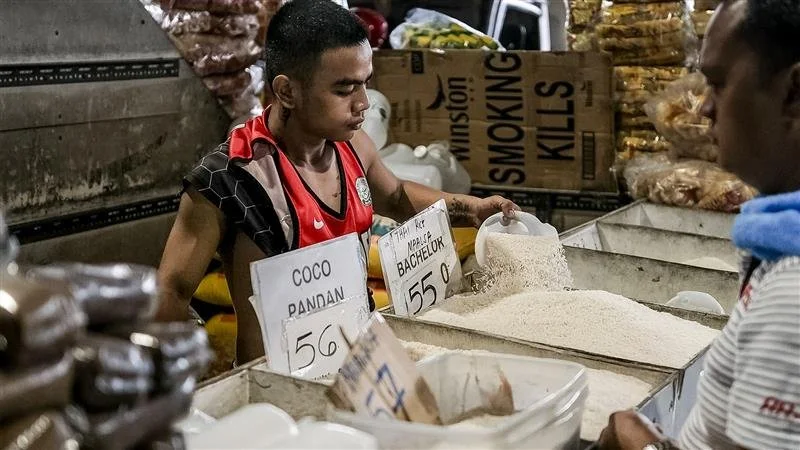
1. For the Common Person: Relief at the "Sari-Sari" Level
For the average Filipino family, rice accounts for nearly 20% of the household budget. When rice prices spiked toward ₱55–₱60 in 2025, it acted like a "hidden tax," forcing families to cut back on other essentials.
Why prices are coming down now:
The Tariff Shield: The government extended the 15% tariff rate on imported rice (instead of letting it jump back to 35%). This keeps the "landed cost"—the price of rice when it hits our shores—manageable.
Vietnam’s Surplus: Our primary supplier, Vietnam, is seeing lower export prices (roughly $382 per metric ton).
The "MSRP" Effect: The Department of Agriculture (DA) is enforcing a Suggested Retail Price (SRP) of ₱43 per kilo for well-milled imported rice, ensuring that the "savings" from the global market aren't just swallowed up by greedy middlemen.
Bottom Line: If you're buying rice today, you should see more options under ₱45. If prices are still high in your local market, it’s likely due to old stock or local traders resisting the price drop.
2. For the Forex Trader: The Inflation-Peso Connection
In Forex Trading, rice is an "Inflation Anchor." Because rice has a massive weight in the Philippine Consumer Price Index (CPI), its price dictates whether the Bangko Sentral ng Pilipinas (BSP) will hike, hold, or cut interest rates.
The Strategy for USD/PHP:
Inflation Dampener: Lower rice prices lower the overall inflation print. When inflation stays within the 2.0%–4.0% target, the BSP doesn't need to be "hawkish."
Rate Cut Potential: If rice keeps inflation low, the BSP might cut interest rates to boost the sluggish 3% GDP growth we saw in Q4 2025.
Currency Reaction: Lower interest rates typically make a currency weaker. Traders at Global Markets Eruditio are watching for a scenario where "Cheap Rice = Lower Inflation = BSP Rate Cut = USD/PHP heading toward 58.50+."
3. The "Import Window" Strategy: A Delicate Balance
The government is now using a "calibrated" approach. They allowed a 300,000 metric ton window in January 2026 to ensure supply before the local "summer harvest" begins in March.
Why this matters:
Avoiding the "Glut": If too much cheap rice arrives during the local harvest (March–April), it crashes the "farmgate price," hurting our farmers.
The Port Squeeze: Imports are being limited to 17 major ports (like Manila, Cebu, and Davao) to better monitor quality and prevent smuggling.


The GME Academy Analysis: "Watch the Plate, Trade the Peso"
For Forex Trading for Beginners, it’s easy to get lost in technical charts. But in an emerging market like the Philippines, the price of a sack of rice is often more "predictive" than any moving average.
When you see the news that "Rice is getting cheaper," don't just think about your grocery bill. Think about the BSP's next meeting. If rice is cheap, the central bank has the "green light" to support the economy with lower rates, which fundamentally changes the value of every Peso in your trading account.
Want to Master Fundamental Analysis? Understanding how commodities like rice and oil move the needle for the Peso is what separates "lucky" traders from "educated" ones.
Join our FREE Forex Workshop. Learn how to read inflation reports like a pro and turn "grocery store news" into a high-probability trading plan for the USD/PHP cross.
