

Firm but Diplomatic: PH and China Resume Political Dialogue Amid Maritime Tensions
In a significant pivot toward de-escalation, the Philippines and China resumed their bilateral political dialogue on Thursday, January 29, 2026, ending a "more than a year-long hiatus." The meeting, held in Cebu, marks a critical attempt to stabilize a relationship that has been increasingly defined by "word wars" and maritime confrontations in the West Philippine Sea.
At the GME Academy, we view this dialogue as a "Geopolitical Safety Valve." For Forex Trading, particularly for the USD/PHP, any move toward diplomatic stability reduces the "Risk Premium" on the Peso. While the stock market is currently reeling from GDP data, this diplomatic thaw provides a much-needed long-term psychological floor for the Philippine economy.
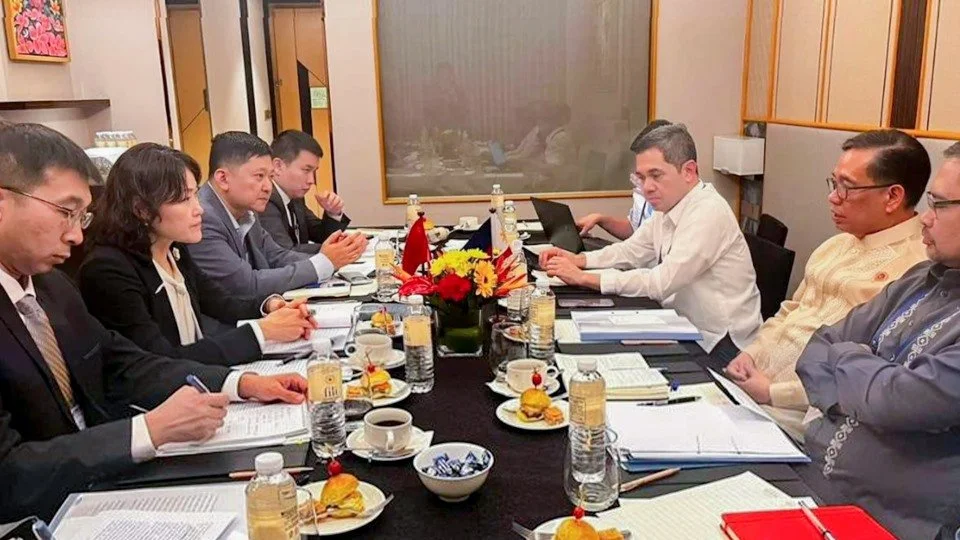
1. The Cebu Meeting: Diplomacy Behind Closed Doors
The dialogue was chaired by Philippine Foreign Affairs Undersecretary Leo Herrera-Lim and China’s Hou Yanqi, Director-General for Ocean Affairs.
What was discussed?
Candid Exchange: The DFA described the talks as a "candid exchange of views," a diplomatic term usually indicating that both sides aired their grievances directly without sugarcoating.
Maritime Management: The focus remained on maritime-related matters, specifically aimed at preventing the "grey-zone operations"—such as water cannon incidents and laser pointing—from escalating into a full-scale kinetic conflict.
Code of Conduct (COC): The timing is pivotal, as the meeting took place just 24 hours before senior ASEAN and Chinese officials met to negotiate the next round of the South China Sea Code of Conduct.
2. Beyond the West Philippine Sea: The "Economic Olive Branch."
Despite the friction, the Chinese Embassy in Manila is signaling a desire to protect the $41 billion bilateral trade relationship. China remains the Philippines' largest trading partner, and Beijing is reportedly "actively facilitating" cooperation in high-growth sectors:
Clean Energy & Waste-to-Energy: Exploring solar and renewable partnerships to address the Philippines' power supply issues.
Digital Economy: Aligning with the Philippines’ 2026 ASEAN Chairship goal of a "Digital Economy Framework Agreement."
Agriculture: Ensuring that high-value exports, such as durian and bananas, remain insulated from political "trade sanctions."
3. The "Persona Non Grata" Crisis: A Firm Approach
The resumption of talks comes at a time of extreme domestic pressure. Earlier this month, heated public exchanges led some Philippine legislators to propose declaring specific Chinese Embassy officials persona non grata (unwelcome persons).
President Ferdinand R. Marcos Jr. has adopted what Malacañang calls a "firm with diplomacy" approach. By supporting the resumption of talks while maintaining a firm stance on sovereignty, the administration is attempting to avoid the "Economic Shock" that would follow a total diplomatic rupture, which the World Bank warns could shave 1.5% to 3.5% off GDP growth through trade disruptions.


The GME Academy Analysis: Trading the "De-Escalation"
In Forex Trading for Beginners, geopolitical tension is a "Hidden Variable."
The Conflict Premium: When tensions in the West Philippine Sea spike, foreign investors often pull out of the PSEi (as seen in today's 2.08% slide), leading to a weaker Peso.
The Dialogue Discount: The resumption of political talks signals to the "Big Money" that both sides are still willing to talk rather than fight. This acts as a stabilizer for the USD/PHP, preventing it from breaking out past historical resistance levels.
Is Your Trading Strategy Accounting for the "Cebu Thaw"? While the headline GDP growth of 3% is disappointing, the "Firm with Diplomacy" approach ensures that the Philippines remains open for business with its largest trading partner.
Join our FREE Forex Workshop. Learn how to trade "Geopolitical Volatility." We’ll show you how to monitor DFA and Chinese Embassy statements to predict "Sentiment Shifts" in the Peso before they hit the mainstream news.
