

The $39 Billion Question: Will the PH-Denmark Healthcare Pact Fuel the PHP’s Remittance Strength?
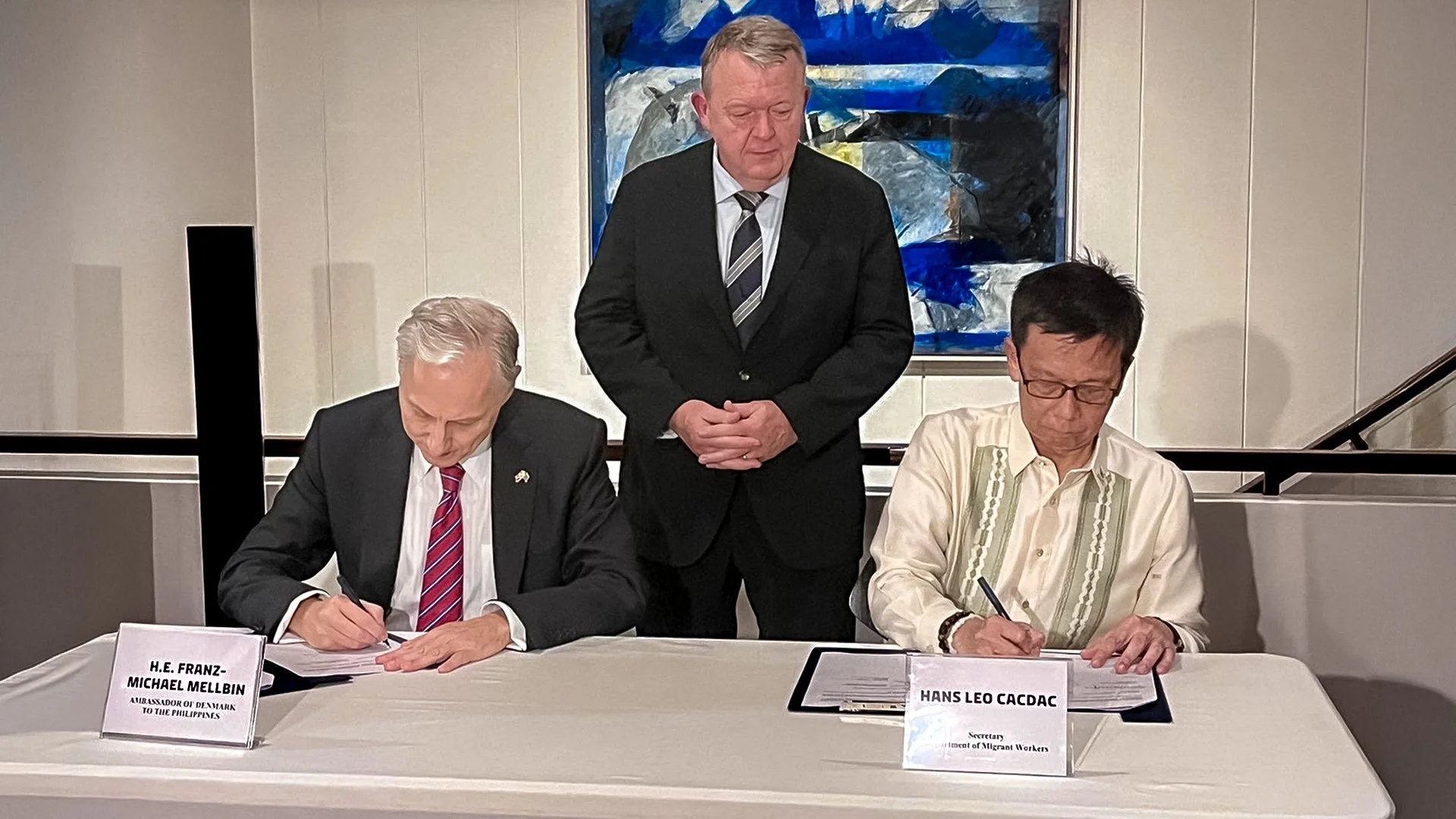
The Philippines and the Kingdom of Denmark are finalizing a landmark Memorandum of Understanding (MOU) to establish a long-term, ethical pipeline for Filipino health and care professionals. While primarily a humanitarian and labor initiative, this formalized, high-wage migration channel represents a structural tailwind for the Philippine Peso (PHP), whose stability is already heavily reliant on global remittances. The agreement, which prioritizes advanced training and equal pay, sets a new standard for international labor mobility, creating a clear, high-value income stream for the Philippines that merits attention from the Forex Trading community.
The latest drafts of the MOU were initialed during the visit of Denmark’s Minister for Senior Citizens, Mette Kierkgaard, to Manila. The agreement establishes a crucial Government-to-Government (G2G) framework designed to fill Denmark's staggering projected shortage of up to 24,000 social and health care assistants by 2035, driven by its rapidly aging population.
A Blueprint for Ethical Labor: The G2G Advantage
This MOU is significant not just for the volume of workers but for the quality and ethics of the recruitment system it establishes. DMW Secretary Hans Leo Cacdac stressed the agreement ensures Filipino workers are fully protected and receive the same rights and working conditions as their Danish counterparts.
Structural PHP Tailwind: High-Value Remittances
The Filipino diaspora, often referred to as the Philippines' "modern-day heroes," remitted a record high of $39 billion in 2024, forming a vital economic shield for the nation and a key source of demand for the Philippine Peso against the US Dollar (USD). The Denmark MOU enhances this crucial dynamic in three ways:
High-Value Currency: Remittances from Denmark will be denominated in the Danish Krone (DKK), a stable, highly valued G10 currency pegged to the Euro (€) via the ERM II mechanism. A strong DKK translates directly into higher real income for Filipino households when converted to the PHP, increasing the value of each remittance dollar.
Zero Placement Fees: By adopting a G2G framework, the MOU eliminates predatory recruitment fees. This means workers start sending back their full income much sooner, accelerating the cash flow back to the Philippines.
Skills and Equal Pay: The agreement prioritizes training and guarantees equal pay under Danish labor standards. Higher skills and higher wages in a high-income country like Denmark translate directly into higher average remittance values per worker, strengthening the structural support for the PHP/USD exchange rate over the long term.
Policy Divergence: Demographic Risks and Forex
This agreement highlights a growing global economic and demographic reality: the divergence between aging developed nations (like Denmark) that are labor-demand elastic and young developing nations (like the Philippines) that are labor-supply elastic.
Danish Krone (DKK) Perspective: For Forex Trading, the agreement provides a marginal positive to the DKK, as the influx of skilled labor helps mitigate wage-push inflationary pressures that could arise from the severe labor shortage. Stable labor supply contributes to economic equilibrium, a favorable factor for the DKK against currency pairs like the EUR/DKK, which is already managed by the central bank.
Philippine Peso (PHP) Perspective: The continued success of ethical migration frameworks under the Department of Migrant Workers (DMW) enhances the reputation of the Philippines as a reliable source of high-quality labor. This provides a structural, non-cyclical cushion for the PHP against global economic shocks. For Forex Trading for Beginners, this G2G agreement illustrates how long-term macro-factors like migration policy can be a consistent, underlying bullish driver for a currency.
Beyond Brain Drain: Capacity Building and Circular Migration
The MOU is not just a deployment document; it is a Capacity Building framework. The pilot program, starting with social and health care helpers before expanding to assistants and nurses, is supported by knowledge transfer and skills-alignment training in the Philippines.
Joint Committee: The establishment of a Joint Committee ensures ongoing collaboration, workforce planning, and adherence to the WHO Global Code on the International Recruitment of Health Personnel.
Circular Migration: The agreement supports the concept of circular migration, where Filipino workers gain valuable specialized experience in Denmark and eventually return home to apply those enhanced skills. This mitigates the "brain drain" concern and transfers international standards back into the Philippine healthcare system—a key objective for Filipino policymakers focused on Global Markets Eruditio principles.
In short, the MOU is a strategic win for both nations: Denmark secures the high-quality care workers it desperately needs to maintain its welfare system, and the Philippines secures a high-value, protected income stream that strengthens its national currency and develops its healthcare sector.
Are You Equipped to Trade the Remittance-Driven Strength of the PHP?
The formalization of ethical, high-wage labor corridors like the Denmark MOU provides a clear, long-term bullish signal for the Philippine Peso (PHP) against the US Dollar (USD).
Master the skill of translating macro-policy agreements into actionable currency trades.
Join the GME Academy community today and sign up for our FREE Forex Workshop to learn how to incorporate remittance flows, G2G agreements, and high-value currency exchange rates into your trading plan for the PHP currency pairs, securing a comprehensive understanding of the forces that move the market.
