

Fragmented Fortune: Andrew Bailey on the New Global Imbalance
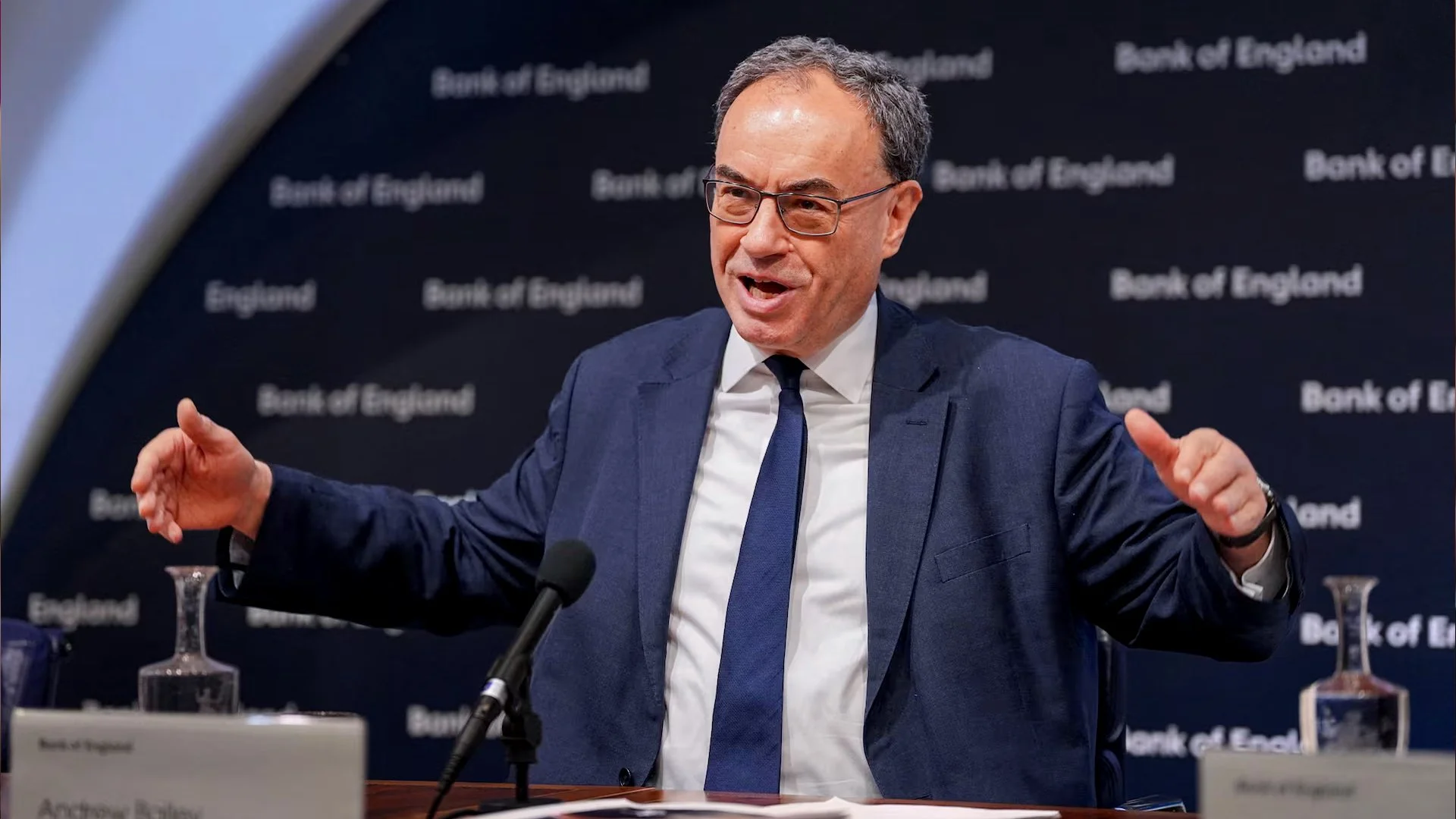
The world of international finance is shifting, and the "rules of the game" are being rewritten in real-time. In a high-stakes speech delivered at the Bellagio Group event on January 16, 2026, Bank of England Governor Andrew Bailey issued a stark warning: the era of seamless economic globalization is under threat from a "multi-polar" world and a rising tide of populism.
For those navigating Forex trading for beginners, Bailey’s remarks are a crucial reminder that currency values aren't just moved by interest rates—they are deeply anchored in the geopolitical stability and trade relations of the nations behind them.
The End of the "One-Way Street"
Bailey’s core argument centered on a hard truth: international cooperation cannot exist in a vacuum. It requires a "domestic license." In the past, the benefits of open markets were often assumed to be a win-win, but the Governor acknowledged that the distributional consequences—where some groups win, and others lose—have undermined social cohesion.
This creates a "natural tension" for the British Pound (GBP) and other major currencies. When a country's domestic policy goals clash with international rules, volatility in the Forex market is the inevitable result. Bailey noted that while the post-WWII era focused on monetary relations, today’s battleground is Trade.
Four Headwinds Threatening Global Growth
To understand why the US Dollar (USD) or GBP might experience "choppy" trading in 2026, one must look at what Bailey calls the "strong counter-currents" to growth. He identified four specific headwinds currently slowing the global engine:
Productivity Lulls: We are currently between "discrete rushes" of innovation. While Bailey expects AI and Robotics to be the next rush, we haven't seen the full impact on living standards yet.
Ageing Populations: An older workforce leads to lower growth and puts massive pressure on fiscal resources.
The Defense Burden: Increasing demands for defense expenditure—highlighted by recent geopolitical tensions—are draining budgets that could otherwise support economic expansion.
Climate Shocks: The physical and policy-driven consequences of climate change are acting as a permanent drag on global productivity.
Industrial Policy and the "Greenland" Effect
The Governor also touched upon the return of "Industrial Policy"—government intervention to support specific sectors. He warned that when countries subsidize production but suppress domestic consumption, the excess "flows abroad," creating persistent global imbalances.
This is particularly relevant given recent headlines regarding the USD. As the US asserts more control over trade routes and targets specific regions (like the ongoing tensions over Greenland), the Forex market sees an increase in "risk premiums." When the US Dollar becomes a tool of industrial policy, cross-economy news regarding tariffs can cause the EUR/USD or GBP/USD to swing violently regardless of standard economic data.

Why "Speaking Truth to Power" Matters
Bailey’s final plea was for the protection of multilateral institutions like the IMF and the Financial Stability Board (FSB). He argued that in an age of populism—which tends to blame outside forces for domestic woes—we need objective "truth-seekers" more than ever.
For a trader at the GME Academy, this means looking beyond the "populist noise." Success in Forex trading requires a cold, analytical view of a country's fiscal health and its commitment to the international rules-based system. As Bailey noted, "a world without effective institutions is unlikely to be stable."
Are You Prepared for a Fragmented Market?
The global economy is no longer a simple, interconnected machine. It is a series of shifting plates. Understanding how these macro-tensions influence your favorite currency pairs is the difference between a lucky guess and a professional strategy.
Don't let global fragmentation catch your portfolio off guard.
Join our FREE Forex Workshop Today!
