

Bank of Canada’s Tiff Macklem Cautions on Structural Weakness — What It Means for CAD Traders
A Softer Tone from the Bank of Canada
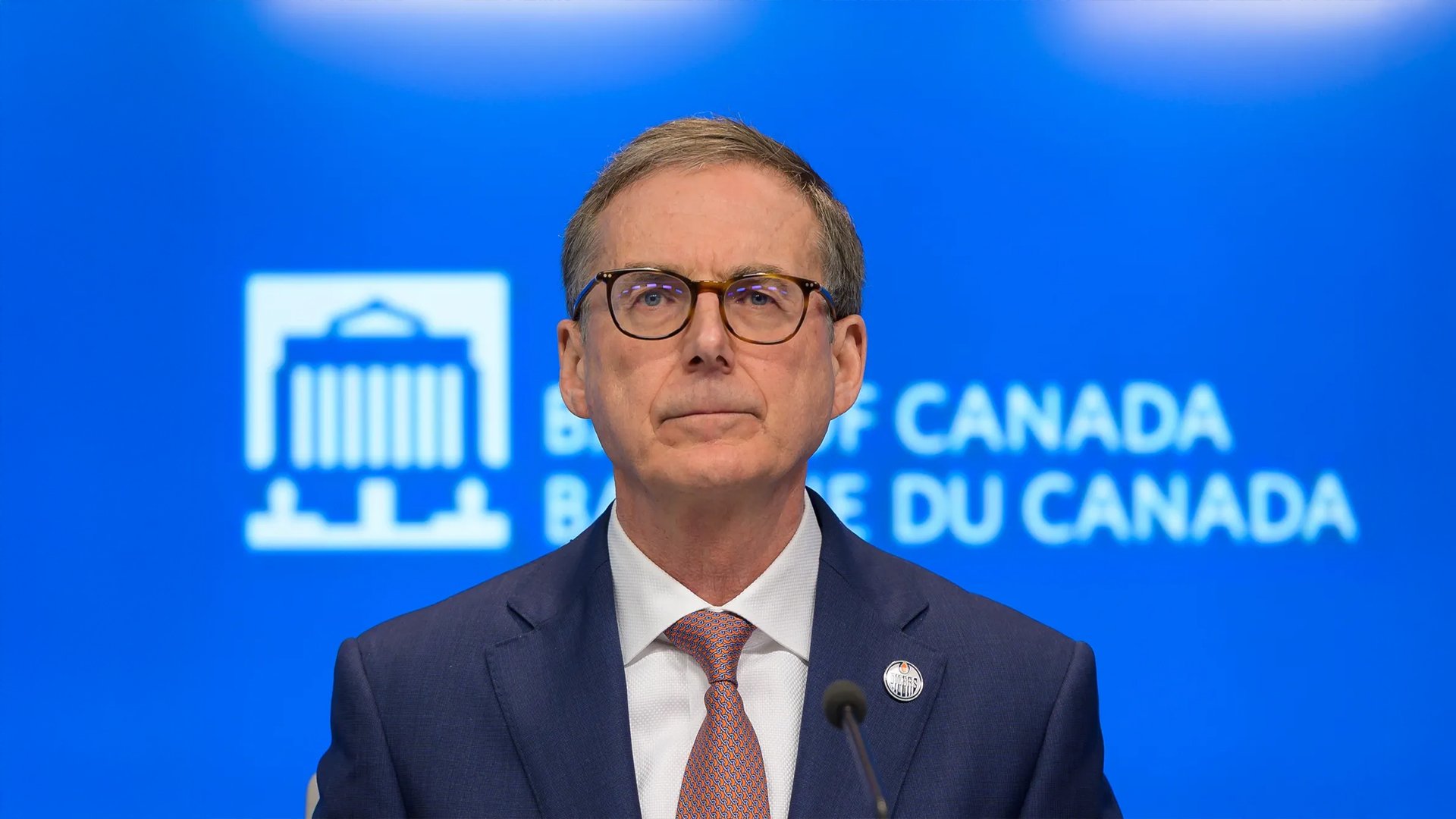
Bank of Canada (BOC) Governor Tiff Macklem and Senior Deputy Governor Carolyn Rogers appeared before the House of Commons Standing Committee on Finance to discuss Canada’s latest monetary policy direction — and traders across the Forex world were watching closely.
Macklem confirmed a 25-basis point rate cut, lowering the policy rate to 2.25%, marking the second consecutive reduction this year. The move reflects persistent economic weakness and subdued inflation, signaling a dovish shift in tone from the central bank.
For Forex Trading beginners, a “rate cut” means the central bank is making borrowing cheaper to encourage spending and investment. However, lower interest rates often make a country’s currency less attractive to foreign investors — potentially weakening the Canadian Dollar (CAD).
Why the Bank is Cutting Rates
Governor Macklem pointed to U.S. tariffs and global trade uncertainty as key reasons for Canada’s slowdown. The central bank expects only modest GDP growth through late 2025, with a gradual recovery starting in 2026.
“Trade conflict has weakened our economy and limited our capacity to grow,” Macklem stated. “This is more than a cyclical downturn — it’s a structural transition.”
In simple terms, Canada isn’t just facing a temporary slump. The U.S. trade tensions have caused long-term structural damage, making it harder for industries like autos, steel, aluminum, and lumber to bounce back.
Inflation Still Under Control
Despite the weak economy, inflation remains relatively stable. The Consumer Price Index (CPI) was at 2.4% in September, close to the Bank’s 2% target.
The BOC’s preferred core inflation measures — which strip out volatile items like food and energy — are hovering near 3%, but the Governor expects these pressures to ease.
For Forex traders, stable inflation usually means the BOC won’t rush into aggressive rate cuts unless growth worsens. Macklem even noted that the current policy rate is “about right” for now, suggesting a potential pause in rate adjustments ahead.
How This Impacts the CAD
From a Forex trading perspective, Macklem’s cautious tone has mixed implications for the Canadian Dollar (CAD):
Dovish stance = short-term pressure on CAD. The double rate cut can cause traders to sell CAD in favor of higher-yielding currencies like the USD, especially in pairs like USD/CAD or EUR/CAD.
Controlled inflation = medium-term stability. Since the BOC isn’t panicking about inflation, this could limit how far the CAD weakens, giving it room to stabilize once trade tensions cool.
Essentially, the CAD’s direction will depend on whether markets focus more on the rate cuts (bearish) or the controlled inflation (neutral to bullish) outlook.
A Deeper Issue: Structural Transition
Perhaps the most significant part of Macklem’s speech was his emphasis that Canada’s challenge is structural, not just cyclical.
He explained that tariffs and trade friction are permanently reducing Canada’s productive capacity — meaning the economy may not return to its previous growth path even after recovery.
This statement carries weight for long-term Forex traders. It implies that Canada’s economic fundamentals could stay weaker for longer, limiting future CAD strength unless global trade conditions improve.
What Traders Should Watch Next
Macklem closed his remarks by saying, “We will be assessing incoming data carefully… If the outlook changes, we are prepared to respond.”
In Forex terms, this signals that the BOC remains flexible — it could cut rates again if growth disappoints, or hold steady if inflation stays near target.
Traders should monitor:
Employment trends (especially in trade-sensitive sectors)
CPI and GDP releases
Any U.S.-Canada trade policy shifts
These indicators will determine whether the USD/CAD pair continues to rise or if the CAD can stage a recovery in 2026.

Why It Matters for Ordinary Filipinos
For Filipino Forex traders, the Canadian Dollar is a key currency to watch because it often moves in sync with oil prices and U.S. trade activity. A weaker CAD could create short-term opportunities for trading pairs like USD/CAD or CAD/JPY, especially when volatility rises after central bank announcements.
Learning to interpret speeches like Macklem’s helps traders anticipate policy-driven price movements, a critical skill in Forex Trading for Beginners under GME Academy (Global Markets Eruditio).
Join Our Free Forex Workshop
Want to understand how central bank policies affect currency pairs like USD/CAD or EUR/CAD?
Join our free Forex Trading workshop at GME Academy — and start learning how to trade with confidence and clarity!
