

Germany's Economic Engine Stutters: Composite Growth Slows, Manufacturing Slumps
Germany, the Eurozone's industrial powerhouse, is showing fresh signs of economic frailty, according to the latest HCOB Flash Germany PMI data for November 2025. The report indicates a broad loss of momentum across the private sector, driven by a sharper-than-expected slowdown in the dominant services sector and a worrying renewed slide into deep contraction for manufacturing.
For Forex Trading participants, this data provides a crucial bearish signal for the Euro (EUR), particularly against the US Dollar (USD), as it reinforces the case for the European Central Bank (ECB) to maintain a cautious, or even dovish, policy stance.
Composite Growth Fades: Services Lose Their Vigor
The headline figures point to a significant deceleration in overall German business activity during the penultimate month of the year.
The HCOB Flash Germany Composite PMI Output Index fell to 52.1 in November, down sharply from 53.9 in October, marking a two-month low. While the index remains above the crucial 50.0 no-change mark, signifying continued expansion, the pace of growth has eased substantially.
This slowing was led by the services sector, which had previously been the primary driver of the Eurozone’s largest economy.
HCOB Flash Germany Services PMI Business Activity Index: 52.7 (October: 54.6).
The index hit a two-month low, with reports indicating a softer increase in new business inflows. This loss of momentum in services suggests that the domestic demand resilience that helped Germany weather the manufacturing slump earlier in the year may be starting to fade.
The Industrial Crisis Deepens: Manufacturing Falls Back
The most concerning reading came from the industrial sector. Germany's economic model relies heavily on its Manufacturing base, and the sector's performance continues to be a major drag on the entire Eurozone.
HCOB Flash Germany Manufacturing PMI Output Index: 50.7 (October: 52.4).
HCOB Flash Germany Manufacturing PMI: 48.4 (October: 49.6).
The Manufacturing PMI (which tracks overall factory health, including orders, output, and employment) fell to 48.4, hitting a six-month low and deepening its position well into contraction territory (below 50.0). The output index, which measures actual production, also decelerated sharply.
This renewed slump is attributed to a sharp and accelerated reduction in export sales—a clear vulnerability for this export-oriented nation. The combination of sluggish global demand and persistent trade barriers continues to weigh heavily on German industrial production and exports, an ongoing structural challenge for the nation's industry. Analysts at Global Markets Eruditio view this manufacturing weakness as a significant headwind for the entire continent.


Forex Impact: The Bearish Signal for the Euro
The soft German PMI data is a critical piece of information for Forex Trading for Beginners and seasoned professionals alike, as Germany's economic health heavily influences the value of the Euro.
1. EUR/USD Under Pressure
The disappointing German data—especially the manufacturing slip and the slowing services growth—casts a shadow over the near-term Eurozone economic outlook.
Dovish ECB Expectations: Weak German economic performance increases the likelihood that the European Central Bank (ECB) will remain patient before tightening monetary policy, or that it may even consider rate cuts sooner if the downturn accelerates. This dampens the attractiveness of holding the Euro (EUR).
Contrast with the USD: Given the US Dollar (USD) has recently found support from strong US economic data, the contrasting weakness in Germany reinforces the divergence in economic performance across the Atlantic. This divergence is typically bearish for the EUR/USD currency pair, pushing its value lower.
2. Market Sentiment and the Euro
When trading Currency pairs like EUR/USD, the PMI serves as a forward-looking indicator. A negative surprise, as seen in the manufacturing index, usually prompts investors to quickly sell off the currency, anticipating weaker corporate earnings and lower future interest rates.
The takeaway for Forex traders is clear: the German economy is navigating a highly fragile path, with its industrial sector still struggling to find a bottom. Until key forward-looking indicators, particularly the Manufacturing PMI, show a sustained recovery above 50, the Euro will likely remain vulnerable to bearish pressures, especially against the stronger USD.
Master the Economic Data That Moves the Euro!
The HCOB Flash Germany PMI is not just a statistical report; it's a direct driver of volatility in the EUR/USD and other Euro currency pairs. Understanding how this data is collected, interpreted, and traded is the difference between losing money and capitalizing on market shifts.
Don't let vital economic news catch you by surprise. Elevate your analytical skills and trade with confidence.
Join our FREE Forex Workshop today to learn professional-level fundamental analysis and master the tools needed for effective Forex Trading!
Click here to secure your spot and start trading like a pro!
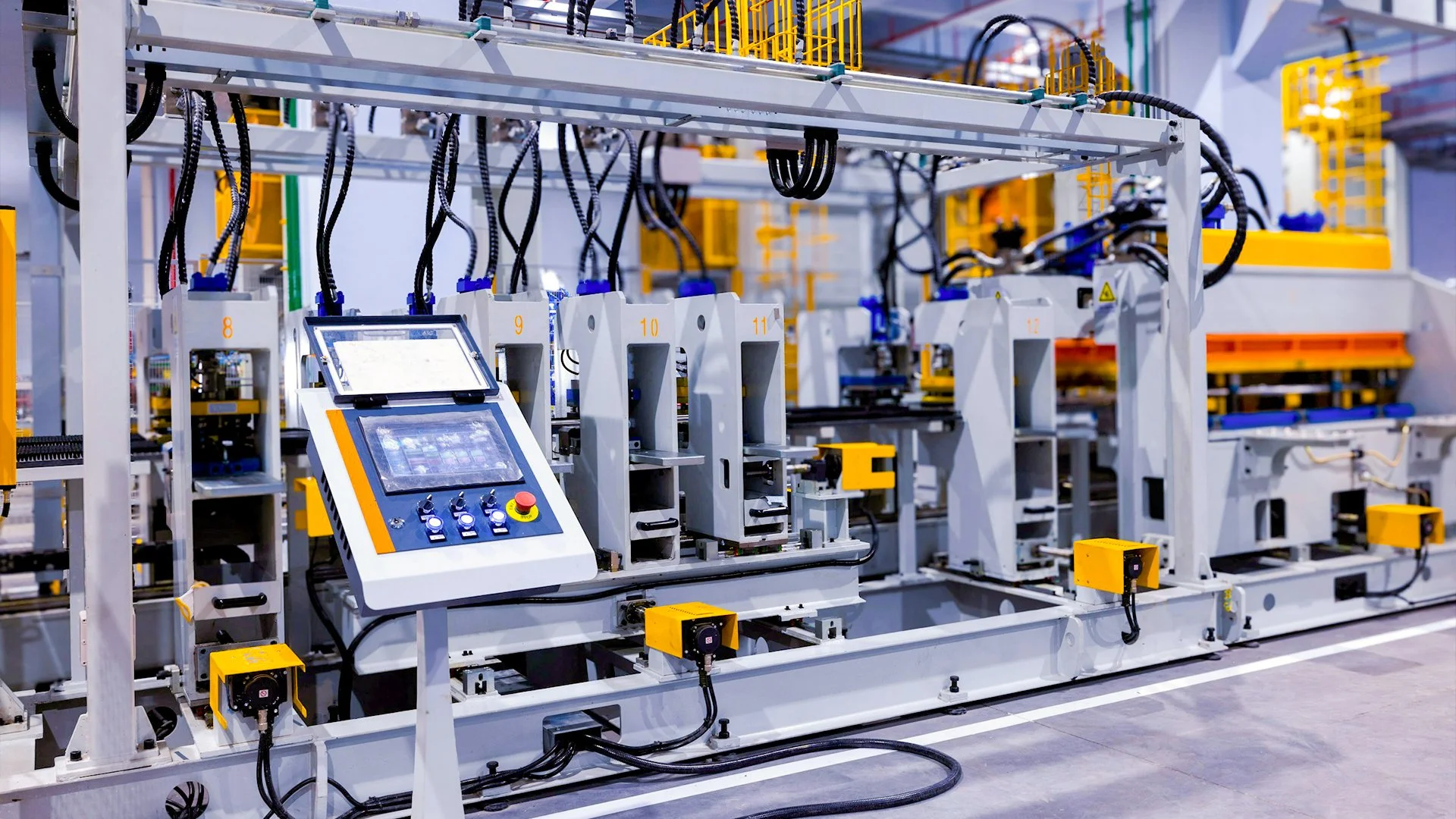
🇩🇪 Feature Image Suggestion: Photojournalism Style
Description: A wide-angle shot taken inside a large, modern German factory or production facility. The image should feature a long assembly line or an array of sophisticated, clean machinery. The focus should be slightly on the machinery or the length of the production floor, emphasizing scale and industrial power. However, strategically include a foreground element—perhaps a worker looking at a control panel or a manager reviewing a blueprint—with a subtle expression of concern or deep thought. The lighting should be slightly cool or harsh, reflecting the industrial environment and the "slump" narrative.
Why this works:
Photojournalism Style: Captures the real-world setting of German industry—the core of the PMI's concern. It's authentic and grounded.
Relevance: Directly illustrates the Manufacturing sector, which is the most negative and worrying part of the German PMI report (Manufacturing PMI at 48.4).
Narrative Support: The vastness of the factory contrasts with the concerned human element, visually representing the struggle of the massive industrial engine as its performance contracts.
Professionalism: Conveys the gravity of the economic news, aligning with the article's professional and educational tone.
