

Trump’s Supreme Court Showdown: Could Tariff Power Shake the Global Economy and the US Dollar?
A Legal Battle With Global Economic Stakes
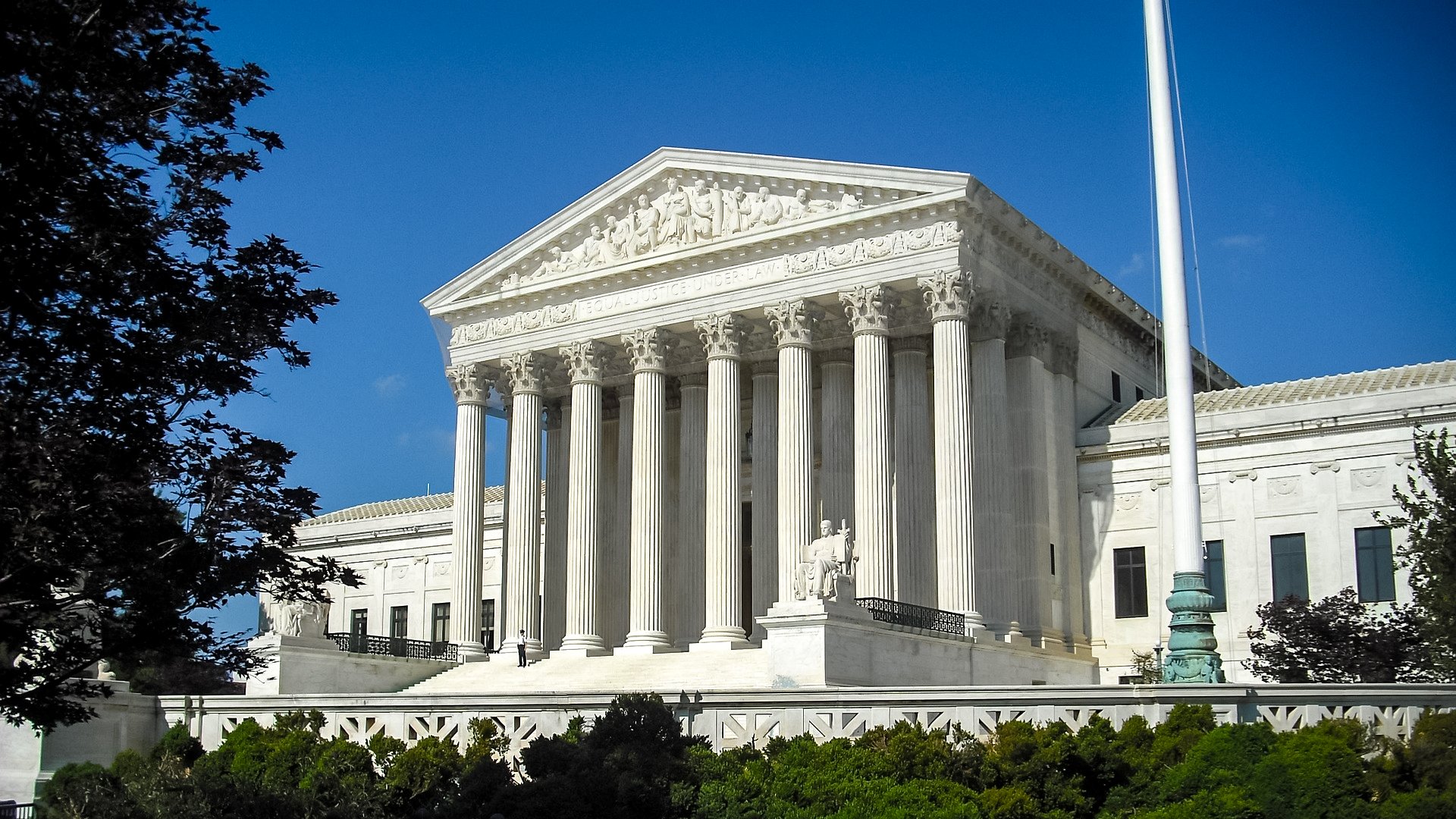
The U.S. Supreme Court is facing a case that could redefine not only presidential power but also the direction of global markets. At the heart of the controversy is President Donald Trump’s use of sweeping tariffs under the International Emergency Economic Powers Act (IEEPA) — a 1977 law originally meant to regulate economic sanctions, not trade duties.
For forex traders, investors, and global market observers, this case could mark a turning point. The ruling could determine whether the president of the United States has near-unchecked authority to impose tariffs — a decision that would ripple through currency markets, corporate supply chains, and international diplomacy.
If Trump wins, the U.S. dollar (USD) may surge on perceived executive control and policy continuity. A loss, however, could weaken confidence, triggering short-term volatility across major currency pairs like EUR/USD, USD/JPY, and USD/CNH.
What’s at Stake: Billions in Tariffs and Presidential Power
Currently, the U.S. government collects around $556 million per day in tariffs imposed under IEEPA — accounting for three-quarters of all additional customs revenue this year. According to Bloomberg Economics, those duties could exceed $140 billion by the end of 2025, much of it tied to tariffs on goods from China, Canada, Mexico, Brazil, and India.
If the Supreme Court rules that Trump exceeded his authority, it could render most of those tariffs illegal, potentially forcing the government to refund billions to U.S. importers. Such a move could widen the federal deficit but temporarily boost business liquidity — a paradox that forex traders must closely watch as it could influence market sentiment and U.S. Treasury yields.
Economists warn that removing IEEPA tariffs could cut the effective tariff rate in half — from 15.9% to about 6.5% — reducing inflationary pressure but also shrinking government revenue. For forex markets, this balance between fiscal contraction and investor optimism will likely dictate short-term movements in the USD’s valuation.
The Broader Battle: Who Holds Economic Power?
The question before the Supreme Court extends beyond tariffs: Who has the authority to shape U.S. economic policy — Congress or the President?
Opponents argue that IEEPA was never meant to grant tariff powers, pointing out that Congress intentionally excluded the word “tariffs” from its text to prevent executive overreach.
Legal experts warn that if the Court sides with Trump, it could set a precedent for “governing by emergency”, where presidents could invoke crises — from trade deficits to foreign conflicts — to unilaterally alter the economy.
Constitutional scholar Michael McConnell of Stanford University called the case “the most significant since 1952” regarding presidential economic authority. That year, the Supreme Court famously blocked President Truman from nationalizing U.S. steel mills during the Korean War.
In contrast, Trump’s legal team argues that his use of IEEPA is both necessary and constitutional, claiming the president must have flexibility to protect American interests in an increasingly competitive global economy.
Impact on the Forex Market: Dollar in the Crosshairs
The forex market’s response hinges on the perception of control and risk:
If Trump wins, the U.S. dollar (USD) could strengthen in the short term due to expectations of continued protectionist policies and tighter trade flows. Traders may interpret the decision as an expansion of U.S. economic sovereignty, prompting risk aversion and capital inflows into dollar assets.
If Trump loses, the dollar could initially weaken against major pairs like EUR/USD and GBP/USD as uncertainty over U.S. trade policy deepens. However, a subsequent rebound could follow if refund-driven liquidity and improved corporate profitability fuel optimism.
In either case, forex traders — especially those learning through institutions like Global Markets Eruditio (GME Academy) — must closely track developments. Understanding how fiscal and legal shifts shape currency strength is key to building long-term trading strategy.


A Moment of Global Reckoning
While the Supreme Court’s ruling may take weeks or even months, its implications will reverberate worldwide. A decision that narrows executive power could restore legislative oversight — a win for democratic accountability but a potential source of short-term market instability.
Conversely, upholding Trump’s broad interpretation of IEEPA could cement presidential authority over trade, signaling a shift toward stronger nationalism that may challenge global economic norms.
Either outcome, the forex market will be watching — with traders weighing whether the next phase of U.S. trade policy fuels a risk-off flight to safety or a renewed wave of dollar volatility.
Join the Discussion: Learn How Policy Moves Markets
At GME Academy, we help traders decode how major political and economic events — like the Supreme Court’s IEEPA ruling — influence currency pairs, trade flows, and forex volatility.
Join our FREE Forex Workshop today and discover how to anticipate market shifts, manage risks, and trade confidently in a world where policy and power shape every pip.
