

Europe's Growth Dilemma: How Smart Spending Can Ward Off "Fiscal Stagnation"
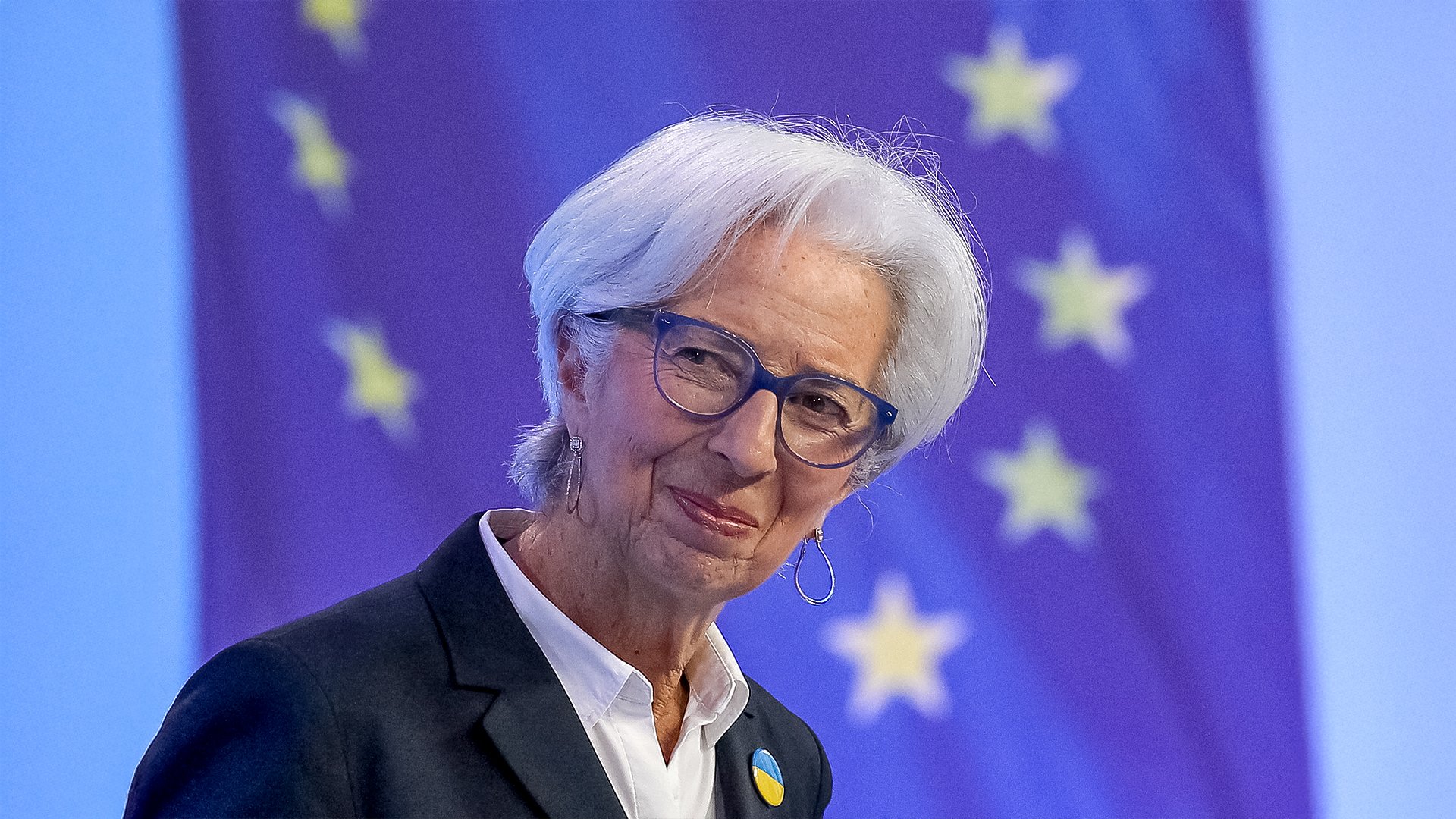
Speaking in Vienna, European Central Bank (ECB) President Christine Lagarde delivered a powerful address on the critical relationship between fiscal policy and growth in Europe, cautioning that while the euro area has successfully avoided the historical trap of fiscal dominance, it now faces a more insidious threat: fiscal stagnation.1
Lagarde argued that the biggest challenge facing European governments today is not simply reducing high public debt, but fundamentally shifting the composition of their spending towards investments that boost potential growth and safeguard Europe's social model for the long term. This focus on long-term structural health is paramount for the stability of the Euro (EUR) and the effective functioning of the ECB.
Avoiding the Ghost of Fiscal Dominance
Lagarde began by addressing the age-old concern that short-sighted governments, burdened by debt, may compel central banks to finance their spending, regardless of the inflationary consequences—a situation known as fiscal dominance.
The Recent Experience
Reviewing the policy response to recent crises, Lagarde firmly asserted that the narrative of fiscal dominance does not hold true for the euro area:2
Pandemic Cooperation: During the pandemic, the ECB's large-scale bond purchases and government fiscal support successfully stabilized the economy, leading to a rapid recovery.3 However, this left public debt significantly elevated, peaking at around 15 percentage points of GDP above pre-pandemic levels.
ECB Independence: When faced with the largest inflation shock in a generation, the ECB demonstrated its unconstrained independence by executing the sharpest tightening of monetary policy in its history.4 This record pace of rate increases successfully brought inflation close to the 2% target.
Balance Sheet Reduction: The ECB further reinforced its stance by implementing quantitative tightening (QT), reducing its securities portfolio by over €1.1 trillion from its peak.
Lagarde concluded that the ECB’s independence is "unchallenged," thanks to its strong legal anchoring in the EU Treaties.5
The Vicious Circle of "Fiscal Stagnation"
While the ECB is safe from classical fiscal dominance, Lagarde identified a different, pressing fiscal challenge: the tendency of governments to deprioritize productive, growth-enhancing spending in favor of current social spending and short-term political demands.
The new EU fiscal rules offer countries the flexibility to extend their adjustment period to seven years, provided they commit to public investment and structural reforms that boost productivity.6 Yet, Lagarde noted that only seven out of 20 euro area countries have chosen this longer, growth-oriented path.
This choice risks creating a scenario of "fiscal stagnation":
“where the measures taken to consolidate public finances weaken growth potential, leading to still more need for consolidation, in what can become a vicious circle.”
Why This Matters for the Central Bank
This low-growth trap makes the ECB's job harder in several ways:
Natural Rate of Interest: Persistently low productivity growth exerts downward pressure on the natural rate of interest ($r^*$), limiting how far the central bank can cut rates in a downturn.
Inflation Pressure: Conversely, weak potential growth can also keep inflation higher than it would otherwise be, creating a difficult trade-off for the ECB.
A scenario of stronger, productive growth, supported by smart fiscal choices, would ease these constraints, making the central bank’s task of ensuring price stability much easier, especially in ageing societies where productivity gains are needed to offset shrinking labor supply. Insights from Global Markets Eruditio emphasize that fiscal policy's impact on long-term growth is a primary driver of sustained currency value.

Mobilizing Europe's Collective Strength for Growth
Lagarde proposed three concrete strategies for Europe to break the cycle of fiscal stagnation and foster a virtuous circle where productive spending raises productivity growth, which in turn strengthens potential growth and sustains the European social model.
1. Utilize Fiscal Flexibility
Countries must make full use of the flexibility already embedded in the new fiscal rules, specifically by reallocating existing public spending towards high-return areas.7
The Power of Reallocation: One study cited suggests that shifting just 1% of GDP of public spending to Research & Development (R&D) and another 1% to education could boost long-run output by around 6%. This shift would place government debt on a more sustainable path through higher growth, not punitive taxes or cuts to productive sectors.
2. Deploy Collective Resources More Efficiently
Europe should pool resources in high-multiplier areas with cross-border benefits and clear returns to scale, rather than having each country act in isolation.
Historical Precedent: The European Organization for Nuclear Research (CERN), established in the 1950s by pooling national resources, led to major breakthroughs like the World Wide Web and advancements in AI and medical imaging.8
Modern Initiatives: More recently, the Readiness 2030 initiative by the European Commission mobilizes €150 billion for investments in pan-European defense capabilities (air, missile, and anti-drone systems).9
3. Leverage EU Budget Instruments for Private Capital
To meet the vast investment needs for the green, digital, and defense transitions (estimated at an additional €1.2 trillion per year through 2031), public investment must mobilize private capital.10
Crowding-In Effect: ECB research on the European Structural and Investment (ESI) funds shows a significant "crowding-in" effect: every euro of ESI funding has been matched by €1.10 of private investment.11
Productivity Gains: This funding generates long-lasting gains in productivity and increases the capital stock for recipient firms.12
These synergies between targeted public investment and private finance are crucial for Europe to meet its investment gap and boost potential growth.13 This ultimately reduces the risk of future pressures on the ECB.
Forex Implication: The Euro's Long-Term Health
For Forex Trading professionals and those engaged in Forex Trading for Beginners, this speech highlights that the Euro's (EUR) long-term strength is inextricably linked to Europe's ability to achieve robust potential growth.
While the immediate EUR/USD or EUR/GBP exchange rate is driven by short-term rate decisions, the capacity for high-return fiscal spending determines the currency's fundamental value over time. Fiscal stagnation, by keeping the natural rate of interest low and complicating the ECB's inflation fight, is structurally negative for the Euro. Conversely, successful implementation of the three growth strategies would be a massive bullish catalyst for the EUR, as it promises higher, sustainable economic returns.
Don't Trade on Headlines—Trade on Fundamentals!
The relationship between central banks and governments is the single most important driver of a currency's value. Lagarde’s speech provides a clear, advanced lesson in the fundamental forces shaping the Euro. To truly succeed in Forex, you must move beyond short-term interest rate speculation and understand the structural growth policies that impact long-term currency strength.
Join our FREE Forex Workshop today to master the analysis of central bank mandates, fiscal policy, and their ultimate effect on major currency pairs like EUR/USD and EUR/GBP.
Click here to reserve your spot and gain a deeper understanding of the Euro's future trajectory!
