

The Unseen Hand: How the SNB's Quarterly Ritual Shapes the Swiss Franc
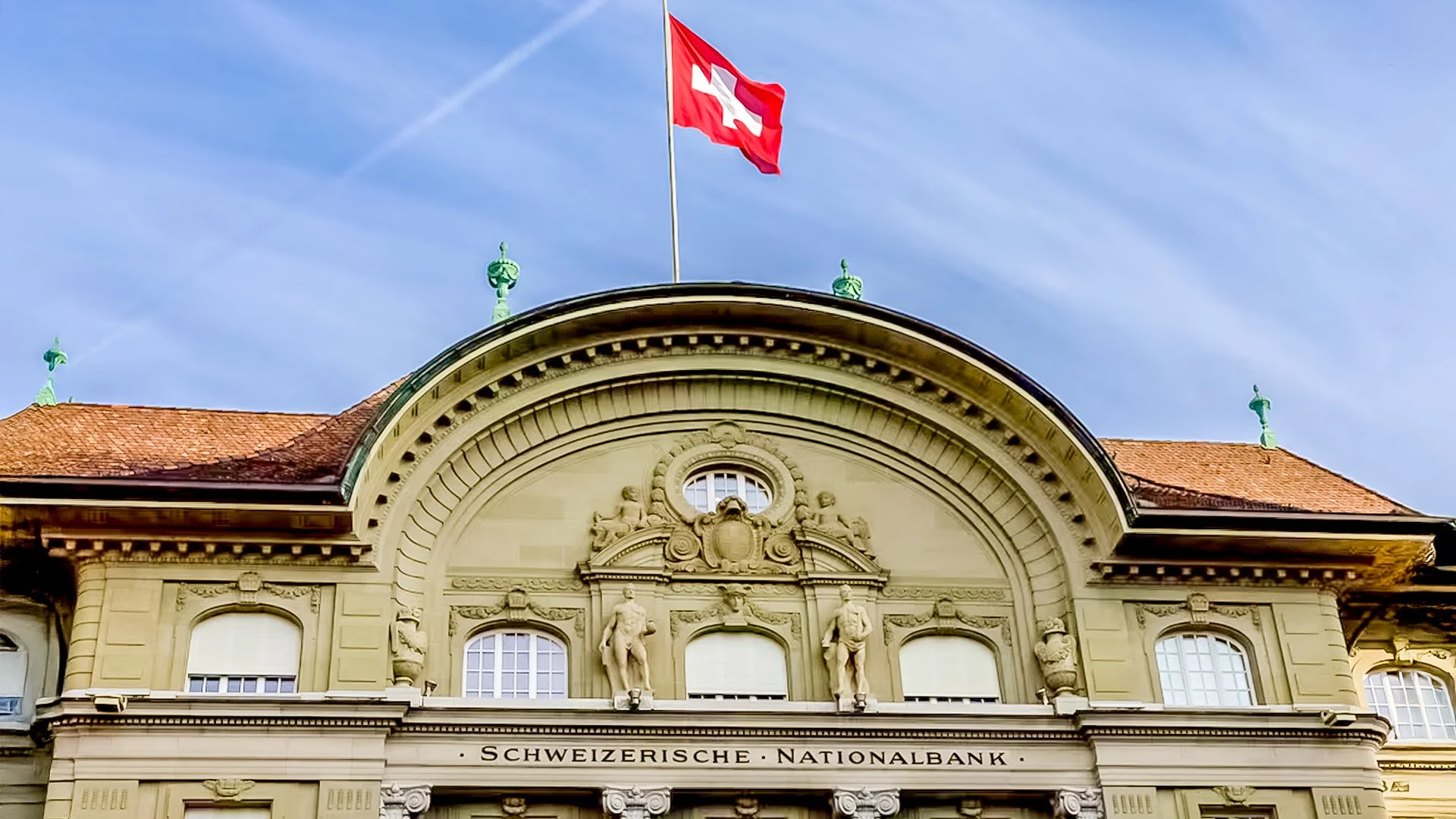
The Swiss National Bank (SNB) holds a unique position in global finance, presiding over the Swiss Franc (CHF)—a globally renowned safe-haven currency. Unlike the monthly decisions of many peers, the SNB's monetary policy is determined through a highly rigorous, structured process just four times a year. The insights provided by Martin Schlegel, Chairman of the Governing Board, illuminate this path, revealing how the central bank ensures price stability while subtly wielding the power of foreign exchange market interventions.
At the September 2025 assessment, the SNB made a pivotal choice, keeping its policy rate at 0% and reaffirming its willingness to be active in the Forex market. Understanding why and how this decision was reached is fundamental to trading the Swiss Franc in pairs like USD/CHF and EUR/CHF.
The Dual Mandate and the 0-2% Goldilocks Zone
The foundation of every SNB decision is its mandate: to ensure price stability, defined as an inflation rate of between 0% and 2% over the medium term. This narrow band—a "Goldilocks Zone" of neither inflation nor deflation—guides the complex, two-phase decision-making process.
The SNB constantly assesses monetary conditions, which are the combined effect of the domestic interest rate and the Swiss Franc exchange rate. Because Switzerland is a small, open economy, the exchange rate is a massive factor. A strong appreciation of the Swiss Franc can lead to harmful deflation, which the SNB is ready to counteract.
Policy Rate: Currently 0%. The primary tool for influencing domestic interest rates.
FX Interventions: A powerful secondary tool used to directly influence the CHF exchange rate, often against major currencies.
Phase I: The Three-Month Deep Dive (Preparation)
Immediately following one decision, the preparation for the next one begins. This period is not passive; it involves continuous analysis and monitoring, crucial for successful Forex Trading for Beginners to understand.
The Interrogation of the Economy
Around the middle of the quarter, an interim assessment takes place. Economists from the Economic Affairs division review recent economic developments to check if the previous forecasts are still valid. This is the first reality check.
The SNB doesn't just rely on statistics. It systematically gathers real-world feedback:
Quantitative Analysis: Analyzing data using statistical models, focusing on monetary indicators like interest rates, the Swiss Franc exchange rate, and money supply.
Qualitative Feedback: Crucially, the SNB conducts structured talks with approximately 250 Swiss companies every quarter. This anecdotal, ground-level information provides a vital check on the raw statistical data, ensuring the SNB's view is holistic. This type of nuanced data gathering is a key lesson in the GME Academy/Global Markets Eruditio approach to fundamental analysis.
Final Readiness
In the final weeks, the Governing Board engages in intensive discussions with economic, money market, and financial stability experts. Every angle is scrutinized: global growth forecasts, foreign inflation and policy, domestic real estate trends, and the functioning of the financial markets. This detailed cross-referencing concludes the preparation phase, ensuring all decision-makers have a comprehensive, risk-assessed view.


Phase II: The Two-Day Policy Verdict
The climax of the process occurs over two days, where the preparation is synthesized into a final, actionable policy decision.
Day 1: The Briefing Room
The first day is dedicated to presentations from all key divisions, providing a comprehensive picture of the environment:
Financial Markets & Monetary Conditions: Detailed reports on global risk sentiment and the current state of the Swiss Franc exchange rate.
Global & Domestic Economy: Presentations on global trends and the baseline scenario for Switzerland, including the latest inflation and growth forecasts, heavily informed by the company talks.
Financial Stability: Discussion of domestic risks, particularly the real estate market, which can be sensitive to interest rate decisions.
Day 2: The Decision and Risk Management
The second day is reserved exclusively for the Governing Board to finalize the monetary policy stance. The Board's decision is not mechanical; it involves a sophisticated risk management approach. The SNB pursues a policy that is appropriate for a number of probable scenarios, acknowledging the high level of uncertainty in global markets.
The Board determines whether the current policy rate and stance are appropriate. If a change is needed, the Board decides whether to tighten or ease, using the policy rate as the primary tool. However, the use of foreign exchange market interventions is always on the table, a unique feature of the SNB's toolkit, designed to prevent excessive CHF strength which would undermine price stability.
Transparency and The Conditional Forecast
The transparency of the SNB's decision is anchored by the conditional inflation forecast.
Published alongside the interest rate decision, this forecast shows the expected path of inflation over the next three years, assuming the SNB policy rate remains exactly where it is. If the forecast predicts inflation moving outside the 0%–2% target (e.g., above 2%), it serves as a strong signal to the market that a future rate hike is likely required to bring inflation back into the zone.
This structured communication—including the press release, news conference, and the new summary of the assessment discussion (starting September 2025)—gives Forex traders a clear roadmap for anticipating future moves of the Swiss Franc against pairs like USD/CHF and EUR/CHF.
Don't Let the SNB's Next Move Surprise You!
The Swiss Franc is one of the most stable and heavily traded currencies in the world, yet its movements are often dictated by these complex, quarterly decisions. Successful Forex Trading requires mastering the nuances of central bank policy, especially the unique risk management approach of the SNB.
Stop reacting to the news and start anticipating it. Join our FREE Forex Workshop today to learn how to dissect central bank mandates, interpret conditional forecasts, and use this high-level economic insight to trade pairs like USD/CHF with confidence.
Click here to secure your spot and unlock the secrets to trading the Swiss Franc!
