

Soft Landings or Soft Markets? Fed Governor Waller Signals More Cuts Ahead
While insisting there is "no rush," Federal Reserve Governor Christopher Waller warns that the labor market has become "very soft," suggesting a steady path toward lower interest rates in 2026.
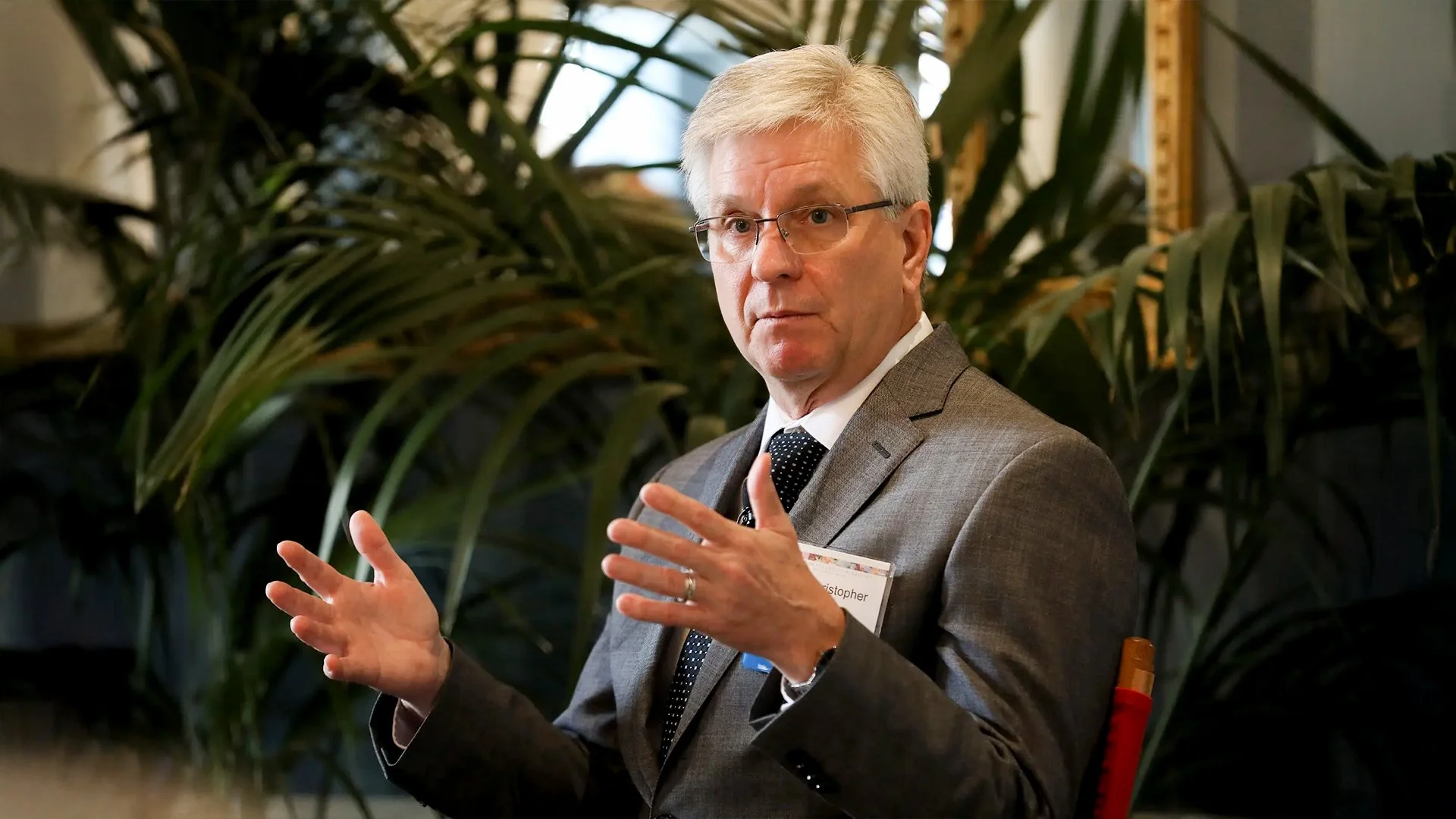
In a pivotal address at the Yale School of Management CEO Summit, Federal Reserve Governor Christopher Waller—a top contender to lead the central bank in 2026—painted a picture of an economy at a crossroads. While he dismissed fears of a total economic collapse, his assessment of the American worker's landscape was blunt: the jobs market is currently "very soft," and recent payroll growth simply "is not good."
His comments highlight a growing shift within the Fed: the battle against inflation is entering its final act, while the fight to protect the labor market is taking center stage.
The Jobs Market: Soft, Not Sinking
Waller’s primary concern is the cooling of the labor market. He noted that recent average job growth (estimated at 50,000 to 60,000 monthly) is likely to be revised even lower.
The Verdict: Waller described the current environment as "very soft," admitting that rate cuts have been necessary to keep the market from "falling off a cliff."
The Silver Lining: He remains optimistic about the future, suggesting that 2026 could turn out to be a better year for the economy as productivity gains from Artificial Intelligence (AI) potentially begin to take hold.
Interest Rates: The Path to "Neutral"
Perhaps the most significant part of Waller’s speech was his estimate of where interest rates are versus where they should be. He revealed that the Fed is currently 50 to 100 basis points over "neutral."
What is the Neutral Rate? The neutral rate (or R-star) is the "Goldilocks" interest rate that neither stimulates nor slows down the economy. By Waller's math, with the current rate range at 3.5% to 3.75%, the Fed still has room to cut significantly just to stop putting the brakes on growth.
Despite this, Waller urged a "moderate pace." He explicitly stated there is "no rush" to slash rates dramatically, advocating instead for a steady, predictable descent as inflation continues its downward trend.

Inflation: "I'm Not Particularly Worried"
While inflation remains slightly above the Fed's 2% target, Waller’s tone was remarkably calm. He cited several reasons for his confidence:
Anchored Expectations: Businesses and consumers don't expect prices to spiral.
No Re-acceleration: He dismissed the idea that inflation would suddenly spike again.
Tariff Neutrality: He noted it was "hard to say" if recent trade policies caused job weakness and does not expect tariffs to spark a new inflationary trend.
The Forex View: Trading Waller's "Moderate Pace"
For the Global Markets Eruditio community, Waller’s "bearish turn" on the economy provides a clear roadmap for the US Dollar (USD).
USD Softness: If Waller’s view becomes the consensus, the USD may face headwinds as the market prices in another 100 basis points of cuts in 2026.
EUR/USD and GBP/USD: Watch for these pairs to find support as the interest rate differential between the U.S. and Europe narrows.
Independence & Interaction: Waller notably mentioned that it is "not wrong" for the Fed and the Administration to interact, but stressed that Fed independence remains critical. Any sign of political pressure on the Fed Chair selection in January will trigger volatility in the USD/JPY.
Master the Macro Landscape
As we head into 2026, the Federal Reserve's "Dual Mandate" (Price Stability and Full Employment) is in a delicate balance. Understanding whether a Fed official is a "Hawk" (focused on inflation) or a "Dove" (focused on jobs) is the key to predicting market moves.
Don't get caught on the wrong side of the trend.
Join our FREE Forex Workshop today and learn how to interpret Fed speeches like a pro to protect your capital in 2026!
