

The Dovish Cut, The Divided Vote: Fed Lowers Rates to 3.5%-3.75% as Employment Risks Mount
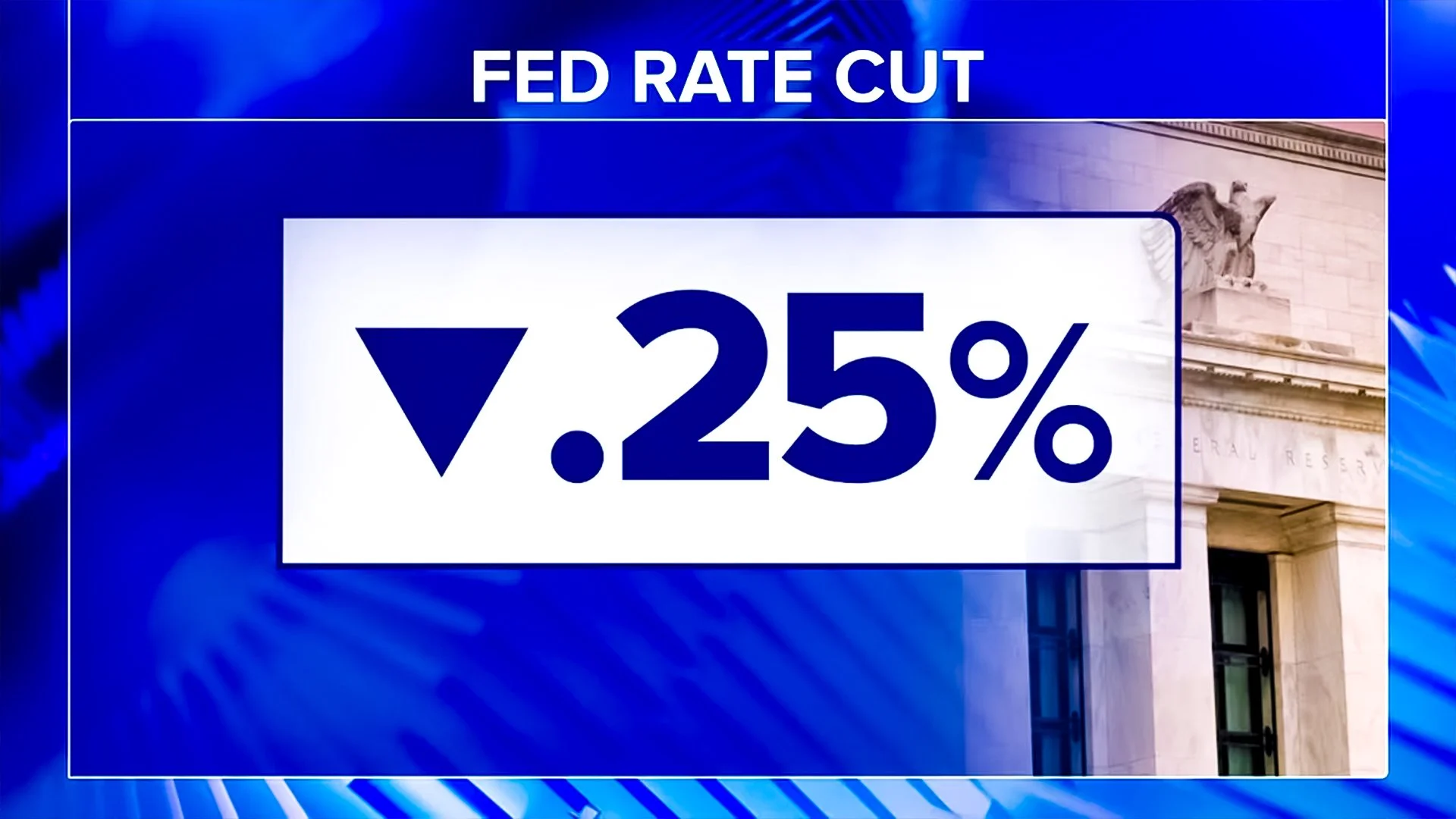
The Federal Open Market Committee (FOMC) concluded its December 2025 meeting by delivering a widely anticipated 1/4 percentage point (25 basis point) rate cut, moving the Federal Funds Rate target range to 3-1/2 to 3-3/4 percent. The decision was driven by a "shift in the balance of risks," recognizing that downside risks to employment have risen amid slowing job gains and an edging up of the unemployment rate, setting a pivotal tone for the US Dollar (USD) as the central bank prioritizes its maximum employment mandate.
The FOMC's final policy decision of 2025 confirms a growing concern within the Federal Reserve (Fed) regarding the weakening state of the U.S. labor market. While inflation remains "somewhat elevated" and above the 2% target, the Committee judged that the cooling in economic activity and the rising risk to employment warranted a third consecutive rate reduction this year. This "insurance cut" aims to support sustained economic expansion and mitigate the risk of a deeper slowdown.
The Dual Mandate Pivot: Employment Takes the Lead
The FOMC statement explicitly frames the decision around a shifting balance of risks, moving away from its prolonged focus on inflation control.
The Economic Diagnosis:
Activity: Economic activity is expanding at a "moderate pace," a slight softening from previous descriptions.
Labor Market: Job gains have slowed this year, and the unemployment rate has edged up through September. The Committee judged that downside risks to employment rose in recent months.
Inflation: Inflation has moved up since earlier in the year and remains "somewhat elevated," still above the target of 2%.
The decision to cut rates despite elevated inflation underscores the Fed's commitment to its dual mandate, signaling that the rising risk to maximum employment now outweighs the immediate threat of slightly above-target inflation.
Operational Changes: Maintaining Ample Reserves
Beyond the rate cut, the Fed also announced a key technical adjustment to its balance sheet policy:
The Committee will initiate purchases of shorter-term Treasury securities as needed to maintain an ample supply of reserves on an ongoing basis. This is a technical move intended to manage the Federal Funds Rate within the target range by ensuring enough liquidity in the banking system, and is not a return to traditional Quantitative Easing (QE).
The Divided House: A Rare Three-Way Split
The vote on the December rate cut was marked by an unusually strong and divided dissent, highlighting the complexity and uncertainty surrounding the economic outlook, a factor carefully watched by global investment strategists at GME Academy/Global Markets Eruditio.
The Deeper Cut (Hawk/Dove Split): Stephen I. Miran preferred a larger 1/2 percentage point cut, arguing for a more aggressive stimulus to counter labor market weakness.
The Holdouts (Hawks): Austan D. Goolsbee and Jeffrey R. Schmid preferred no change to the target range, likely citing the continued elevated level of inflation and the risk of premature easing.
This three-way split—where members voted for a larger cut, a smaller cut, and no cut—is rare for the FOMC and signals a deep internal debate that is likely to persist into 2026.

Forex Trading Fallout: Bearish Pressure on the USD
The rate cut, coupled with the explicit mention of rising employment risks, has immediate and clear implications for the Forex market, particularly for the US Dollar (USD).
Fundamentals Shift
Lower interest rates reduce the yield attractiveness of USD-denominated assets relative to other major economies, putting downward pressure on the currency.
Impact on USD: The cut itself is fundamentally bearish for the USD. The explicit acknowledgment of rising employment risk reinforces the market's expectation that the current easing cycle will continue, further weighing on the USD.
Currency Pairs: This easing provides a lift to cross-currency pairs. For example, the EUR/USD pair generally sees upward momentum, as the interest rate differential narrows (assuming the European Central Bank holds steady). Similarly, a pair like USD/CAD would see downward pressure as the USD softens.
The Forward-Looking Stance
The statement maintains flexibility: "The Committee will carefully assess incoming data, the evolving outlook, and the balance of risks." This language ensures the Fed is not on "autopilot" and retains the option to adjust policy based on upcoming labor market reports and inflation readings. For Forex Trading for Beginners, this means the market will be hyper-focused on all subsequent U.S. economic data—especially the monthly Non-Farm Payrolls and CPI—to gauge the timing and size of the next rate adjustment.
The December decision confirms the Fed's tilt toward protecting the job market. This strategic shift fundamentally alters the trade-off for the USD, marking the end of the high-rate era and setting the stage for a potentially softer currency in the first half of 2026.
Are You Capitalizing on the Fed's Shift to Employment Risk?
The Fed's rate cut due to rising downside risks to employment is a high-impact signal that fundamentally affects the USD's valuation.
Master the skill of decoding FOMC statements and translating policy shifts into profitable trades.
Join the GME Academy community today and sign up for our FREE Forex Workshop to learn how to analyze the Fed's forward guidance and its influence on USD currency pairs, securing a comprehensive understanding of the forces that move the market.
