

Two Trillion Dollar Question: Can Tariffs Really Replace the Income Tax?
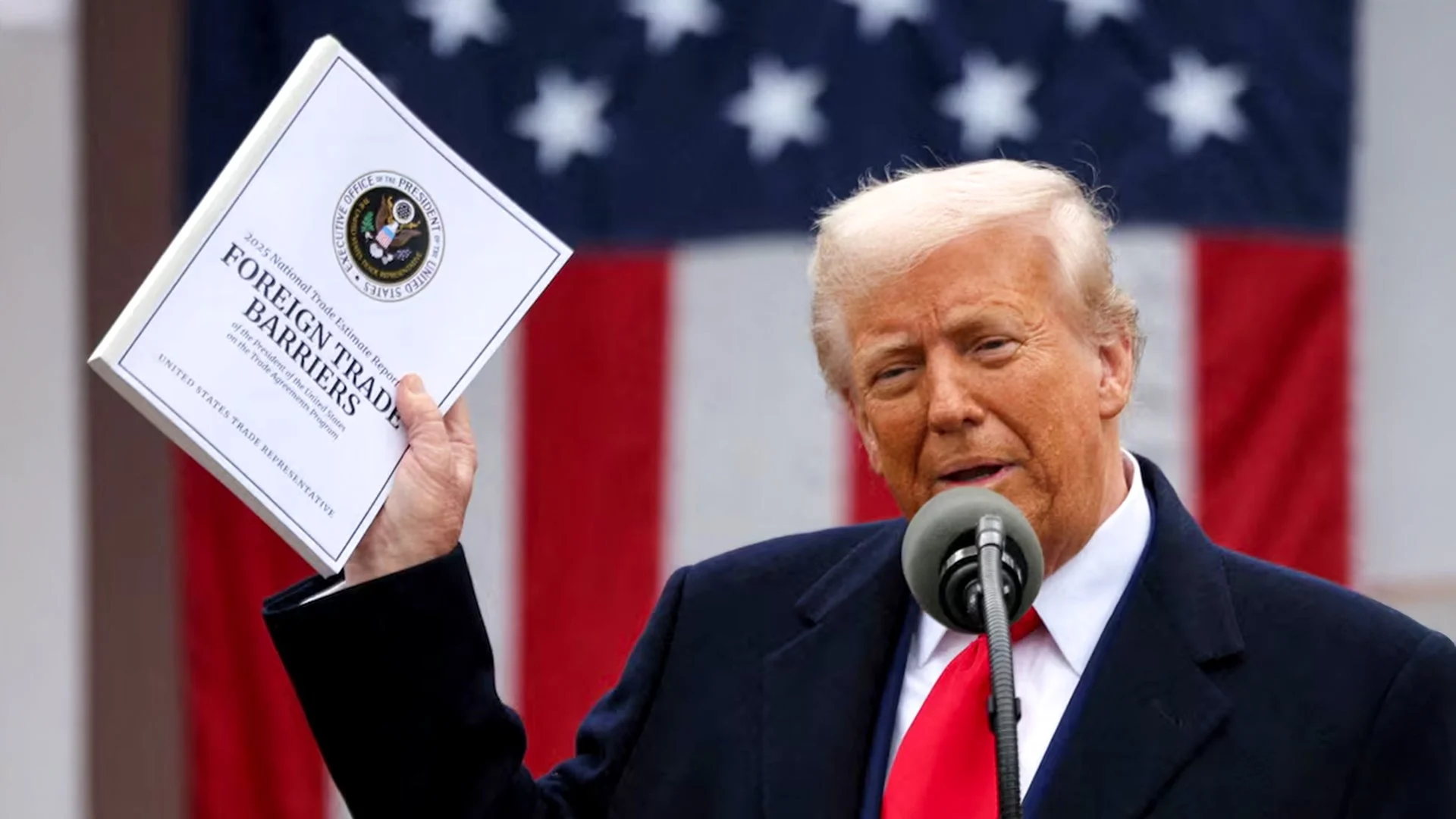
President Donald Trump recently linked his aggressive tariff strategy to the potential for a massive, unprecedented overhaul of the U.S. tax system. He suggested that revenue generated from new import duties would be so substantial that it could "almost completely eliminate" the federal income tax, with particular relief targeted toward middle- and lower-income households.
This concept, pairing a radical trade policy with a generational tax change, poses one of the most profound economic questions of the modern era and carries immense implications for U.S. financial stability and global trade relations.
The $2.2 Trillion Gap: An Impossible Trade-Off?
The U.S. federal income tax is currently the bedrock of government funding, generating approximately $2.2 trillion annually—roughly half of all federal revenue. Tariffs, or customs duties, historically represent a tiny fraction of this total.
While the administration’s recent imposition of wide-ranging import duties has pushed monthly tariff collections to record highs (around $31 billion per month), the math behind replacing income tax with tariffs highlights a near-insurmountable fiscal gap:
The Required Tariff Rate: To replace the individual income tax using the current import volume (around $3.8 trillion annually), the U.S. would need to impose an average tariff rate of approximately 58% on virtually all imported goods. This is a rate far beyond any seen in developed nations today.
The Shrinking Base Effect: Economic models widely predict that imposing tariffs that high would not only be passed on to American consumers but would also drastically reduce import volumes. When an activity (like importing) is taxed heavily, people buy less of it. As imports fall, the tariff revenue base shrinks, making it impossible to generate the necessary revenue to replace the lost income tax funds, thereby inflating the federal deficit.
Economic Drag: Economists caution that relying on tariffs as the primary source of revenue is highly inefficient and harmful to economic growth. Tariffs act as a regressive consumption tax, disproportionately raising costs for the poor and middle class who spend a higher percentage of their income on consumer goods. Furthermore, U.S. manufacturers that rely on imported parts would see their production costs skyrocket, damaging competitiveness.
This scenario creates extreme fiscal uncertainty. Global Markets Eruditio (GME Academy) emphasizes that such radical shifts in revenue structure are fundamental risks that Forex traders must track, as they can directly influence investor confidence in U.S. fiscal management.


Trade Wars and Currency Volatility
The implementation of tariffs high enough to even partially fund the proposed tax cut would inevitably trigger severe global trade disputes.
Retaliation: Trading partners, including the EU, Canada, and major Asian economies, would almost certainly retaliate with tariffs on U.S. exports (like soybeans, aircraft, and advanced technology). This would cripple U.S. export-oriented industries and further slow global trade.
The USD Dynamic: For Forex trading, high, generalized tariffs typically lead to a complex reaction for the USD. While initial capital flight seeking safety might temporarily strengthen the USD, the long-term outlook is bearish. Trade wars and economic contraction reduce global trade volume and the use of the USD in international commerce, damaging its status as the global reserve currency. The resulting instability would create massive volatility across currency pairs like the CAD/USD, which is heavily influenced by U.S. trade policy.
Geopolitics on Land: Escalation in Venezuela
In a separate but related foreign policy development, President Trump signaled an imminent expansion of U.S. efforts to halt drug trafficking from Venezuela, moving the operation from successful maritime interdiction to land-based operations.
Having previously noted a high success rate (about 85%) in stopping illicit flow by sea, the President announced that the administration will soon begin targeting land routes. This shift signals a major escalation in the administration’s pressure campaign against the regime of Nicolás Maduro, whom the U.S. has labeled as part of the "Cartel de los Soles" drug trafficking network.
This development raises geopolitical tensions in the region. Military actions aimed at countering drug trafficking often have unintended consequences, and the market will be keenly watching for any instability that could impact oil prices or regional assets. This kind of event adds a high-risk premium to global geopolitical events, a topic frequently covered in Forex Trading for Beginners courses as a necessary layer of analysis.
The Educational Mandate: Tariffs as a Tax
Whether or not the income tax replacement proposal is fiscally viable, the core principle remains important for economic literacy: tariffs are taxes. They are paid by the importing companies and almost always passed on to American consumers and businesses in the form of higher prices.
Understanding how trade policy directly functions as fiscal policy is a crucial skill. The GME Academy prepares traders to look beyond political rhetoric and calculate the genuine economic impact of such proposals—a necessity for successful Forex Trading.
Are You Calculating the Real Cost of Trade Policy?
A proposal to replace income tax with tariffs is not just domestic news; it’s a global economic shockwave that demands adjustment in your Forex trading strategy. The stability of the USD hinges on sound fiscal management.
Learn how to accurately interpret these profound shifts in U.S. economic policy.
Join the GME Academy community today and sign up for our FREE Forex Workshop to master the fundamental analysis that predicts currency movements during periods of extreme trade uncertainty.
