

The Two-Speed Economy: Why Canada’s 2.2% CPI Hides a Services Slowdown and a Grocery Shock
Canada’s annual inflation rate held steady at 2.2% in November, matching the increase in October. While the headline number is comfortably within the Bank of Canada's (BoC's) 1% to 3% target range, the underlying details reveal a sharply bifurcated economy. Prices for services cooled significantly, offering a dovish signal, yet this was violently offset by a surge in goods prices, driven by the steepest rise in grocery inflation since late 2023.
This mixed report complicates the Bank of Canada's next moves, reinforcing its current pause on the Official Overnight Rate (2.25%) but highlighting the persistent, supply-driven price pressures that monetary policy alone struggles to contain. For Forex Trading, this data lessens the immediate pressure on the Canadian Dollar (CAD) but increases uncertainty about when the next monetary policy move will occur.
The Dovish Anchor: Slowdown in the Services Sector
The most promising development for the Bank of Canada was the noticeable cooling in the services sector, a key area the BoC has previously flagged as a source of underlying inflationary persistence.
Services Deceleration: Annual services inflation dropped to 2.8% in November, down from 3.2% in October. This slowdown was driven by a handful of volatile, non-core components.
Travel and Rent Relief: Prices for travel tours fell sharply (- 8.2% year-over-year) and traveler accommodation declined further (- 6.9%). The decline in accommodation was particularly notable in Ontario due to a high base-year effect from a surge in November 2024 related to major concerts. More structurally significant, rent prices rose at a slower pace (+4.7% vs. +5.2% in October), suggesting easing in shelter costs across many regions.
Core Measures Cool: Crucially, the Bank of Canada's preferred core measures of inflation—CPI-trim and CPI-median—also showed moderation, a welcome sign that underlying price pressures are softening.
This cooling in services gives the BoC breathing room and supports the market expectation that the Bank is done cutting rates for the time being.
The Hawkish Offset: Grocery Price Shock
The services slowdown was nearly negated by a significant re-acceleration in goods inflation, primarily driven by a surge in the cost of food.
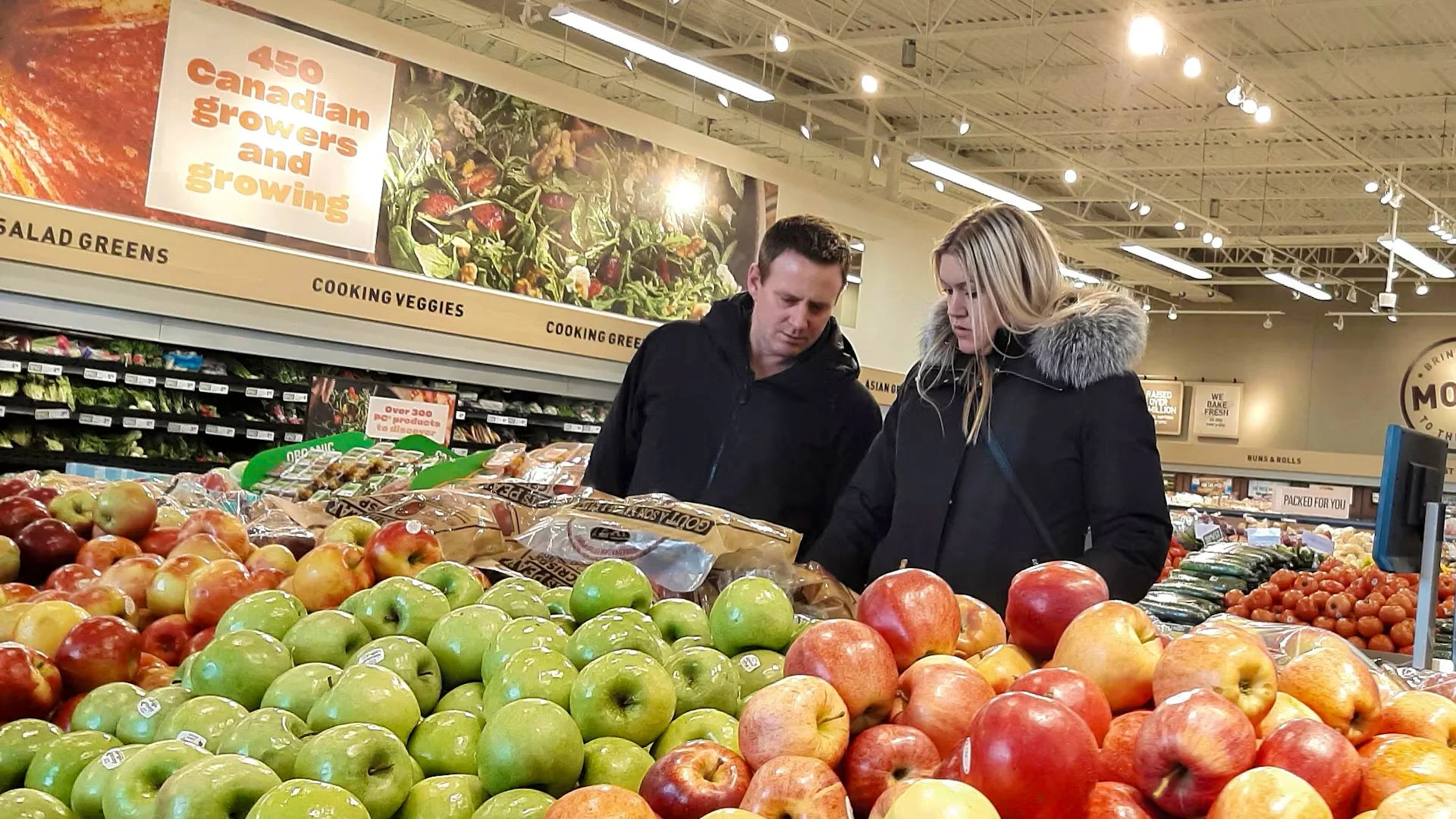
Grocery Price Surge: Prices for food purchased from stores jumped by 4.7% year-over-year in November, up sharply from 3.4% in October. This marks the highest rate of grocery inflation since December 2023.
Key Drivers: The acceleration was broad, led by fresh fruit (+4.4%) and other food preparations. Specific items showed extreme inflation: fresh or frozen beef (+17.7%) and coffee (+27.8%). These increases are largely attributed to supply-side issues that monetary policy cannot easily fix, such as lower North American cattle inventories and adverse weather/American tariffs impacting coffee-growing regions.
Monthly Spike: On a month-over-month basis, grocery prices surged 1.9%, the largest monthly increase since January 2023, signaling immediate pressure on household budgets.
Other Components
The overall goods inflation was also impacted by gasoline prices, which fell at a slower annual rate (- 7.8% vs. - 9.4% in October) due to a 1.8% monthly increase caused by North American refinery disruptions. Conversely, cellular services provided a strong upward offset in the services category (+12.7% year-over-year), as fewer industry-wide promotions were offered this November compared to a year prior.


Forex Trading: The BoC's Dilemma and the CAD/USD Pair
For Forex Trading, the November CPI report is a study in conflicting signals for the Canadian Dollar (CAD).
Bank of Canada Stays Put: The fact that headline inflation remains at the 2.2% target midpoint—with core inflation measures showing a slight deceleration—validates the BoC's recent decision to hold the policy rate at 2.25%. This confirms that no immediate rate hikes are necessary, reducing "hawkish" upside for the CAD.
Long-Term Dovish Bias: The slowing of services inflation, coupled with weak GDP figures in the preceding quarter, reinforces the view among analysts that the BoC is done tightening. Any future move is more likely to be a cut, which typically pressures the CAD against the US Dollar (USD), keeping USD/CAD in focus.
The Goods Problem: The sudden spike in essential grocery inflation is driven by non-monetary, supply-side factors. While the BoC usually "looks through" such volatility, persistent food cost pressure affects inflation expectations and requires policymakers to maintain a cautious stance. This limits the near-term possibility of another rate cut, thereby limiting the CAD's downside risk.
Ultimately, the data suggests the Bank of Canada will maintain its hold on the overnight rate well into the start of the next year, prioritizing stability as it waits for the services slowdown to fully offset the supply shocks in goods. This provides a period of relative calm for CAD currency pairs as the BoC adopts a patient, data-dependent approach—a vital concept for traders utilizing Global Markets Eruditio principles.
How Will Canada’s Grocery Shock Impact Your CAD/USD Strategy?
The simultaneous slowing of services and acceleration of essential goods prices creates a complex outlook for Canadian monetary policy. Understanding this nuance is crucial for accurately forecasting the Canadian Dollar.
Master the skill of decomposing complex inflation reports into actionable currency trade ideas.
Join the GME Academy community today and sign up for our FREE Forex Workshop to learn how to analyze the conflicting signals from the Canadian CPI and position yourself accurately on the USD/CAD and CAD/JPY currency pairs, securing a comprehensive understanding of the forces that move the market.
