

Why the Fed is Keeping Rates Too High, According to Governor Miran
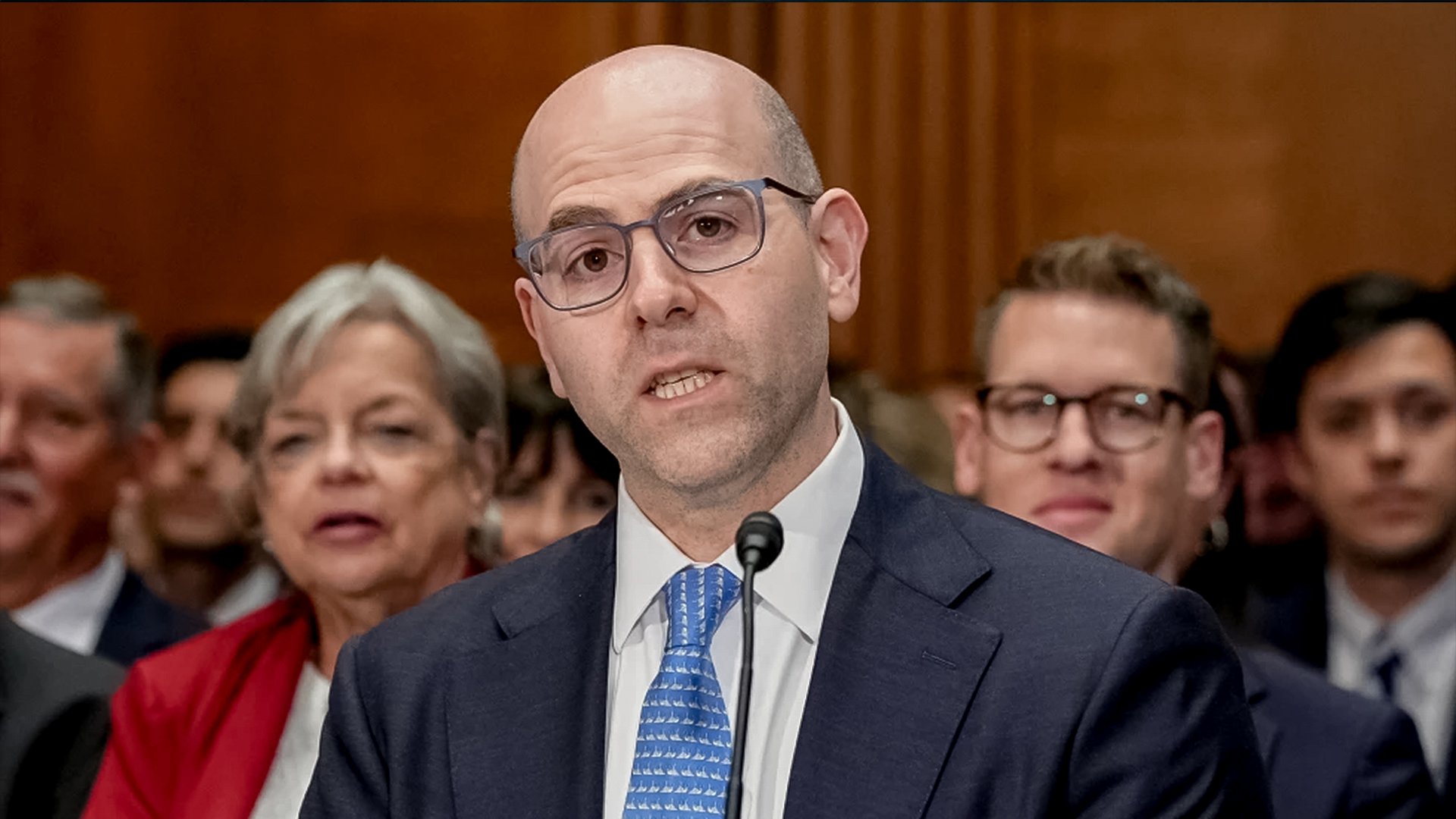
Federal Reserve Governor Stephen I. Miran delivered a profoundly dovish assessment on inflation at Columbia University, arguing that the central bank’s current restrictive policy is based on "after-echoes" of past imbalances and statistical "phantom inflation." The Governor asserts that, when adjusted for these distortions, the true underlying rate of inflation is already within "noise" of the Federal Reserve's 2% target, making the continued tight stance a direct risk to the US job market.
This viewpoint, which champions a quicker pace of policy easing, presents a clear counter-narrative to other members of the Federal Open Market Committee (FOMC). For those engaged in Forex Trading, this speech signals a high probability of structural US Dollar (USD) weakness as the Federal Reserve eventually bows to the mounting evidence of cooling market pressures.
The Shelter Illusion: An After-Echo of 2022
Governor Miran dedicated a substantial portion of his analysis to shelter inflation, the largest single component of the target Personal Consumption Expenditures (PCE) price index. He argues that current high shelter readings are entirely retrospective and misleading.
PCE’s Lag and Overshoot
The Lag: The PCE shelter index measures the housing costs for all households and adjusts slowly, lagging behind real-time shifts in the rental market. When the pandemic housing demand peaked 2-4 years ago, market rents for new tenants surged. The official PCE measure is only now reflecting that surge.
The Overshoot: Crucially, Miran noted that the PCE index has not just caught up, but has actually "overshot new rents" which have shown extremely low increases for two years.
"The current elevated readings for shelter inflation are an after-echo of previous, rather than current, supply–demand imbalances in the economy. For the past two years, we've seen extremely low increases in new-tenant rents."
Miran is convinced that this catch-up phase is complete, leading him to expect a faster decline in measured PCE shelter inflation ahead.
The Phantom Inflation: Statistical Quirks
The Governor's second major point of contention lies with what he calls "imputed" or "phantom inflation"—statistical measurements that distort the overall index without reflecting genuine consumer prices or current supply-demand imbalances.
Portfolio Management Fees: The most striking example is the calculation of portfolio management services costs. These fees are based on the overall value of assets under management (which rises when the stock market rises). If the stock market boosts assets, the Bureau of Economic Analysis records the corresponding revenue increase as an increase in prices, not an increase in the quantity of services.
Ignoring Reality: This quirk contributed a significant portion of core PCE inflation in the last year, even though industry data shows a long-term trend of fee compression (deflation). Miran criticizes the Fed for keeping rates elevated because of this statistical artifact: "Yet here we are, keeping interest rates too high because of the phantom inflation of portfolio advisory fees."
By removing these nonmarket-based components, Miran finds that market-based core inflation is already running at a much lower rate—one that is fully consistent with the 2% target once the shelter anomaly normalizes. This high-level technical analysis is essential for achieving true Global Markets Eruditio.


Goods, Services, and the Tariff Smoke Screen
Miran dismisses two other common inflationary concerns:
Tariffs and Goods Inflation: He argues that the recent pickup in core goods inflation is unlikely to be driven by US tariff policy. Using evidence on incidence elasticity (the burden falls mostly on exporters) and comparisons with import-intensive goods and inflation in other countries (Canada, U.K., E.U.), he concludes that the effect of tariffs is likely transitory noise.
Services Inflation: He notes that core nonhousing services inflation has moved sideways, but since wages are its primary driver, the continued loosening of the labor market (rising unemployment trend) suggests that downward pressure on nominal wage growth will eventually lead this component lower.
Policy Mandate: Focus on 2027, Not 2022
The Governor's policy takeaway is a direct call for action. Given the substantial monetary policy lags (several quarters), the FOMC should not be making policy for the supply-demand imbalances of 2022, but rather for the economy of 2027.
He warns that the risk of a severe mistake—keeping policy unnecessarily restrictive due to statistical artifacts—is too high.
"Experience suggests that labor market deterioration can occur quickly and nonlinearly and be difficult to reverse... A quicker pace of easing policy—as I have advocated—would appropriately move us closer to a neutral stance."
Forex Trading: The USD’s Dovish Future
For Forex Trading for Beginners and expert traders alike, Governor Miran’s speech represents a crucial, highly dovish signal. If this influential view gains traction among the broader FOMC, it implies a steeper path of interest rate cuts than the market currently anticipates.
Rate Cut Bets: The call for a "quicker pace of easing policy" means the market will likely increase its bets on future rate cuts, which reduces the attractiveness of US Dollar-denominated assets.
Currency Pairs: This outlook places fundamental downward pressure on the USD. Traders should monitor pairs like EUR/USD for potential strength (as rate differentials narrow) and USD/JPY for continued weakness as the Japanese Yen benefits from lower US rates.
Are You Trading Based on Real Inflation or Statistical Phantoms?
The Federal Reserve is locked in a debate over its own data. Governor Miran’s analysis provides a clear road map for a dovish policy pivot that will fundamentally shift the landscape for the US Dollar.
Master the skill of translating high-level Monetary Policy speeches into actionable Forex positions.
Join the GME Academy community today and sign up for our FREE Forex Workshop to learn how to analyze the conflicting signals from the FOMC and position yourself accurately on key currency pairs, securing a comprehensive understanding of the forces that move the market.
