

Safeguarding the People’s Money: DBM Hardens Defenses Against Graft
In a decisive response to heightened public scrutiny over infrastructure spending, the Department of Budget and Management (DBM) announced on February 7, 2026, a suite of intensified anti-corruption measures designed to "plug the leaks" in the national treasury.
Speaking at the 4th Ruperto P. Alonzo Memorial Lecture Series at UP Diliman, Acting Budget Secretary Rolando Toledo emphasized that the government is moving beyond traditional audits and toward a system where corruption "finds no easy entry point." At the GME Academy, we view these reforms as essential "structural stabilizers" that protect the Philippine Peso (PHP) by ensuring that fiscal expansion actually leads to productive growth rather than vanishing into "ghost" projects.
1. Digital Fortresses: BTMS and Blockchain
The DBM’s primary weapon in this fight is the full-scale rollout of the Budget and Treasury Management System (BTMS). This digital ecosystem creates a real-time, "paperless" audit trail for every peso from obligation to disbursement.
Interoperability: By connecting the DBM, the Bureau of the Treasury, and the Commission on Audit (COA), the system prevents the "mangling" of budgets between approval and execution.
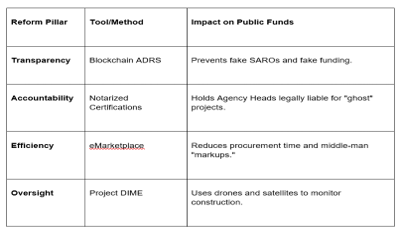
Blockchain Verification: In a first for Philippine governance, the DBM launched the Blockchain Application for the Action Document Releasing System (ADRS). This allows the public to independently verify the authenticity of Special Allotment Release Orders (SAROs).
Ending "Ghost" Transactions: Starting with the 2027 budget cycle, agency heads will be required to certify accounts payable using notarized digital signatures, ensuring that every project claimed is physically verified.
2. The New Government Procurement Act (NGPA)
Secretary Toledo highlighted the New Government Procurement Act as the "biggest anti-corruption measure in recent history." The law fundamentally changes how the government buys supplies and services:
eMarketplace: A "Shopee-style" platform where agencies procure common-use supplies from pre-accredited, reputable suppliers, eliminating the need for complex bidding processes that are prone to collusion.
Beneficial Ownership Disclosure: Companies bidding for government contracts must now disclose their true owners. This prevents the use of "shell companies" by officials to award contracts to themselves or their relatives.
Open Contracting: All procurement data, from bid results to contract fulfillment, is now published online via the PhilGEPS portal for public scrutiny.
3. Stricter Vetting for the 2027 Budget
Following the Independent Commission for Infrastructure (ICI) report on flood control corruption, the DBM has issued a "Strict Budget Call" for 2027. Agencies are now required to:
Secure RDC Approval: Projects must be approved by Regional Development Councils to ensure they align with actual local needs.
Prove Performance: Funding will be denied to agencies that failed to implement previous projects on time (addressing the "underspending" issue).
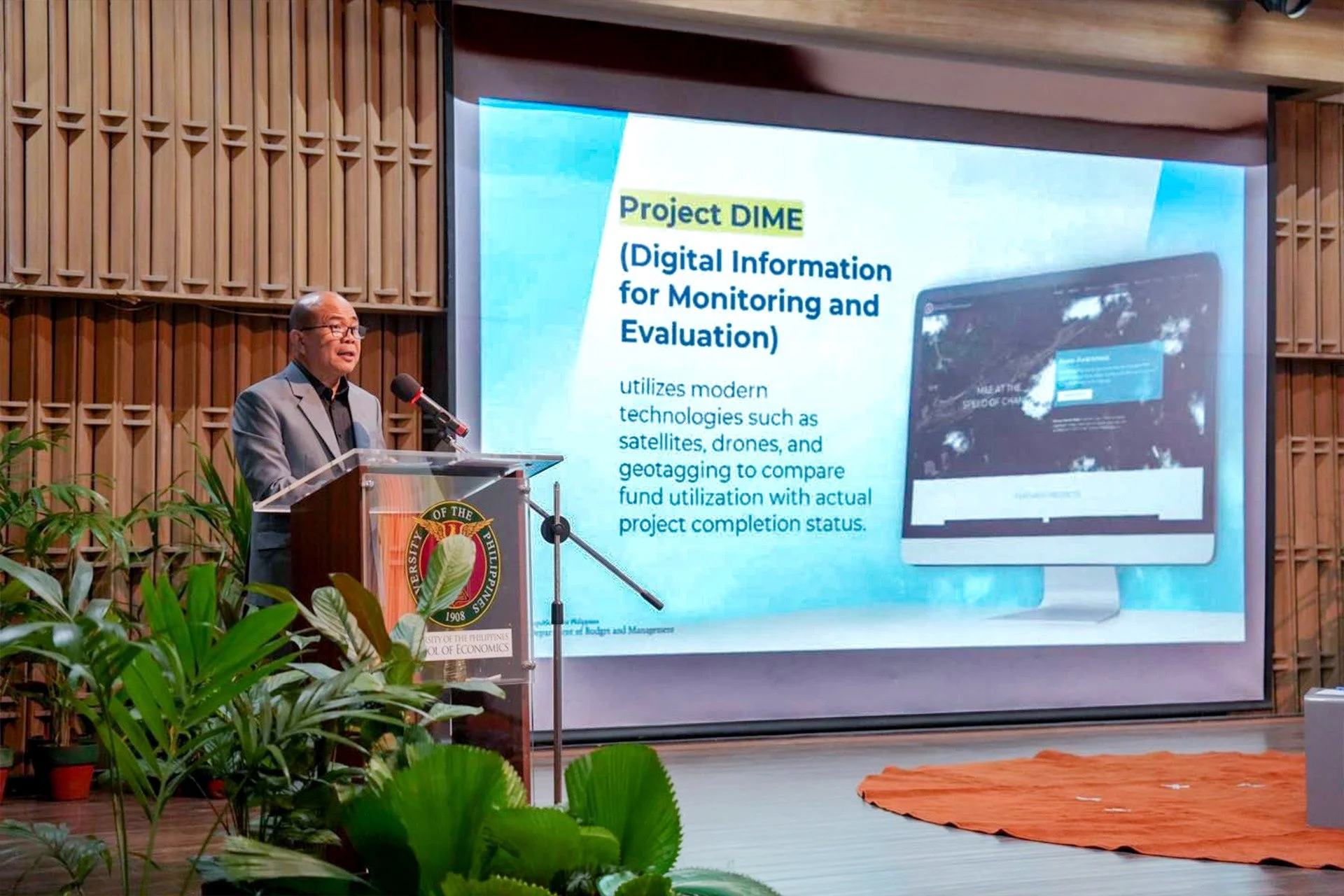
Data-Backed Proposals: Every new project must be supported by satellite imagery (Project DIME) and clear implementation milestones.


The GME Academy Analysis: "Fiscal Integrity and the Peso"
At Global Markets Eruditio, we teach that a country's currency is a reflection of its institutional strength. Corruption is a hidden "inflation tax" that devalues the PHP.
Why traders should be bullish on these reforms:
Credit Rating Protection: Agencies like Fitch and Moody’s reward countries that improve "Governance Indicators." A higher credit rating keeps borrowing costs low for the Philippines.
Investor Confidence: As the DBM eliminates "ghost projects," foreign direct investment (FDI) is more likely to flow into legitimate infrastructure, boosting long-term GDP.
Budget Realignment: By cutting out corruption, the DBM can reallocate billions toward "people-centered" sectors like Health (ZBB) and Agriculture (Rice TWG), creating a more balanced and resilient economy.
Join our FREE Forex Workshop at Global Markets Eruditio!
Are you following the money? Learn how to read the National Expenditure Program (NEP) and use government transparency data to identify the next big move in the Philippine markets.
