

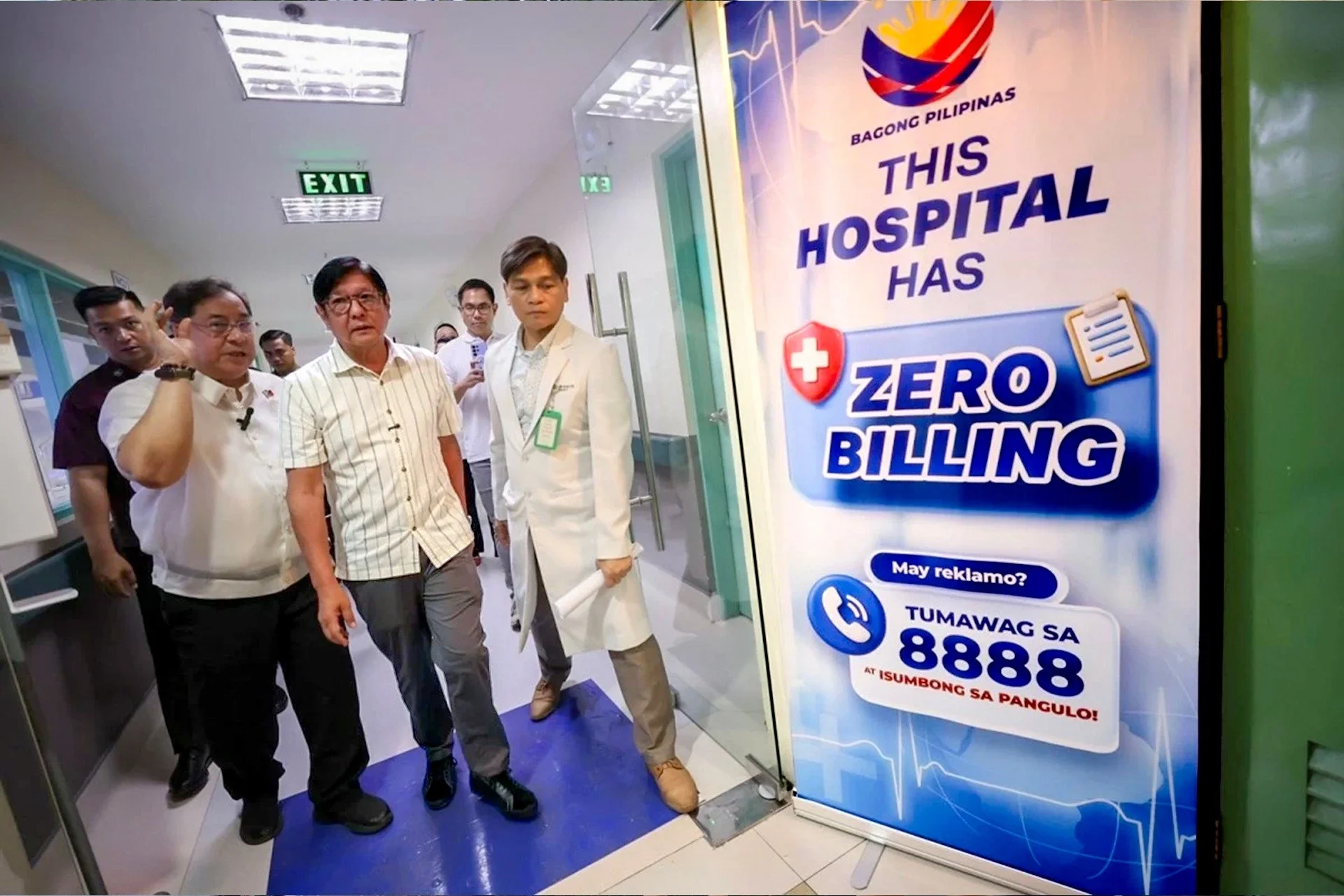
DOH Expands "Zero Balance Billing" to Reward Middle-Class PhilHealth Contributors
In a significant policy shift aimed at making healthcare more equitable, the Department of Health (DOH) announced on February 9, 2026, that it will expand its Zero Balance Billing (ZBB) coverage. This expansion specifically targets direct contributors—the working and middle-class Filipinos whose premiums are regularly deducted from their salaries.
Under the new directive from Health Secretary Teodoro Herbosa, these members will soon be eligible for free accommodations in pay wards or shared rooms across all 87 DOH-run hospitals nationwide, moving beyond the traditional basic ward coverage.
1. What is the New "Zero Balance Billing" Policy?
Historically, ZBB (also known as "No Balance Billing") was reserved for indigent and sponsored members admitted to basic government wards. The new Department Memorandum Circular (DMC) changes the game for the working class:
Upgraded Accommodations: Direct contributors can now access "pay wards" or shared rooms without out-of-pocket costs.
Better Amenities: These special areas are designed to offer improved amenities, such as air conditioning and more private spaces (e.g., maximum of two patients per room), compared to common wards.
Full Coverage: The policy ensures that PhilHealth's packaged rates, combined with DOH support, cover all medical services, room charges, medicines, and laboratory tests.
2. Responding to the Middle-Class "Clamor".
Secretary Herbosa noted that the policy is a direct response to a directive from President Ferdinand R. Marcos Jr., who sought to address the concerns of middle-income earners who felt their consistent contributions did not translate into tangible hospital perks.
"They have been asking if they can also be included beyond the basic accommodation... Our President heard your request and instructed me to think of a program," Herbosa stated during the flag-raising ceremony in Manila.
By allocating "special areas" for the working class, the DOH aims to provide a "commensurate benefit" to those who fund the national health insurance system.
3. Strategic Impact on the Philippine Economy
From a macro-perspective, this policy serves as a form of non-monetary wage increase for the Filipino workforce. By reducing the catastrophic cost of healthcare for the middle class, the government is indirectly boosting disposable income.
Key Economic Takeaways:
Reduced Out-of-Pocket (OOP) Spending: Middle-class families can now reallocate funds previously saved for medical emergencies toward consumption or investment.
Incentivizing Direct Contributions: The move reinforces the value of being a "direct contributor," potentially improving PhilHealth’s collection efficiency from self-employed individuals and freelancers.
Impact on the Peso (PHP): While primarily a domestic policy, improved social safety nets contribute to long-term economic stability and consumer confidence, which are key pillars for a resilient Philippine Peso.
4. Implementation and Next Steps
The DOH is currently finalizing the guidelines, with implementation expected to roll out immediately following the issuance of the formal circular this February.
Hospital Readiness: DOH-run facilities are now tasked with reconfiguring their floor plans to designate these "special ZBB areas."
Expansion to LGUs: While currently limited to DOH-run hospitals, there is an ongoing push to expand this model to Level 3 LGUs (Local Government Units) hospitals by the second half of 2026.


The GME Academy Analysis: "Health as an Economic Shield"
At Global Markets Eruditio, we believe that "social health is economic wealth." For Forex Trading for Beginners, it is important to understand that a healthy, financially secure middle class is the backbone of a strong domestic economy. When a government successfully implements "Zero Balance" initiatives, it reduces the "inflationary pressure" on households, allowing the BSP to maintain a more balanced interest rate environment.
Traders should watch:
Consumer Sentiment Indices: Look for a rise in consumer confidence in Q2 2026 as these health benefits take effect.
PhilHealth Funding: Monitor the 2026 General Appropriations Act (GAA) to ensure the DOH receives the necessary subsidies to sustain these "pay ward" upgrades.
Join our FREE Forex Workshop at Global Markets Eruditio! Learn how to track "Social Policy" as a leading indicator for currency strength. We’ll show you how to connect the dots between government healthcare spending and the long-term value of the Philippine Peso.
