

The AI Anchor: DOST to Launch National AI Center for Research and Innovation
The Philippines is set to institutionalize its "human-centered" artificial intelligence strategy with the launch of the National Artificial Intelligence Center for Research and Innovation (NAICRI) on February 26, 2026. Announced by the Department of Science and Technology (DOST), this center is designed to move the country beyond pilot projects and into a sustainable, data-driven future.
According to DOST Secretary Renato Solidum Jr., NAICRI will act as the "central hub" for governance, advanced computing, and research. The goal is clear: to ensure that AI serves as a national infrastructure that outlasts individual funding cycles and political transitions.

1. The Three Pillars of NAICRI
The hub will not just be a research facility but an operational center that provides tangible tools for the public and private sectors.
Research Coordination: Setting national AI standards and priorities across the government, academe, and industry.
Platform and Services: Operating as a "service hub" where agencies can adopt reusable AI templates for sectors like health, agriculture, and traffic management.
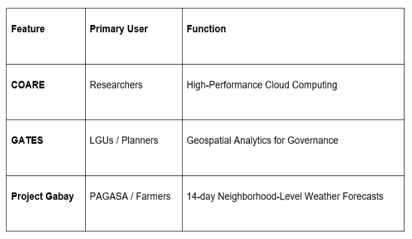
National Assets: Ensuring that successful AI systems—like the AI-Powered Weather Forecasting (Project Gabay)—become enduring national utilities accessible even outside Metro Manila.
2. The "Big Three" Innovation Showcase
During the launch, the DOST will showcase three flagship platforms that demonstrate the practical power of AI for Filipinos.
NAIRA (Nexus for AI Research and Applications): A gateway that democratizes access to high-performance computing (like the COARE supercomputer) for researchers and MSMEs.
DIMER (Democratized Intelligent Model Exchange Repository): A "model store" where agencies can share and reuse pre-built AI models for disaster detection and urban planning.
iTANONG: A natural language interface that allows users to query complex organizational databases using Filipino, making data-driven insights accessible to non-technical staff.
3. Strategic Impact: Inclusive and "Human-Centered"
Secretary Solidum has been vocal that AI in the Philippines should support, not replace, Pinoy talent. The NAICRI launch is a fulfillment of the National AI Strategy Roadmap (NAIS-PH).
For MSMEs: The center provides small businesses with advanced analytics and predictive tools (e.g., inventory optimization) that were previously only available to large corporations.
For Governance: By breaking down "data silos" between agencies, NAICRI aims to create science-based governance, ensuring that policy decisions are backed by evidence rather than speculation.


GME Academy Analysis: "The Tech Multiplier"
At Global Markets Eruditio, we view the establishment of NAICRI as a significant "Tech Multiplier" for the Philippine economy.
Trader's Takeaway for February 2026:
BPO Transformation: As the Philippines moves toward higher-value work, companies specializing in AI-integrated services will be the winners of the 2026–2030 cycle.
Public-Private Partnerships: The DOST’s openness to "international collaborators" suggests a surge in tech-transfer agreements with U.S. and Japanese firms in the AI-infrastructure space.
Upskilling Opportunity: With the government targeting over 600 individuals for AI training this year, the labor market is pivoting toward "AI literacy," which is a long-term bullish sign for the local tech sector.
Join our FREE Macro Workshop at Global Markets Eruditio!
Can the Philippines become an "AI Powerhouse" in Southeast Asia? We’ll break down the National AI Roadmap 2026 and show you how to identify the most resilient tech-driven investments in the local market.
