

“Ready for More”: Palace Signals Green Light for Surge in Japanese Investment
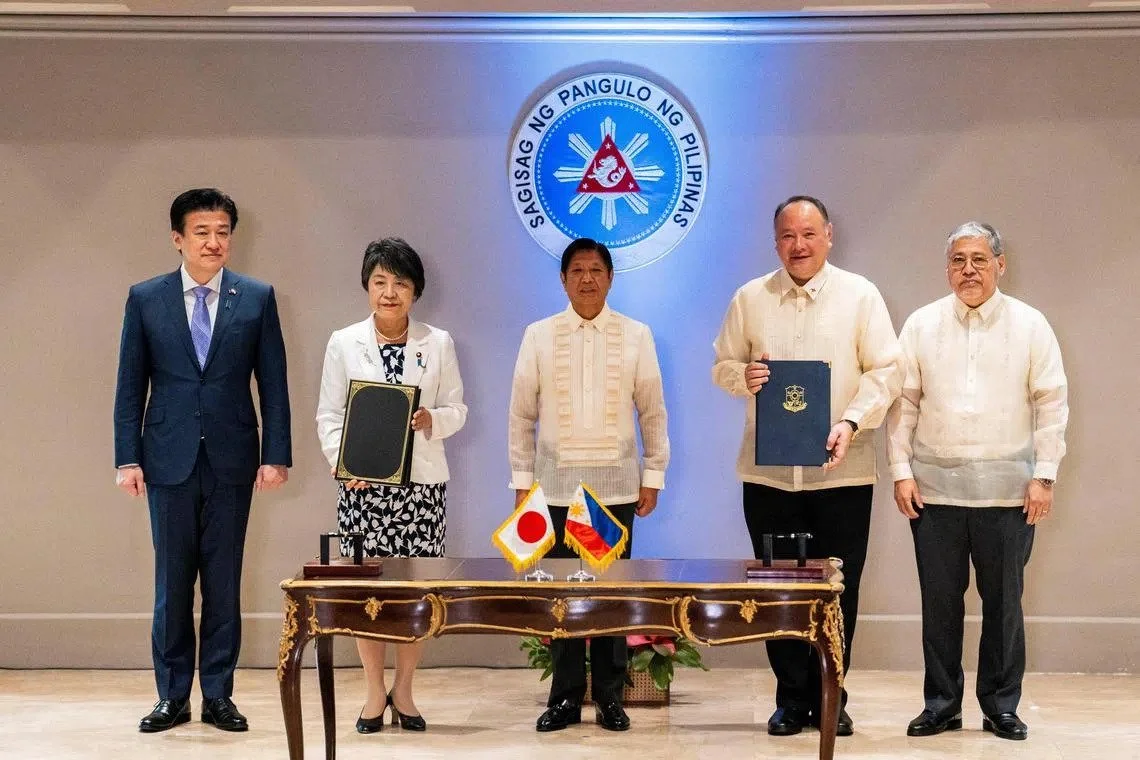
The Philippines is open for business, and Japan is at the front of the line. On Thursday, February 19, 2026, Executive Secretary Ralph Recto issued a clear invitation to Japanese investors, declaring that the country has reached a "ripe" stage for a massive expansion in bilateral trade and industrial partnership.
Speaking at the 42nd Annual Joint Meeting of the Economic Cooperation Committees of the Philippines and Japan, held at the historic Goldenberg Mansion in Malacañang, Recto emphasized that the Marcos administration is stripping away the red tape that once hindered foreign entry.
1. The "Premium Brand" Partnership
Recto highlighted Japan’s reputation for quality, citing the Metro Manila Subway Project (MMSP) as the "Exhibit A" of Japanese excellence.
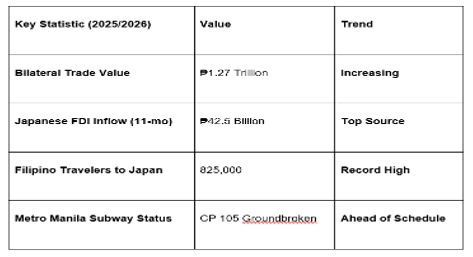
Acceleration Update: Just last week, on February 13, 2026, President Marcos inspected the subway’s Shaw Boulevard station, reporting that construction is now moving ahead of schedule.
Policy Alignment: Recto assured delegates from PHILJECC and JPECC that the government is delivering on three specific demands: clear rules, coordinated governance, and decisions made without delay.
Investment Surge: Japan remains the Philippines’ top source of Foreign Direct Investment (FDI), contributing ₱42.5 billion in the first 11 months of 2025 alone.
2. Bilateral Trade: A ₱1.27 Trillion Success Story
The economic relationship between the two nations has reached historic highs, with the Philippines successfully maintaining a trade surplus with its neighbor.
Trade Volume: Total bilateral trade reached ₱1.27 trillion in 2025.
Agriculture & Tech: While Japan exports integrated circuits and vehicles, the Philippines continues to be a dominant supplier of insulated wire, wood carpentry, and bananas.
Tourism Recovery: The "people-to-people" exchange is also booming. In late 2025, over 825,000 Filipinos traveled to Japan, while nearly 407,000 Japanese tourists visited the Philippines, drawn by the "sand, sea, and surf" Recto mentioned in his welcome.
3. Strategic Advantages for 2026
The Executive Secretary positioned the Philippines as the "ideal demographic partner" for Japan’s aging economy.
Young Workforce: With a median age of 25, the Philippines offers a "skilled, English-proficient, and AI-ready" workforce.
Regional Gateway: Recto marketed the country as a resilient gateway to the ASEAN region, noting that the Philippines is less susceptible to global trade wars because domestic consumer demand drives 72% of the economy.


GME Academy Analysis: "The Yen-Peso Play"
At Global Markets Eruditio, we see the strengthening of these ties as a crucial stabilizer for the Philippine Peso (PHP) against the US Dollar.
Trader's Takeaway for February 2026:
Infrastructure Stocks: Keep a close eye on local partners of the Tokyu-Tobishima-Megawide Joint Venture. With the subway project accelerating, construction and materials firms are prime candidates for long-term growth.
FDI Stability: The steady flow of Japanese capital provides a "shield" for the Philippines' balance of payments, even as political noise (such as the recent impeachment raps) creates short-term volatility.
Energy & Tech: Watch for new agreements in Smart Agriculture and Renewable Energy following the JPY 1.7-billion grant for rice processing signed earlier this week.
Join our FREE Macro Workshop at Global Markets Eruditio!
Is the "Philippine Golden Age of Infrastructure" sustainable? We’ll break down the JICA-Philippines 2026 Funding Roadmap and show you how to identify the next big winners in the local market.
