

The Billion-Dollar Blueprint: Why Philippine Lawmakers See the P1.35-T Education Budget as a Future-Proof Investment
In a historic move that signals a massive shift in national priorities, the Philippine government has officially breached the trillion-peso mark for the education sector. With the signing of the 2026 General Appropriations Act, a record-breaking P1.35 trillion has been allocated to education—representing roughly 4.4% of the country's Gross Domestic Product (GDP).
For the first time in Philippine history, the nation has met the UNESCO-recommended benchmark of spending at least 4% of GDP on education. Local lawmakers (solons) have been quick to hail this as more than just a fiscal milestone; they view it as a decisive "investment in human capital" that will define the country’s economic trajectory for the next decade.
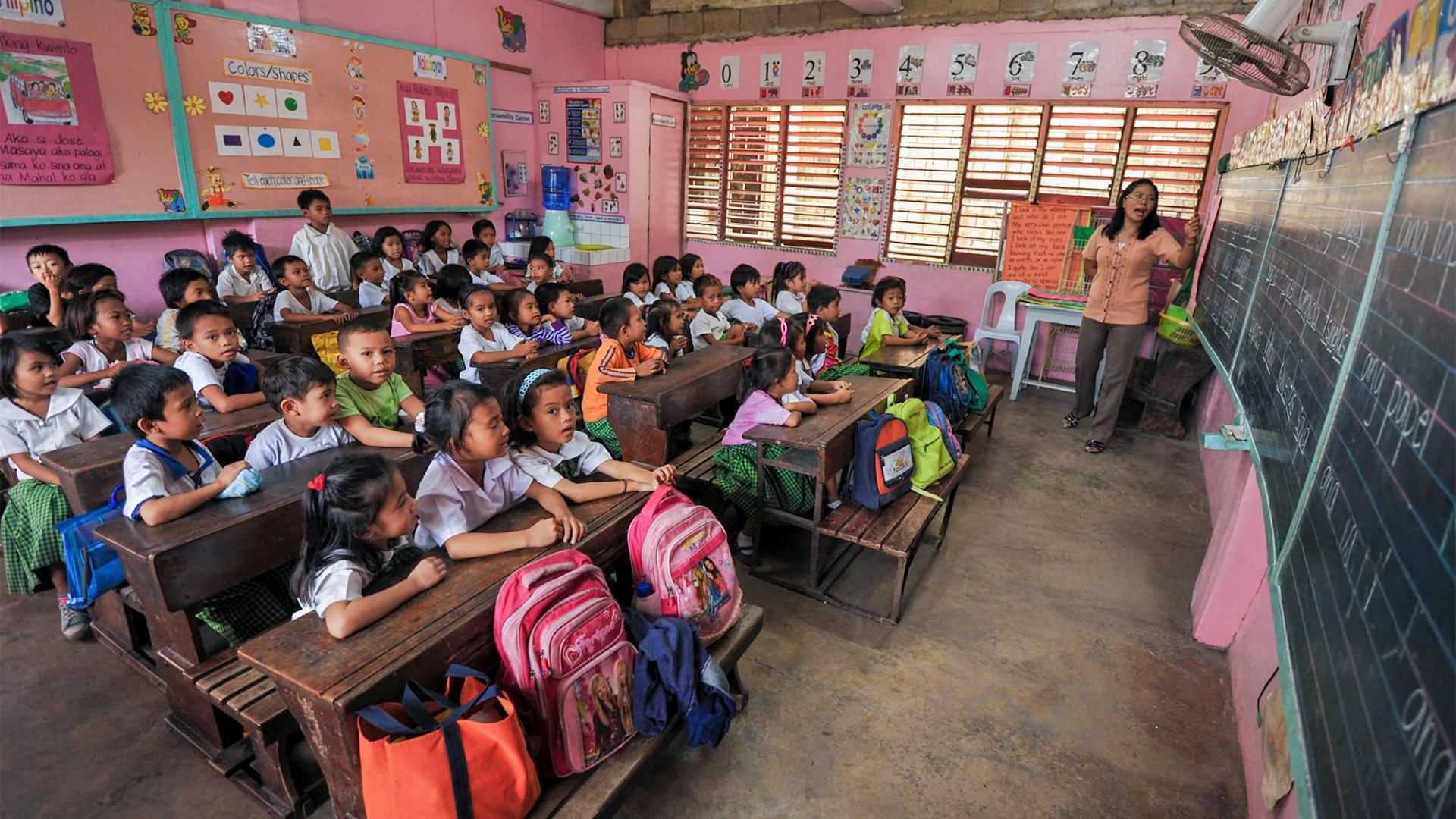
Breaking the "Classroom Crisis": Where the Trillion Goes
The sheer scale of this budget is aimed at tackling deep-seated structural issues that have plagued the Department of Education (DepEd) for years. Lanao del Sur Rep. Zia Alonto Adiong and other key proponents have highlighted that this is a "direct response" to the findings of the Second Congressional Commission on Education (EDCOM 2).
Key Allocations in the 2026 Budget:
P85.3 Billion for Infrastructure: Focused on the 165,000-classroom backlog, with P65 billion dedicated specifically to constructing nearly 25,000 new classrooms.
P25.6 Billion for School-Based Feeding: A massive jump from previous years, aimed at benefiting 4.6 million learners to combat malnutrition and stunting.
P19.5 Billion for Textbooks: Ensuring that every student has access to updated instructional materials.
P10.6 Billion for Digitalization: Funding the DepEd Computerization Program to bridge the digital divide in remote areas.
P42.4 Billion for Human Resources: Hiring over 32,000 new teachers and specialized roles like school counselors.
The Forex Perspective: Education as a Long-Term USD Driver
While education news might seem localized, seasoned Forex Trading professionals know that human capital is a primary driver of long-term currency value. When a country like the Philippines significantly boosts its education spending, it is essentially upgrading its "labor export" and BPO capabilities—the two main pillars that support the US Dollar (USD) to Philippine Peso (PHP) exchange rate.
AUD/USD and Global Comparisons: Just as we watch the Australian CPI or the Fed's "neutral rate" to judge economic health, global investors look at education benchmarks. Meeting the UNESCO 4% target puts the Philippines on a more competitive footing with regional peers, potentially attracting more Foreign Direct Investment (FDI).
Currency Stability: A more skilled workforce leads to higher-value service exports, which can strengthen the Peso over time against the US Dollar. For those practicing Forex Trading for Beginners, this is a classic "fundamental" indicator of a country's future economic productivity.
Why "Neutral" Isn't Enough
Referencing recent comments from the Fed's Kashkari about reaching a "neutral" interest rate, Philippine solons argue that the education sector cannot afford to stay neutral. Rep. Jude Acidre noted that "incremental fixes" are no longer sufficient to solve the learning crisis.
The strategy is to move beyond mere maintenance and into "transformative" growth. By fully funding the Universal Access to Quality Tertiary Education Act (with P67 billion), the government is ensuring that the transition from basic education to the workforce is seamless and sustainable.


The GME Academy/Global Markets Eruditio Take
At GME Academy, we believe that market movements are often the shadow cast by government policy. The P1.35 trillion budget is a "bullish" signal for the Philippine economy's long-term prospects. However, as many solons have warned, the success of this investment hinges on implementation.
Traders should watch for:
Inflationary Pressures: Massive government spending can sometimes stoke local inflation, impacting the PHP's purchasing power.
Infrastructure Efficiency: If the classroom build-up hits snags, the expected economic "ROI" may be delayed, affecting market sentiment.
Whether you are analyzing EUR/USD or the emerging strength of Southeast Asian markets, understanding the "why" behind national budgets is essential. Education isn't just about classrooms; it's about the future liquidity and stability of a nation's economy.
Are you ready to learn how national policies transform into market profits? Don't miss out on the next big shift.
Join our FREE Forex workshop today and master fundamental analysis with GME Academy!
