

Fed Divide Deepens: Daly Calls for December Rate Cut Citing 'Vulnerable' Job Market Risk
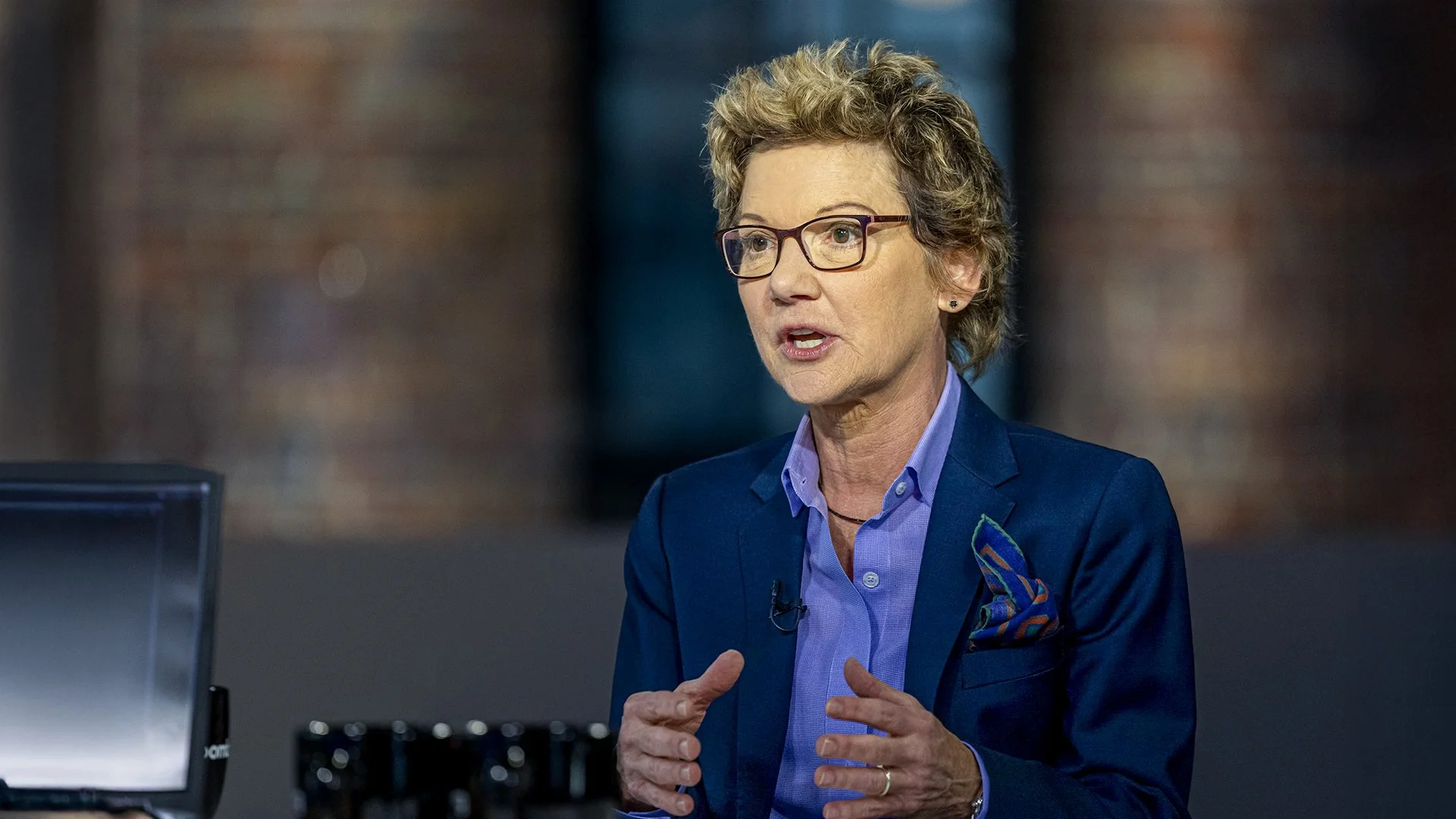
Federal Reserve Bank of San Francisco President Mary Daly has significantly amplified the growing debate within the central bank, making a forceful case for an interest-rate cut in December. Her public stance, articulated in a Monday interview with the Wall Street Journal, hinges on the belief that the paramount risk currently facing the U.S. economy is a sharp, unmanageable deterioration in the labor market, a threat she argues outweighs the risk of reaccelerating inflation.
This shift in priority—focusing on employment stability over the immediate inflation battle—highlights the inherent challenge of the Fed’s dual mandate: achieving maximum employment and maintaining price stability. Daly’s perspective, which sees the job market as precarious, places her firmly in the dovish camp, advocating for pre-emptive easing to safeguard economic momentum.
The Nonlinear Threat to Employment
Daly’s concern is rooted in the current fragility of the labor market, which she believes is operating near an inflection point. She warns against complacency, suggesting that the current cooling trend could quickly turn into a steep decline.
Labor Market Vulnerability: "On the labor market, I don't feel as confident we can get ahead of it," Daly stated. The crucial phrase is her assessment that the job market is "vulnerable enough now that the risk is it'll have a nonlinear change." This is an economist’s warning: a nonlinear change means the gradual slowdown (a linear process) could abruptly accelerate into a severe contraction or recessionary phase, similar to a sudden cliff-edge drop. Once unemployment surges, it becomes notoriously difficult and time-consuming for the Fed to stimulate job growth and reverse the damage.
Inflation Risk Recalibrated: In contrast, Daly views the risk of inflation reaccelerating as a lower threat. She points to evidence of softening price pressures, including softer-than-expected tariff cost gains this year. While inflation remains above the Fed's 2% target, she holds the optimistic view that the inflation objective can still be achieved through continued unwinding of supply-side issues and without necessitating higher unemployment—a key goal known as achieving a "soft landing."
The Heightened FOMC Divide and the December Vote
Daly’s assertive call for a cut solidifies the rift within the Federal Open Market Committee (FOMC), the body responsible for setting the benchmark interest rate. Her position is supported by other influential voices favoring a pivot.
The Dovish Coalition: Earlier on the same day, Fed Governor Christopher Waller publicly reiterated his desire for a quarter-point reduction at the critical FOMC meeting scheduled for December 9-10. The dovish camp argues that waiting too long risks plunging the economy into unnecessary pain.
The Hawkish Counterpoint: Other officials, however, remain deeply skeptical of easing while inflation is not yet fully contained. Boston Fed President Susan Collins represents this hawkish wing, signaling that it would be "appropriate for now" to keep rates unchanged. Her argument hinges on the fact that inflation remains above the target, and while the labor market is cooling, it is doing so gradually, justifying continued vigilance over price stability.
This open disagreement—whether to prioritize avoiding a recession (Daly/Waller) or ensuring the complete eradication of inflation (Collins)—underscores the tightrope the central bank is walking. The outcome will depend on how the majority of the committee interprets the final batch of economic data (employment, CPI, PCE) released before the December meeting.
Implications for the USD and Global Markets
The Federal Reserve’s policy stance is arguably the single most important driver of global financial markets, with the upcoming decision commanding the attention of every major investment firm and Forex Trading desk worldwide.
While SF Fed President Mary Daly is not a voting member of the FOMC this year (as the voting schedule rotates annually), the collective weight of her and Governor Waller’s dovish comments provides essential insight into the internal shift in thinking.
Impact on the USD: A growing consensus for a rate cut—driven by labor market concerns—is typically viewed as negative for the USD. Lower interest rates reduce the yield attractiveness of dollar-denominated assets relative to other currencies, potentially leading to capital outflows and weakening the USD against all major currency pairs like the EUR/USD or the GBP/JPY.
Market Volatility: This internal division creates heightened volatility and strategic opportunities in the Forex market. Traders must closely track which sentiment—the labor market risk emphasized by Daly and Waller, or the inflation risk emphasized by Collins—will prevail in the final vote. The ultimate decision will dictate the direction of global carry trades and risk appetite. When the USD weakens, it often provides tailwinds for emerging market currencies and commodity-linked pairs like the CAD.


The Call for Strategic Alignment and Preparation
The uncertainty emanating from the Federal Reserve highlights a crucial lesson for anyone involved in finance: success in high-stakes environments requires not just intelligence, but the ability to translate ambiguous central bank rhetoric into concrete strategic action and precise risk management.
Understanding the nuances of the FOMC's debate—the difference between a "nonlinear change" in the job market and a temporary inflation spike—is the specialized knowledge that informs high-probability trading decisions. This rigorous, data-driven approach to market strategy is the core philosophy behind the curriculum at Global Markets Eruditio (GME Academy). We teach traders to interpret these complex macro signals and align their positions accordingly.
Ready to move past basic speculation and embrace the disciplined, strategic trading principles that lead to lasting financial security?
Join our FREE Forex Workshop today and receive the professional training required to master risk management and strategic entry/exit points in the global Forex market. You will learn to track, analyze, and trade the outcomes of critical central bank decisions, securing your competitive edge. Start building your financially strategic future now!
