

The Yen’s New Dawn: Governor Ueda Signals a 0.75% Future
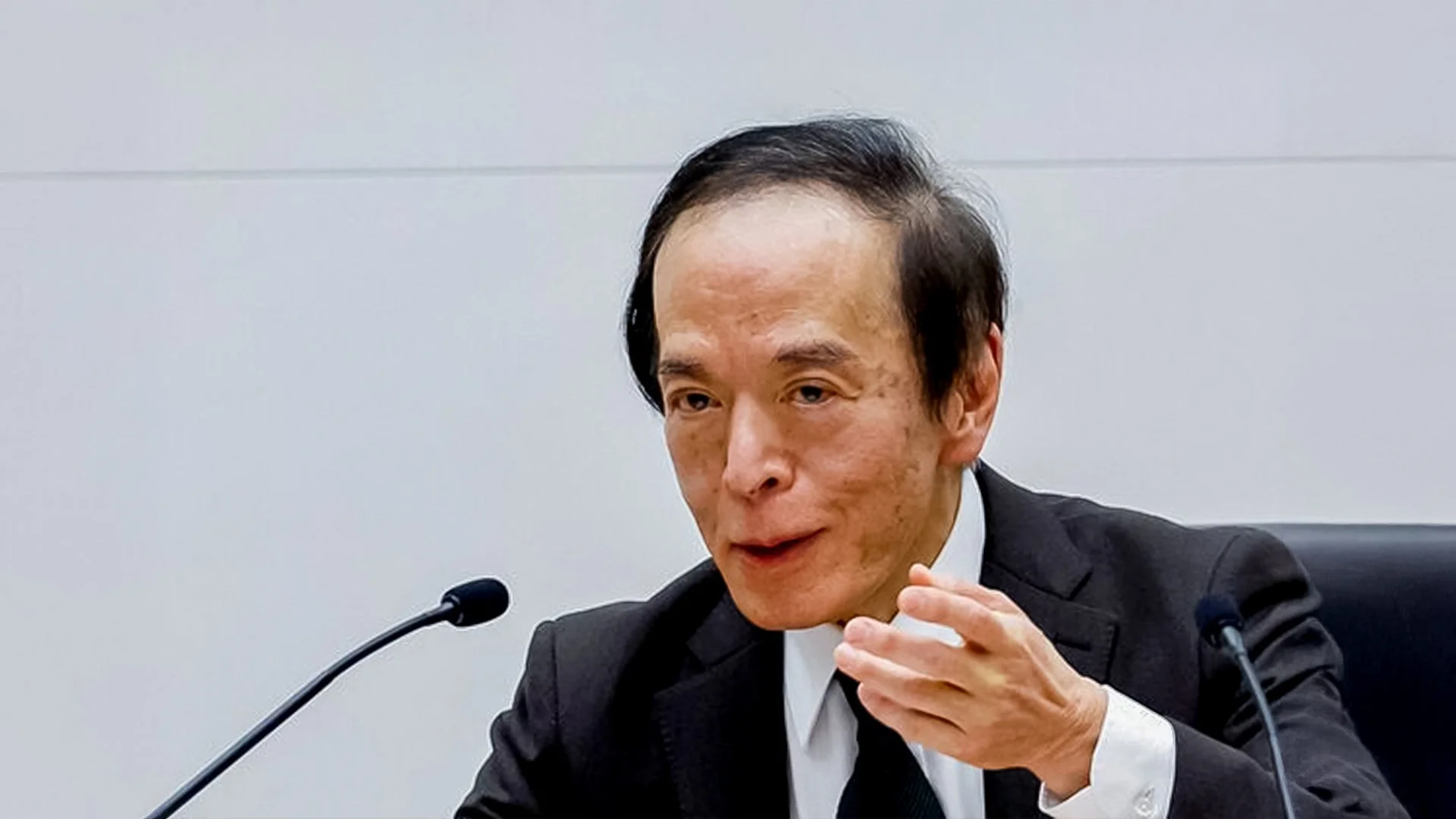
In a landmark address to the Japan Business Federation (Keidanren) on December 25, 2025, Bank of Japan (BoJ) Governor Kazuo Ueda signaled a definitive end to the "zero norm" era. With 2026 just days away, Ueda confirmed the BoJ’s decision to raise the policy interest rate to 0.75%, a move that underscores Japan’s growing confidence in achieving sustainable 2% inflation backed by robust wage growth.
For those navigating the world of Forex trading, this shift is monumental. For decades, the Japanese Yen (JPY) was the "funding currency" of choice due to near-zero rates. Now, as the BoJ pivots toward normalization, the dynamics of currency pairs like USD/JPY and GBP/JPY are being rewritten. At Global Markets Eruditio (GME Academy), we view this as a generational shift in Asian market fundamentals.
The Policy Pivot: Why 0.75% Now?
Governor Ueda highlighted that while U.S. tariff policies initially created uncertainty, the downward pressure on Japanese corporate profits has remained manageable. The decision to raise rates from 0.5% to 0.75% rests on two primary pillars:
Diminishing U.S. Risks: Despite global trade tensions, U.S. private consumption remains solid and AI-driven investment is expanding. This stability reduces the risk of a global slowdown dragging Japan down.
The Wage-Price Spiral: The "Shunto" (spring wage negotiations) are expected to yield solid results in 2026. Ueda noted that firms are no longer just passing on costs; they are raising wages to compete in a tightening labor market.
Breaking the "Zero Norm": A Lesson for Beginners
If you are exploring Forex trading for beginners, Japan’s move is a perfect case study in "monetary policy normalization." For years, Japan was stuck in a cycle where neither wages nor prices moved. Ueda’s speech confirms that Japan is finally entering a phase where:
Labor shortages are forcing firms to invest in AI and human capital.
Inflation expectations are shifting from "prices will stay flat" to "moderate inflation is the new normal."
When a central bank raises rates, the currency typically strengthens as it offers a better return for investors. This is why the Japanese Yen has seen renewed interest from global "carry traders" who are now re-evaluating their positions.


Analyzing the "Loonie" and "Greenback" Connections
The BoJ’s hawkish stance doesn't exist in a vacuum. It interacts directly with other major economies:
USD/JPY: With the U.S. Fed also managing high growth (as seen in recent 4.3% GDP figures), the interest rate "differential" is narrowing but still significant. Traders are watching for the moment the BoJ’s hikes begin to outweigh the Fed’s strength.
CAD/JPY: With Canada’s economy showing recent signs of contraction (a 0.3% GDP dip), the Yen is increasingly seen as a stronger alternative to the Canadian Dollar (CAD) in the Pacific region.
EUR/JPY: As the Eurozone grapples with stagnation, the Yen’s path toward 0.75% makes it an attractive "long" play for many fundamental analysts at GME Academy.
The Keidanren Hope: Investing in People
Ueda closed his speech with a direct appeal to Japan's business leaders. He urged firms to move away from "hoarding cash" and toward proactive investment in software, R&D, and reskilling. This is the "virtuous cycle" the BoJ is aiming for: higher productivity leading to higher real wages, which in turn sustains 2% inflation.
Master the Shift with Global Markets Eruditio
The transition from a deflationary Japan to a "normal" Japan is one of the most significant events in modern financial history. At the GME Academy, we specialize in helping traders decode these high-level central bank speeches into actionable trading plans.
Don't Get Caught on the Wrong Side of the Yen's Recovery
Whether you are trading the US Dollar, the Yen, or the Canadian Dollar, understanding the "why" behind the move is your greatest asset.
Join our FREE Forex Workshop today. We will break down the BoJ’s baseline scenario and show you how to trade the JPY crosses in 2026.
