

Bilateral vs. Trilateral: Trump Administration Weighs Separate Deals with Mexico and Canada
The future of North American trade is standing at a crossroads. As of Thursday, February 19, 2026, the Trump administration has signaled a significant shift in its approach to the United States-Mexico-Canada Agreement (USMCA), with U.S. Trade Representative (USTR) Jamieson Greer indicating that Washington is seriously considering replacing the trilateral pact with separate, bilateral deals.
The move follows months of escalating trade tensions and a "Year of the Tariff" strategy that has redefined relations with America’s closest neighbors.
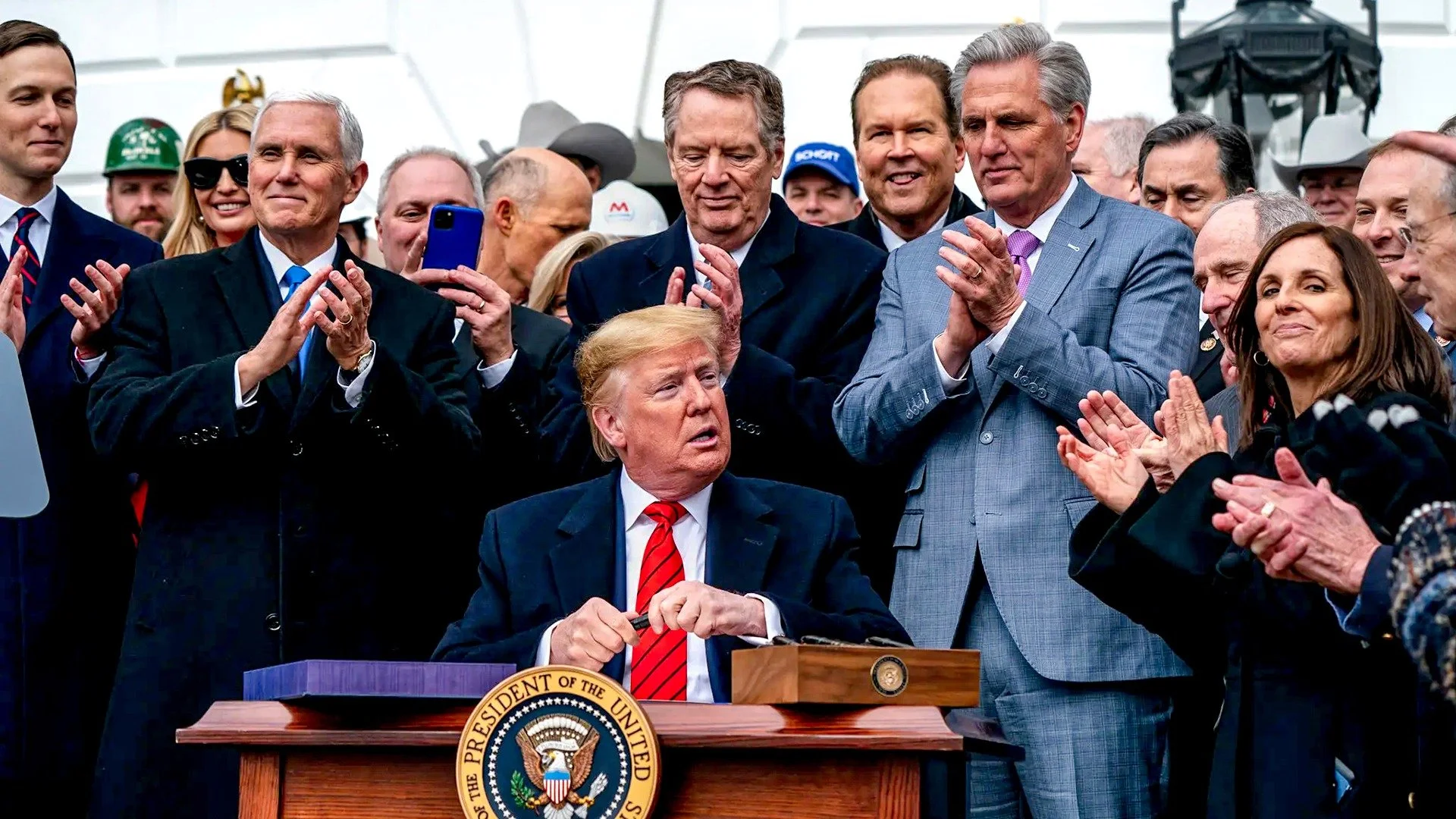
1. The "Divide and Conquer" Strategy
The potential pivot toward bilateral negotiations marks a departure from the traditional three-way cooperation that has defined North American trade since the 1990s.
Greer’s Assessment: In recent statements, Ambassador Greer described talks with Mexico as "quite pragmatic," while characterizing the relationship with Canada as more "challenging."
The "Ontario" Obstacle: USTR officials have specifically cited barriers such as Ontario’s recent restrictions on U.S. wines and spirits as a primary "obstacle" to starting real negotiations with Ottawa.
Country-by-Country Bargaining: Analysts suggest the White House prefers bilateral tracks to prevent Mexico and Canada from forming a "united front" against U.S. demands for stronger rules of origin and labor enforcement.
2. Mexico: A "Pragmatic" Path Forward?
Despite the threat of tariffs, Mexico appears to be finding a more stable footing with the new administration.
Action Plan on Critical Minerals: On February 3, 2026, Ambassador Greer announced a new U.S.-Mexico Action Plan on Critical Minerals, signaling that energy and tech supply chains remain a priority for both nations.
The USMCA Review: While formal discussions for the July 1, 2026, USMCA Review began in late 2025, Mexico’s Economy Minister Marcelo Ebrard has emphasized a desire to keep the trilateral framework intact while addressing U.S. concerns about Chinese "backdoor" imports.
3. Canada: Tensions Peak Over China and Aircraft
Relations with Ottawa have reached their most strained point in decades, fueled by a divergence in global trade policy.
The China Conflict: Washington has reacted sharply to Prime Minister Mark Carney’s efforts to diversify trade with Beijing. Trump has threatened 100% tariffs on all Canadian imports if Ottawa proceeds with a comprehensive free-trade pact with China.
Regulatory Deadlocks: The administration has also threatened to ground Canadian-made aircraft until regulators in Ottawa certify specific U.S. models, such as those from Gulfstream.
New Negotiator: In response to the crisis, Prime Minister Carney appointed Janice Charette as the new Chief Trade Negotiator to the U.S. on February 16, 2026, to manage the "looming review" of the pact.


GME Academy Analysis: "Trading the North American Split"
At Global Markets Eruditio, we are tracking the "Bilateral Discount" being applied to Canadian and Mexican equities.
Trader's Takeaway for February 2026:
Automotive Exposure: Companies with supply chains that "criss-cross" both borders (like GM and Ford) face the highest risk if trilateralism fails. A shift to bilateral deals could lead to conflicting "Rules of Origin," significantly increasing compliance costs.
The "Safe Haven" Dollar: Any news suggesting a breakdown in trilateral talks typically leads to a strengthening USD against both the CAD and MXN, as the U.S. is seen as having the upper hand in one-on-one negotiations.
Mexico's Nearshoring Edge: If Mexico successfully secures a "Reciprocal Trade Deal" similar to those recently signed with Argentina and Bangladesh, it could see a massive influx of capital fleeing the more contentious U.S.-Canada relationship.
Join our FREE Macro Workshop at Global Markets Eruditio! Is the USMCA dead or just "evolving"? We’ll break down the July 1 Deadline Scenarios and show you how to position your portfolio for the "New North American Order."
