

The Unbreakable Link: How Bond Yields Dictate Currency Correlation in Forex Trading
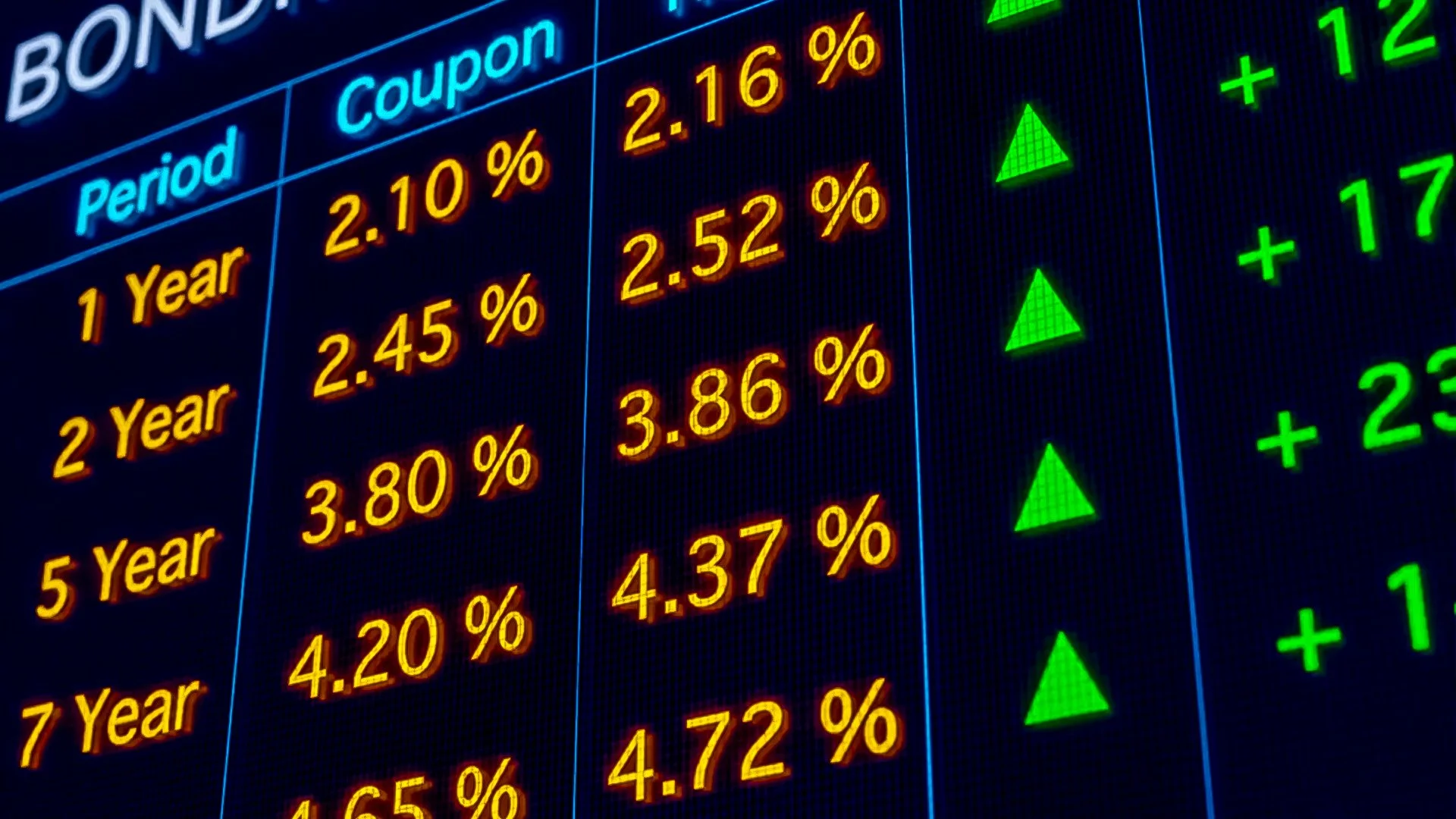
The global Forex market operates on the perpetual movement of capital seeking the highest safe return. In the world of finance, the safest return is typically offered by sovereign bonds—debt issued by governments, such as U.S. Treasuries, German Bunds, or Japanese Government Bonds (JGBs). The interest rate, or yield, offered by these bonds is the bedrock upon which the value of a currency is built.
For anyone serious about achieving Global Markets Eruditio, mastering the bond yield-currency correlation is essential, as it dictates the fundamental flow of money between nations.
The Core Mechanism: Capital Attraction
The relationship between yields and currency strength is driven by a simple economic principle: higher yield attracts capital.
The Yield Differential Trade
International investors, particularly institutional funds, constantly compare the yields offered by different countries' bonds. This comparison is known as the yield differential.
Scenario 1: Rising Yield (Currency Appreciation): If the yield on the U.S. Treasury 10-year note rises faster than the yield on the Japanese 10-year bond, the USD becomes more attractive than the Japanese Yen (JPY). Why? Because an investor can earn a greater return with the same level of safety by holding USD-denominated assets. This flow of investment money into the U.S. creates demand for the USD on the Forex market, leading to the appreciation of the USD/JPY pair.
Scenario 2: Falling Yield (Currency Depreciation): If the yield on German Bunds falls relative to the yield on Italian BTPs (bonds), capital may shift out of the Eurozone's core, weakening the Euro (EUR) against other high-yielding assets, often causing the EUR/USD pair to fall.
This mechanism confirms that bond yields are the opportunity cost of holding one currency over another.
Case Study: U.S. Treasury Yields and USD Strength
The U.S. Treasury market is globally recognized as the deepest and most liquid bond market, establishing its yields as the international benchmark. Consequently, the yield of the 10-year Treasury note serves as a crucial, daily indicator for the direction of the US Dollar (USD) in Forex Trading.
Rising U.S. Yields: The Bullish Signal
When U.S. yields are rising, it signals that the bond market is pricing in either higher inflation expectations or the market's anticipation of future Federal Reserve interest rate hikes. In this environment, the impact on USD strength is bullish. The higher returns offered by U.S. debt increase the demand for the USD from global investors seeking yield. For example, in the Forex market, this trend typically causes pairs like USD/CAD to rise (as the USD strengthens against the Canadian Dollar).
Falling U.S. Yields: The Bearish Signal
Conversely, when U.S. yields are falling, it usually reflects lower inflation expectations or growing market anticipation of Fed rate cuts. This translates to a bearish impact on USD strength, as the return differential narrows, making the USD less attractive. In this scenario, pairs like EUR/USD tend to rise (as the USD weakens against the Euro).
Rising Yield Differential: The Divergence Trade
A powerful signal emerges when observing the rising yield differential, such as when the U.S. yield increases more than the Eurozone (EU) yield. This reflects monetary policy divergence, where the U.S. offers a more attractive rate environment. This divergence has a strong bullish impact on the USD. Consequently, the EUR/USD Forex pair generally tends to fall as capital flows into the higher-yielding USD assets.
The direct linkage between the borrowing costs of the U.S. government and the demand for the USD highlights why bond yield analysis is foundational to Forex Trading.


Beyond Interest Rates: Risk and Safety
The relationship between yields and currencies is also a reflection of global risk sentiment.
1. The Safe-Haven Trade
In times of global financial stress or high volatility (e.g., geopolitical crises), investors prioritize safety over return. They flock to the safest sovereign debt, which is typically the U.S. Treasury market (due to the USD's reserve currency status) or Japanese Government Bonds (JGBs).
When risk aversion spikes, the massive demand for safe-haven bonds pushes their prices up, simultaneously pushing their yields down.
However, despite the falling yield, the USD or JPY may still strengthen because the influx of capital is driven by a flight to safety (liquidity) rather than a search for yield. This phenomenon, where the USD strengthens even as its bond yields fall during a crisis, is a classic exception to the general rule.
2. Inflation Expectations
Bond yields are often seen as gauges of future inflation. A rapidly rising long-term yield suggests bond investors anticipate higher inflation, which may force the central bank to hike rates. Therefore, watching the bond market's reaction provides a glimpse into the market's collective belief about the central bank's next move—a powerful insight for Forex Trading.
This deep connection between government borrowing costs and currency valuation is the ultimate lesson in Global Markets Eruditio; understanding why money is flowing, and not just where.
Are You Tracking the Engine of Global Capital Flow?
Bond yields are not arcane financial data; they are the most reliable predictor of a currency's direction. Ignoring the movement of the U.S. Treasury market is akin to ignoring the engine of the USD.
Master the yield differential trade and gain a decisive edge in the market.
Join the GME Academy community today and sign up for our FREE Forex Workshop to learn how to translate shifts in global bond yields into high-probability trades across all major currency pairs.
