

The Race to the Bottom: Is Your Portfolio Ready for the "Invisible" Currency War?
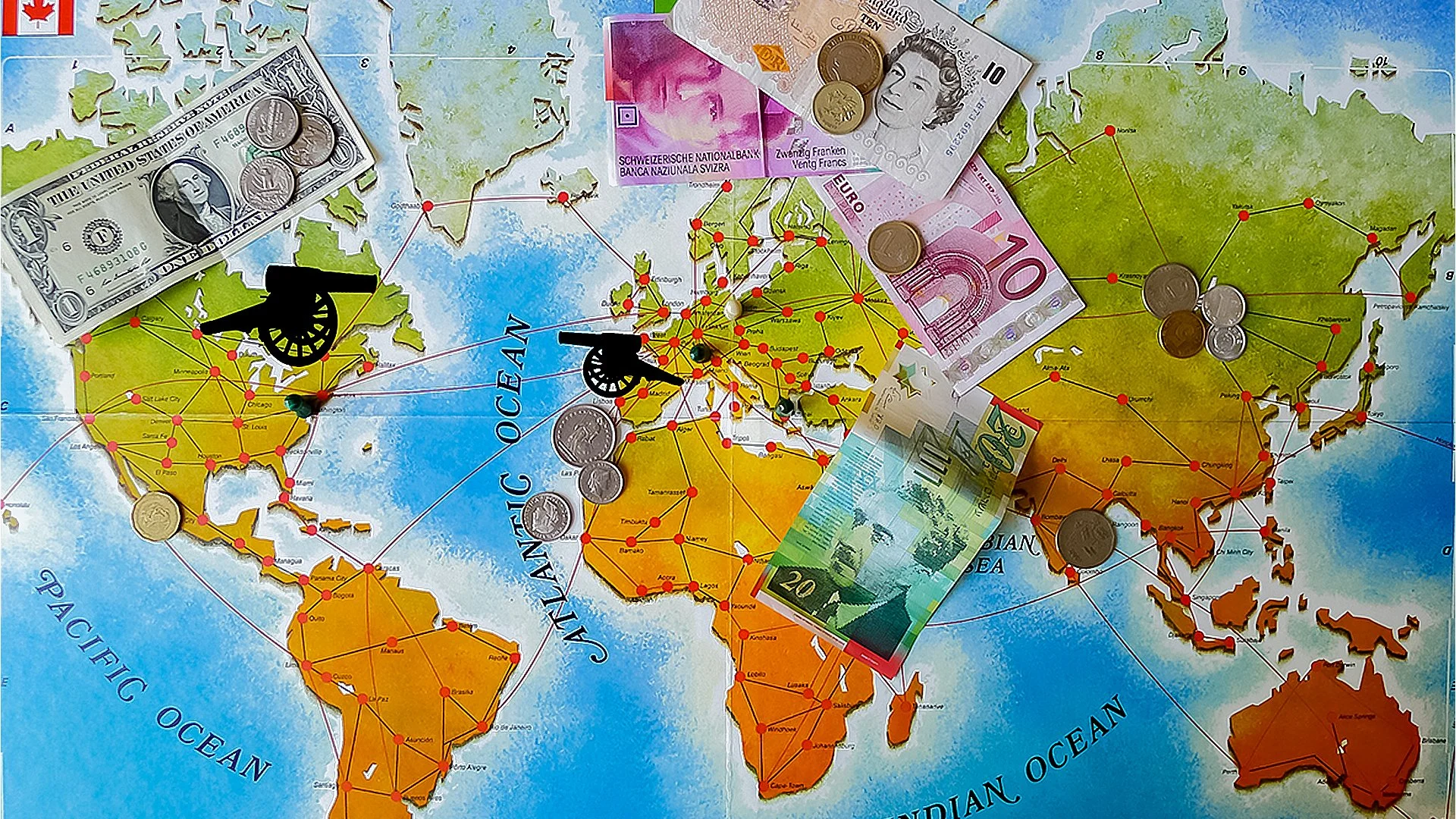
In the world of high-stakes finance, some wars aren't fought with artillery, but with interest rates and printing presses. We are currently witnessing the resurgence of Competitive Devaluation—a phenomenon colloquially known as a "Currency War." While most headlines focus on trade tariffs and military standoffs, the quiet struggle to make a nation’s money "cheaper" than its neighbor’s is what truly dictates the global flow of wealth.
At the GME Academy, we believe that understanding these macro-tectonic shifts is the difference between a retail trader who guesses and a professional who anticipates. In the 2026 landscape, where traditional alliances are fraying, the race to the bottom has officially accelerated.
 https://images.squarespace-cdn.com/content/619b666b5842697e2af69258/a9d57b27-4fad-4532-874a-89133d6a85bc/P477.02.jpg?content-type=image%2Fjpeg
1. The Weaponization of the Exchange Rate
Competitive devaluation occurs when a country’s central bank or government intentionally weakens its currency. On the surface, this sounds counterintuitive—why would a nation want its money to be worth less? The answer lies in Trade Dominance.
When the Japanese Yen (JPY) or the Euro (EUR) weakens, the products made in Tokyo or Berlin become significantly cheaper for foreign buyers. This boosts exports, supports domestic manufacturing, and effectively "steals" growth from trading partners. For someone just starting Forex Trading for Beginners, this is the "Secret Sauce" behind many major market moves: when a country’s economy stalls, they often try to "export" their way out of trouble by slashing the value of their currency.
2. The 2026 Conflict: USD vs. The World
The current theater of war features the US Dollar (USD) as the unwilling protagonist. Throughout late 2025 and into early 2026, we have seen a fascinating "Tug-of-War." While President Trump has frequently praised the benefits of a "weak dollar" to rejuvenate the American "Rust Belt," his Treasury Secretary, Scott Bessent, has stood firm on a "Strong Dollar Policy."
This internal friction in Washington creates massive opportunities in Forex Trading. If the U.S. successfully devalues the Greenback to compete with China, currency pairs like the EUR/USD and GBP/USD would see explosive "bull runs." Conversely, if the U.S. maintains a high interest rate while other nations cut theirs, the "Dollar Juggernaut" will continue to crush its competitors, leading to a potential 1.45+ surge in the USD/CAD.
3. The "Tit-for-Tat" Trap
The danger of currency wars is the retaliatory cycle. If Canada sees the Canadian Dollar (CAD) becoming too strong against the USD—making Canadian lumber and oil too expensive for Americans—the Bank of Canada may be forced to cut rates aggressively.
This creates a "race to the bottom" where no one actually wins because every nation is trying to out-devalue the other. For Forex participants, this results in extreme volatility. You may see a pair like the GBP/JPY move hundreds of pips in a single day, not because of a "good" economic report, but because one central bank decided to "intervene" to protect its exporters.
4. How to Spot the "Devaluation" Signal
At Global Markets Eruditio, we teach our students to look past the rhetoric and follow the "Central Bank Breadcrumbs." There are three major signs that a currency war is heating up:
Verbal Intervention: When a finance minister says their currency is "dangerously high," they are trying to "scare" the market into selling it.
Unconventional Monetary Policy: When interest rates hit zero, and a bank starts "Quantitative Easing" (printing money), they are effectively flooding the market to lower the value.
Direct Market Action: As we saw with recent "rate checks" in the USD/JPY, sometimes a bank will literally enter the market to buy or sell billions in a matter of minutes.
5. Survival of the Smartest: Trading the War
For the uneducated, a currency war is a graveyard of "blown accounts." For the GME Academy graduate, it is a playground of opportunity. In 2026, you cannot afford to trade based on 2010 rules. You must understand how Geopolitics, Tariffs, and Central Bank Mandates intersect.
Whether you are looking at the stability of the EUR/USD or the high-octane moves of the AUD/USD, the "Invisible War" is the primary driver of the trend. If you aren't watching the exchange of fire between the Treasury and the Central Banks, you are trading with a blindfold on.


Master the Macro: Join Our Community
The global financial order is being rewritten in real-time. From the "Petroyuan" to the "Bessent Floor," the rules of the game are shifting beneath our feet. Are you prepared for the next wave of devaluation, or will your portfolio be collateral damage in the next trade war?
Take the first step toward financial sovereignty. At Global Markets Eruditio, we don't just teach you how to read a chart; we teach you how to read the world.
Join our FREE Forex Workshop Today! Learn the exact "Intervention Detection" strategies used by professional floor traders. We will show you how to identify when a currency is being artificially suppressed and how to position yourself before the massive "Snap-Back" occurs.
