

Zooming for Precision: Mastering Multiple Time Frame Analysis for Sniper-Like Entries
Successful trading is about probability and precision. Multiple Time Frame Analysis (MTFA), or the "Top-Down Approach," is a fundamental skill that transforms trading from a single-chart gamble into a high-conviction decision-making process. By viewing the same currency pair across different time candles, traders can filter out misleading market noise, confirm the true trend direction, and execute trades with unparalleled timing, significantly improving the crucial Risk-Reward Ratio.
The core philosophy of MTFA is to ensure your short-term execution (entry) is always aligned with the dominant long-term market trend (the tide). Trading against the tide, even with a perfect entry on a small time frame, often leads to failure.
 https://images.squarespace-cdn.com/content/619b666b5842697e2af69258/a9d57b27-4fad-4532-874a-89133d6a85bc/P477.02.jpg?content-type=image%2Fjpeg
The Top-Down Approach: Context, Structure, and Timing
MTFA operates on a clear hierarchy, typically employing three time frames to provide a complete picture of the market narrative. Using more than three charts is generally discouraged by the GME Academy framework as it often leads to "analysis paralysis" and conflicting signals.
1. The Higher Time Frame (HTF): Defining the Tide
The longest time frame is your "Market Map." This is where you establish your directional bias—whether you should be looking to buy (long) or sell (short).
Goal: Determine the dominant, long-term trend (Uptrend, Downtrend, or Consolidation).
Key Focus: Identify major, reliable Support and Resistance zones and key swing highs/lows. Higher time frame levels tend to be stronger and more robust.
Examples: For a swing trader, the Daily (D1) chart is the HTF. For a day trader, the 4-Hour (H4) chart serves this purpose.
2. The Medium Time Frame (MTF): Validating the Structure
The middle time frame acts as a bridge, giving you a clearer view of the price action within the major trend. It validates the structure of the market's current move.
Goal: Confirm the HTF bias and identify the intermediate market cycle (i.e., is the price currently in a pullback or a continuation move?).
Key Focus: Refine major levels identified on the HTF and locate patterns (flags, channels, head-and-shoulders) that indicate an impending move in the direction of the HTF trend.
Time Frame Rule: Many professional traders suggest using a time frame that is a factor of 4 to 6 greater than your entry time frame. For example, if you enter on the 1-hour chart, the 4-hour chart is a suitable MTF.
3. The Lower Time Frame (LTF): The Entry Trigger
Once the HTF and MTF confirm an aligned directional bias, you zoom down to the LTF for the precision entry. This is where you capitalize on minimal risk and maximum reward potential.
Goal: Pinpoint the lowest-risk, highest-probability entry point to maximize the Risk-Reward Ratio.
Key Focus: Look for a specific, immediate trigger signal that aligns with the higher time frame trend, such as a candlestick pattern (pin bar, engulfing candle), a breakout of a minor LTF resistance level, or a momentum shift confirmed by an oscillator like the Stochastic or RSI.
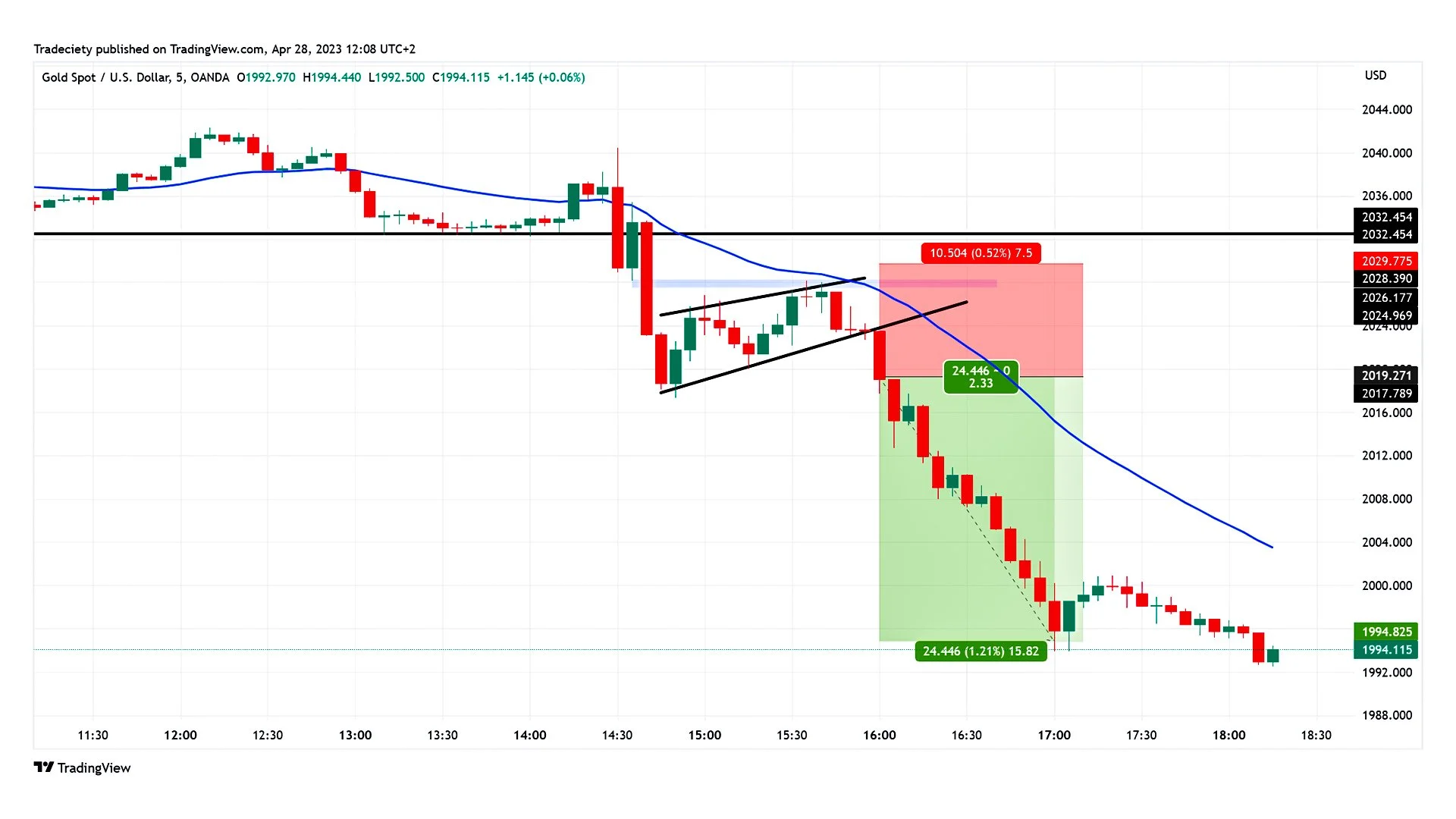
Benefit: By taking the entry on a 5-minute chart instead of a 1-hour chart, you can place a much tighter stop-loss, which exponentially enhances your risk-reward ratio for the trade.


Benefits: Psychological Discipline and Risk Management
The power of MTFA extends far beyond simple chart reading, acting as a crucial element of risk management and trading psychology:
Reduces Market Noise: The higher time frame filters out the erratic, emotionally-charged "noise" of the 1-minute or 5-minute charts, keeping you focused on the significant price movements.
Psychological Discipline: By seeing the "big picture," traders become less emotionally attached to minor fluctuations on the LTF. You are prepared for the counter-trend movement on the LTF because you know the HTF trend is still intact.
Improved Risk-Reward: Precise entry timing on the LTF allows for a smaller stop-loss distance, meaning you risk less capital to target the same major levels identified on the HTF. This is the ultimate goal of skilled Forex Trading.
Are You Ready to Trade with Clarity, Not Confusion?
Multiple Time Frame Analysis is not a "secret" indicator, but a powerful, disciplined approach that turns reactive traders into proactive, sniper-like executors.
Master the systematic, top-down process used by professional traders.
Join the GME Academy community today and sign up for our FREE Forex Workshop to learn how to seamlessly integrate MTFA into your strategy and achieve high-precision entries on your favorite currency pairs.
