

The Global Economic Barometer: Decoding the Baltic Dry Index (BDI)
In the fast-paced markets of February 2026, few indicators are as vital to understanding global trade health as the Baltic Dry Index (BDI). Often called the "canary in the coal mine" for the global economy, the BDI tracks the cost of moving raw materials—like iron ore, coal, and grain—across the world's oceans.
As of February 10, 2026, the BDI is navigating a period of seasonal volatility. While it has recently dipped toward 1,895 points following a pre-Lunar New Year rally, it remains more than double its level from early 2025. At the GME Academy, we monitor the BDI not just as a shipping metric, but as a leading indicator for commodity prices and currency strength.
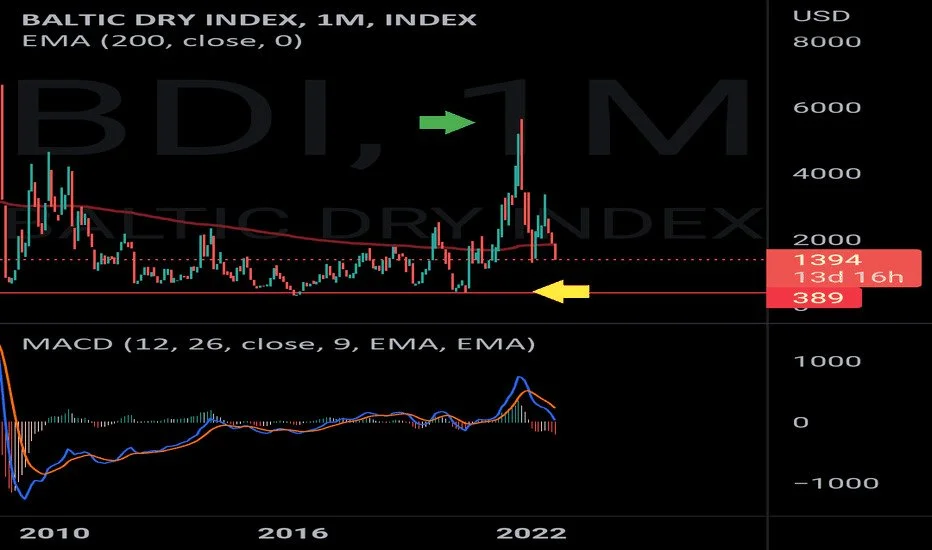
1. What the BDI Measures (and Why It Matters)
The BDI is managed by the London-based Baltic Exchange and is calculated based on daily assessments of "timecharter" rates for three specific ship sizes:
Capesize (40%): Massive vessels (150,000+ tons) that carry iron ore and coal. They are too large for the Panama Canal and must "round the Capes."
Panamax (30%): Mid-sized ships (60,000–80,000 tons) designed to fit through the Panama Canal, mostly carrying coal and grains.
Supramax (30%): Versatile "workhorses" (50,000–60,000 tons) that carry a wide variety of "minor bulks" like cement, fertilizers, and sugar.
Trading Insight: The BDI is a pure supply-and-demand indicator. Because the supply of ships is "inelastic" (it takes years to build a new one), any sudden surge in global demand for raw materials causes the index to spike instantly.
2. The 2026 Outlook: Structural Overcapacity vs. Geopolitics
The narrative for 2026 is one of "Structural Overcapacity." According to the IMF’s January 2026 report, global fleet capacity is expected to grow by nearly 5% this year, significantly outpacing the 2-3% growth in trade demand.
Key Drivers in Early 2026:
The "Post-Tariff" Slump: Global trade was heavily "front-loaded" in late 2025 as companies rushed to beat the February 1, 2026, tariff deadlines. This created a massive spike in BDI rates in January, followed by the current "correction" as warehouses sit full.
Suez Canal Dynamics: Many liners are still avoiding the Red Sea, adding thousands of "tonne-miles" as ships sail around Africa. This effectively "tightens" the supply of available ships, keeping BDI levels from crashing despite the oversupply of new vessels.
China’s Iron Ore Demand: Despite a cooling property sector, China's demand for high-grade iron ore from Brazil (shipped on Capesize vessels) remains the primary support floor for the index.
3. BDI and Currency Correlations
For Forex traders, the BDI is a powerful tool for predicting the direction of Commodity Currencies (the "Comdolls").
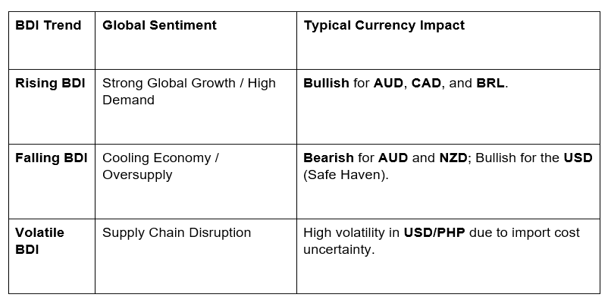
The AUD Connection: Australia is the world's largest exporter of iron ore. When Capesize rates rise, it usually confirms strong Chinese buying, which is a massive bullish signal for the Australian Dollar (AUD).
The Inflation Link: High BDI levels eventually filter into the cost of everything from bread to steel. In 2026, the UN warned that elevated shipping costs are still a "sticky" driver of headline inflation, even as energy prices soften.


The GME Academy Analysis: "Trading the Shipping Correction"
At Global Markets Eruditio, we believe the current February dip is a healthy correction, not a signal of a global recession.
Trader's Takeaway for February 2026:
The Lunar New Year Dip: Expect the BDI to remain soft until late February (post-Lunar New Year). This often provides a "buy the dip" opportunity for commodity-linked stocks and currencies.
Watch the Supramax: While the Capesize index gets the headlines, the Supramax index is a better measure of broader global manufacturing. If Supramax rates stay firm, it means the global "minor bulk" trade is still healthy.
Import Costs for the Philippines: A resilient BDI means that the cost of importing essential grains and construction materials into the Philippines will stay high in 2026, placing continued pressure on the USD/PHP exchange rate as the country spends more dollars on shipping.
Join our FREE Forex Workshop at Global Markets Eruditio!
Want to learn how to use the BDI as a lead-lag indicator for the AUD/USD? We’ll show you our proprietary "Shipping vs. Comdoll" dashboard and teach you how to spot the next major trend reversal.
