

Unlocking the Sleeping Giant: Christine Lagarde’s Vision for Europe’s "Scale" Economy
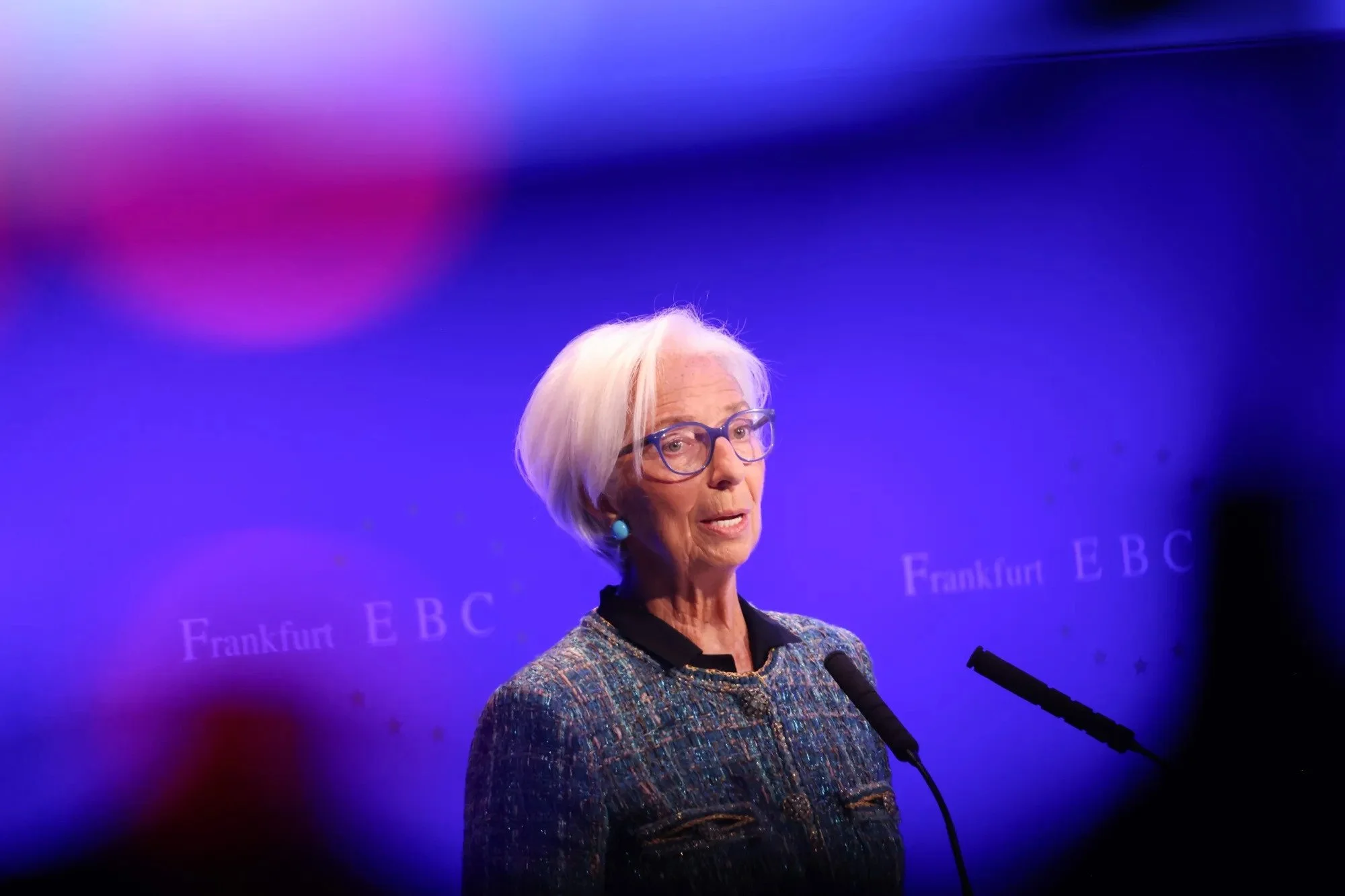
In a landmark address delivered at the 42nd Annual NABE Economic Policy Conference in Washington, D.C., on February 23, 2026, ECB President Christine Lagarde accepted the Paul A. Volcker Lifetime Achievement Award. Drawing on the legacy of the legendary Fed Chair, Lagarde framed a bold new narrative for the European Union: moving beyond mere resilience to harness the untapped power of its massive economic size.
Her speech, titled "Turning Size into Scale: Europe’s New Growth Model," challenged the long-held notion that Europe’s complex decision-making processes condemn it to stagnation. Instead, Lagarde argued that Europe is at a structural "inflection point," pivoting from a reliance on external demand toward a model fueled by domestic investment and digital transformation.
1. The "Volcker Standard" and Central Bank Independence
Lagarde began by paying homage to Paul Volcker, noting that his "personal conviction" changed the global trajectory of central banking. She used this to underscore the importance of institutional culture over mere legal frameworks.
The Power of 27: Lagarde defended the ECB’s 27-member Governing Council—the largest in the world—not as a source of inertia, but as a "diversity of perspectives" that acts as a form of institutional insurance.
Speed in Crisis: She reminded critics that the ECB designed a €750 billion emergency program within days during the pandemic and executed the fastest tightening cycle in its history (450 basis points in one year) to vanquish the 2022-2024 inflation surge.
2. A Shift in the Growth Model: From Exports to Investment
The core of Lagarde’s thesis was a blunt admission: Europe’s old model of relying on external demand is over. With major markets like the U.S. implementing tariffs and China running massive surpluses, Europe must look inward.
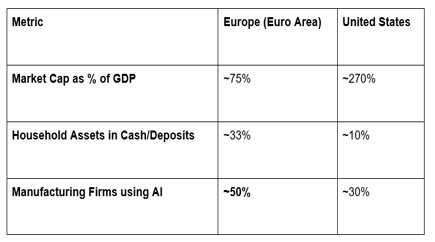
● Exporting Savings: Lagarde pointed out the irony that euro area residents hold roughly as much in U.S.-listed equities as they do domestically. "The broader returns, in productivity gains and innovation, accrue where the capital is deployed," she noted, lamenting that this capital currently fuels American rather than European growth.
● The Investment Surge: Between 2026 and 2028, investment is projected to account for 40% of euro area growth. This is driven by three pillars:
Defense & Infrastructure: Rising spending on security following geopolitical shifts.
Energy Grids: The massive transition to a green economy.
Digital/AI: Private digital investment has risen by 20% since 2020.
3. Turning Size into Scale: The "28th Regime"
The most provocative part of the speech focused on "Scale." Europe has a market of 450 million people, but it remains fragmented across 27 different legal systems.
To solve this, Lagarde highlighted two revolutionary regulatory shifts currently gaining momentum in Brussels:
The "28th Regime" (EU Inc): A proposed single European legal framework for companies. Instead of harmonizing 27 national laws, this would create an "opt-in" EU-level code—similar to how Delaware operates in the U.S.—allowing firms to operate across borders without facing 27 different regulators.
The Savings and Investment Union: A renewed push to unlock €8 trillion in "idle" cash and deposits held by European households. Lagarde argued that redirecting just a fraction of this into market-based investments could provide over €350 billion annually for innovation.
4. Europe’s "Secret Weapon": High-Tech Manufacturing
Lagarde challenged the view that Europe is losing the AI race. While the U.S. leads in consumer software, she argued the "next wave" is about embedding AI in complex physical systems—manufacturing, robotics, and industrial processes.
"Europe’s industrial base—sometimes seen as a legacy of the old economy—may turn out to be its most important asset," she said, noting that European manufacturers are currently ahead of their U.S. counterparts in the deployment of robotics (55% vs 36%).

GME Academy Analysis: "The Euro's Geopolitical Pivot"
At Global Markets Eruditio, we see Lagarde’s speech as a major signal to global bond and currency markets.
Trader's Takeaway for February 2026:
Long-Term EUR Bullishness: If the "28th Regime" and the Investment Union actually gain traction, we expect a massive repatriation of European capital. This would be fundamentally Bullish for the EUR over a 3-5 year horizon.
Sector Rotation: The focus on "AI in manufacturing" makes European industrial giants (DAX and CAC40 leaders) more attractive than purely speculative tech plays.
Digital Euro Sovereignty: Lagarde’s emphasis on the Digital Euro as a "political statement of sovereignty" suggests the ECB is preparing for a world where payments are a battlefield.
Join our FREE Macro Workshop at Global Markets Eruditio!
Is the "Delaware of Europe" finally coming? We’ll analyze the Lagarde-Draghi Reform Roadmap and show you how to trade the DAX 40 as Europe pivots toward domestic scale.
