

A Republic in Shadow: Death of Ayatollah Khamenei Shakes the Middle East
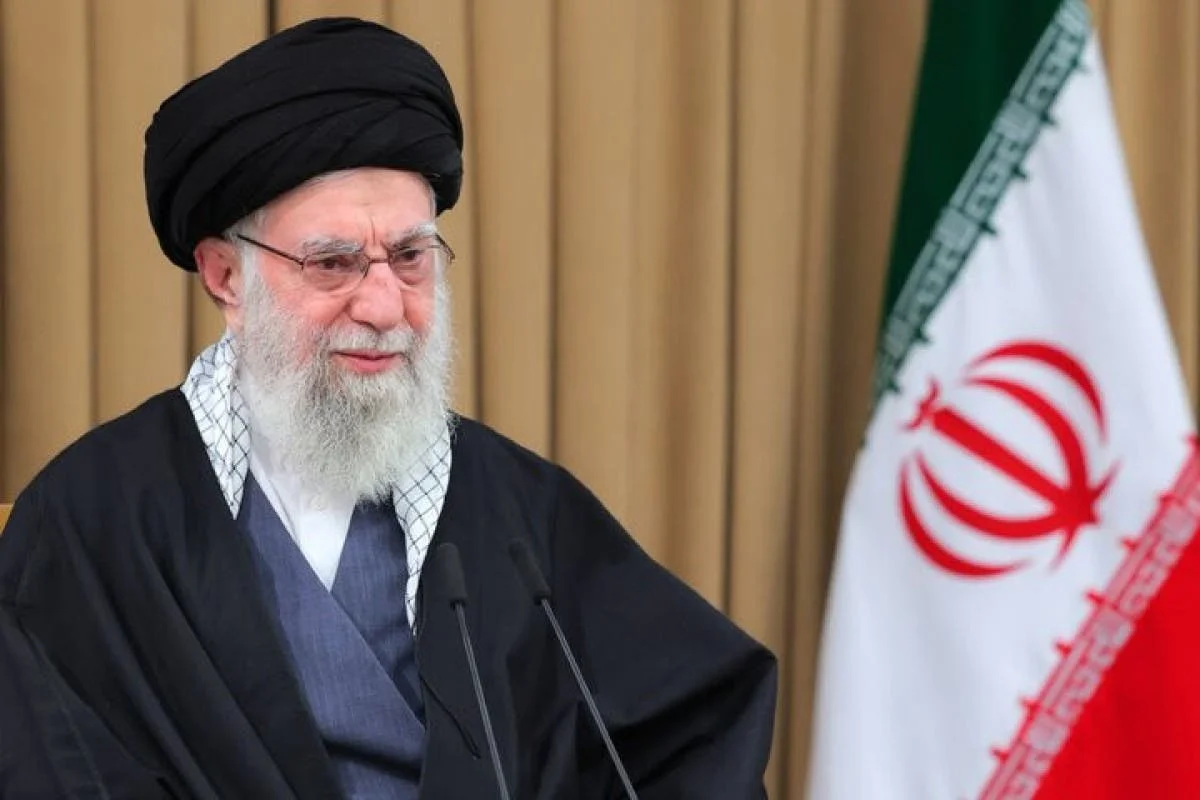
The Islamic Republic of Iran has been plunged into an existential crisis following the confirmed death of Ayatollah Ali Khamenei, the 86-year-old Supreme Leader who has governed the nation with an iron fist for nearly four decades. Iranian state media confirmed early Sunday, March 2, 2026, that Khamenei was killed in a massive, coordinated airstrike conducted by the United States and Israel.
The operation, which targeted the Supreme Leader’s compound in downtown Tehran, represents the most significant escalation in the decades-long shadow war between the three nations and threatens to ignite a full-scale regional conflict.
1. The Strike: "Greatest Chance" for the Iranian People
President Donald Trump announced the success of the mission hours before state media confirmation, characterizing the strike as a liberation event.
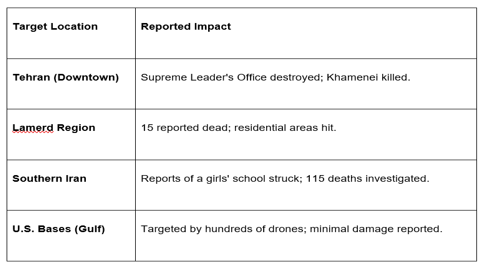
The Attack: Satellite imagery from Airbus confirmed heavy damage to the leadership compound. State TV reported that Khamenei died at his office, "at the forefront of his responsibilities."
Collateral Loss: The strike reportedly killed several high-ranking figures, including the head of the Revolutionary Guard (IRGC) and top security adviser Ali Shamkhani. Reports from the semiofficial Fars news agency suggest several of Khamenei's family members were also among the casualties.
Trump’s Warning: In a characteristically blunt social media post, Trump called Khamenei "one of the most evil people in History" and warned that "heavy and pinpoint bombing" would continue to disable Iran’s nuclear resurgence.
2. Iran’s Response: Retaliation and Governance
Faced with a sudden power vacuum, Iran’s clerical and military establishment moved quickly to stabilize the government while launching a fierce counter-assault.
Governing Council: A temporary council was formed to manage state affairs until a successor is chosen—a task made difficult by the lack of an obvious "heir apparent."
Military Retaliation: The IRGC launched what it called its "most intense offensive operation," firing hundreds of missiles and drones at U.S. bases in Bahrain, Kuwait, and Qatar, as well as targets within Israel.
Casualties: While the U.S. military reported minimal damage and no casualties at its bases, an Iranian missile strike on the UAE reportedly killed one person, and a woman in Tel Aviv died following an Iranian attack.
3. Months of Planning and Failed Diplomacy
The joint U.S.-Israel operation was reportedly months in the making, coinciding with the Muslim holy month of Ramadan.
Nuclear Justification: The Trump administration justified the assault as a necessity to prevent Iran from developing high-quality centrifuges and enriched uranium. Despite claims that the program was "obliterated" in 2025, intelligence indicated Iran was rapidly rebuilding its infrastructure.
Regional Disruption: The conflict has grounded flights across the Middle East. Air defense fire was visible over Dubai, and explosions were reported near the U.S. Navy’s 5th Fleet headquarters in Bahrain.
4. Internal Dissent and Global Markets
The death of the Supreme Leader comes amidst a period of unprecedented internal turmoil in Iran.
Cheering in the Streets: While the government declared 40 days of mourning, eyewitnesses in Tehran reported some residents celebrating on rooftops, reflecting the deep-seated resentment following a government crackdown that reportedly killed over 7,000 protesters in recent months.
Oil Market Panic: The Strait of Hormuz, through which one-third of the world’s seaborne oil passed in 2025, is now a flashpoint. Any closure or harassment of commercial traffic by the leaderless IRGC could send global oil prices into a tailspin.


GME Academy Analysis: "The Vacuum of Power"
At Global Markets Eruditio, we are analyzing the collapse of the Iranian leadership as a "Black Swan" event for 2026.
Trader's Takeaway for March 2026:
Energy Volatility: With the IRGC threatening the Strait of Hormuz, Brent Crude could see a parabolic move toward $100+ if supply routes are blocked.
Safe-Haven Surge: Gold (XAU/USD) and the USD will likely see massive inflows as investors flee Middle Eastern equities and the volatile "Petro-currencies."
Leadership Uncertainty: Without Khamenei, the IRGC may fracture into competing factions. This makes the "Vienna Technical Talks" (previously scheduled for today) completely obsolete.
Join our FREE Macro Workshop at Global Markets Eruditio!
Is the Middle East on the brink of a "Forever War"? We’ll analyze the Geopolitical Risk Premium and show you how to protect your portfolio during this historic shift.
