

Fed Chair Powell Highlights Economic Resilience Amid Policy Shifts
Powell Reflects on Lessons from Past Crises
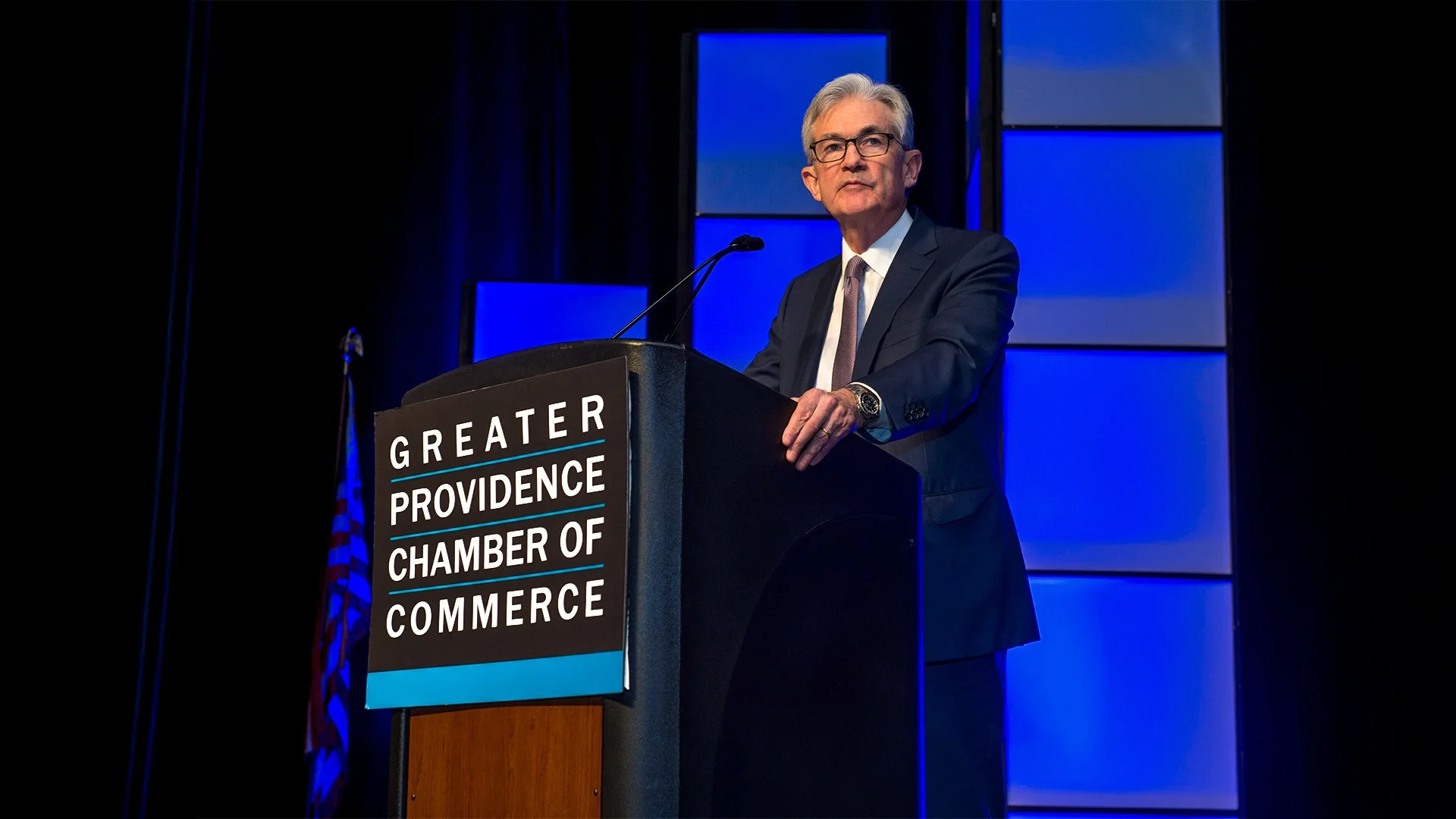
During his speech at the Greater Providence Chamber of Commerce Economic Outlook Luncheon in Rhode Island, Federal Reserve Chair Jerome Powell discussed the challenges the U.S. economy has faced over the past decade, from the slow recovery after the Global Financial Crisis to the unprecedented shock of the COVID-19 pandemic. Powell emphasized that the Fed’s aggressive response, combined with actions by Congress, the Administration, and the private sector, helped prevent severe economic fallout.
He noted that these crises left lasting “scars” and highlighted the importance of public trust in economic and political institutions. Central banks like the Fed had to adopt innovative policies designed to achieve statutory goals during crises, rather than for routine economic management. Despite these challenges, the U.S. economy has performed relatively well compared to other advanced economies.
Current Economic Outlook: Moderate Growth, Low Unemployment, Rising Inflation
Powell described the U.S. economy as resilient, even amid ongoing shifts in trade, immigration, fiscal, regulatory, and geopolitical policies. Recent economic data show moderation in growth:
GDP growth: around 1.5% in H1 2025, down from 2.5% in 2024.
Unemployment rate: edged up slightly to 4.3% in August, but remains low.
Job gains: slowed sharply, averaging 29,000 per month over the past three months.
Inflation has eased from its 2022 highs but remains slightly above the Fed’s 2% target. Core PCE prices rose 2.9% year-on-year in August 2025, largely reflecting higher tariffs. Powell stressed that these tariff-related price increases are largely “one-time” adjustments rather than long-term inflationary trends.
Labor Market Trends
Both supply and demand for workers have slowed, creating an unusual labor environment. While the services sector continues hiring in response to rising workloads, manufacturing focuses on cost management. The job openings-to-unemployment ratio remains near 1, suggesting a generally stable, though less dynamic, labor market.
Monetary Policy: Moving Toward Neutral
In response to these developments, the Fed lowered the federal funds rate by 25 basis points to 4–4.25%, moving toward a more neutral policy stance. Powell emphasized that the Fed’s approach is data-driven and flexible, balancing the dual mandate of achieving maximum employment while keeping inflation sustainably near 2%.
He acknowledged the delicate balance required: easing too aggressively could risk persistent inflation, while restrictive policy for too long could unnecessarily soften the labor market. This adaptive approach demonstrates the kind of economic insight that Global Markets Eruditio teaches traders to analyze in real-time.

Implications for Forex Traders
For Forex traders, Powell’s remarks are critical. Interest rate guidance directly influences the US Dollar (USD) and major currency pairs such as EUR/USD, GBP/USD, and USD/JPY. Traders often look to speeches like this to anticipate changes in monetary policy and refine their strategies. Understanding these market-moving events is exactly the kind of knowledge that GME Academy provides for Forex beginners and advanced traders alike.
Why This Matters for Ordinary Citizens
Fed decisions impact more than just the markets—they affect everyday Americans’ mortgages, loan rates, and purchasing power. Following Powell’s insights and broader economic trends can help you make smarter financial choices. Learning how to read these signals, like those in Forex trading, allows individuals to protect and grow their finances.
Curious about how Fed policy affects the US Dollar and global currency pairs? At GME Academy, our Forex Trading for Beginners workshops break down complex market events into practical lessons you can use to trade smarter. Learn to interpret speeches like Powell’s and take control of your financial future—join our free workshop today!
