

Diplomatic Breakthrough: Iran and US Reach "Principles" Deal; Oil Prices Tumble
In a major shift for global geopolitics, Iranian Foreign Minister Abbas Araghchi announced on February 17, 2026, that Iran and the United States have reached a "general agreement on a set of guiding principles" following intense indirect talks in Geneva.
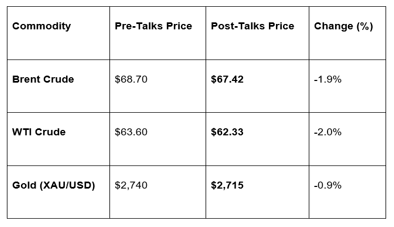
The news acted as a release valve for escalating tensions in the Middle East, triggering an immediate and sharp sell-off in the energy markets. Brent crude plummeted 1.9% to session lows, while West Texas Intermediate (WTI) erased earlier gains to drop below $63 a barrel.
1. The Geneva Breakthrough: "Serious and Constructive"
The second round of indirect negotiations, mediated by Oman, concluded with what Araghchi described as "good progress."
The Principles: While specific details of the "guiding principles" remain confidential, they serve as the foundational framework for drafting a formal agreement.
The Road Ahead: Araghchi cautioned that a final deal is not imminent. Both sides will now draft and exchange formal texts over the next two weeks before a third round of talks is scheduled.
The "Window of Opportunity": Speaking at a disarmament conference shortly after the talks, Araghchi stated that a "new window of opportunity has opened," aimed at a sustainable solution that recognizes Iran’s rights while addressing U.S. security concerns.
2. Oil Market Reaction: Erasing the "War Premium"
Before Araghchi’s comments, oil prices were trending higher due to President Donald Trump’s aggressive rhetoric and reports of Iranian military drills near the Strait of Hormuz.
The De-escalation Trade: The "principles" agreement signaled to the market that a full-scale regional war—which many feared would lead to a 20% global supply disruption—is being avoided for now.
Price Impact: Brent futures fell to $67.42, marking nearly a two-week low.
Sanctions Relief Hopes: Investors are beginning to price in the potential return of Iranian crude to the global market. If sanctions are lifted, Iran could theoretically ramp up production to its full capacity of ~3.8 million barrels per day.
3. The "Battlefield vs. Diplomacy" Paradox
Despite the diplomatic progress, the military posturing in the Persian Gulf remains at fever pitch.
Strait of Hormuz Drills: Simultaneously with the talks, the IRGC conducted live-fire drills, temporarily closing parts of the Strait of Hormuz for "safety concerns."
U.S. Buildup: The U.S. has maintained a massive presence in the region, including two aircraft carriers and B-2 bombers.
Khamenei’s Warning: Iran’s Supreme Leader reiterated that "more dangerous than a warship is the weapon that can send it to the bottom of the sea," emphasizing that Iran is negotiating from a position of defense, not surrender.


The GME Academy Analysis: "Trading the Diplomatic Thaw"
At Global Markets Eruditio, we believe the "Principles Agreement" marks the start of a volatile three-month trading window.
Trader's Takeaway for February 18, 2026:
Energy Bears: We are looking for Brent to test the $65 support if the "Detailed Proposals" expected in two weeks show a compromise on uranium enrichment levels.
Equity Boost: The de-escalation is bullish for global logistics and real estate services, which were previously "priced for conflict."
Currency Watch: The USD weakened slightly as the "flight-to-safety" bid faded. Watch for USD/JPY to continue its descent as the Yen reclaims its safe-haven status over the Dollar.
Join our FREE Macro Workshop at Global Markets Eruditio!
Is the "Grand Bargain" finally here? We’ll break down the Witkoff-Araghchi "Guiding Principles" and show you how to hedge your energy portfolio against a 2026 supply surge.
