

A New Slate: Japan Nominates Toichiro Asada and Ayano Sato to Bank of Japan Policy Board
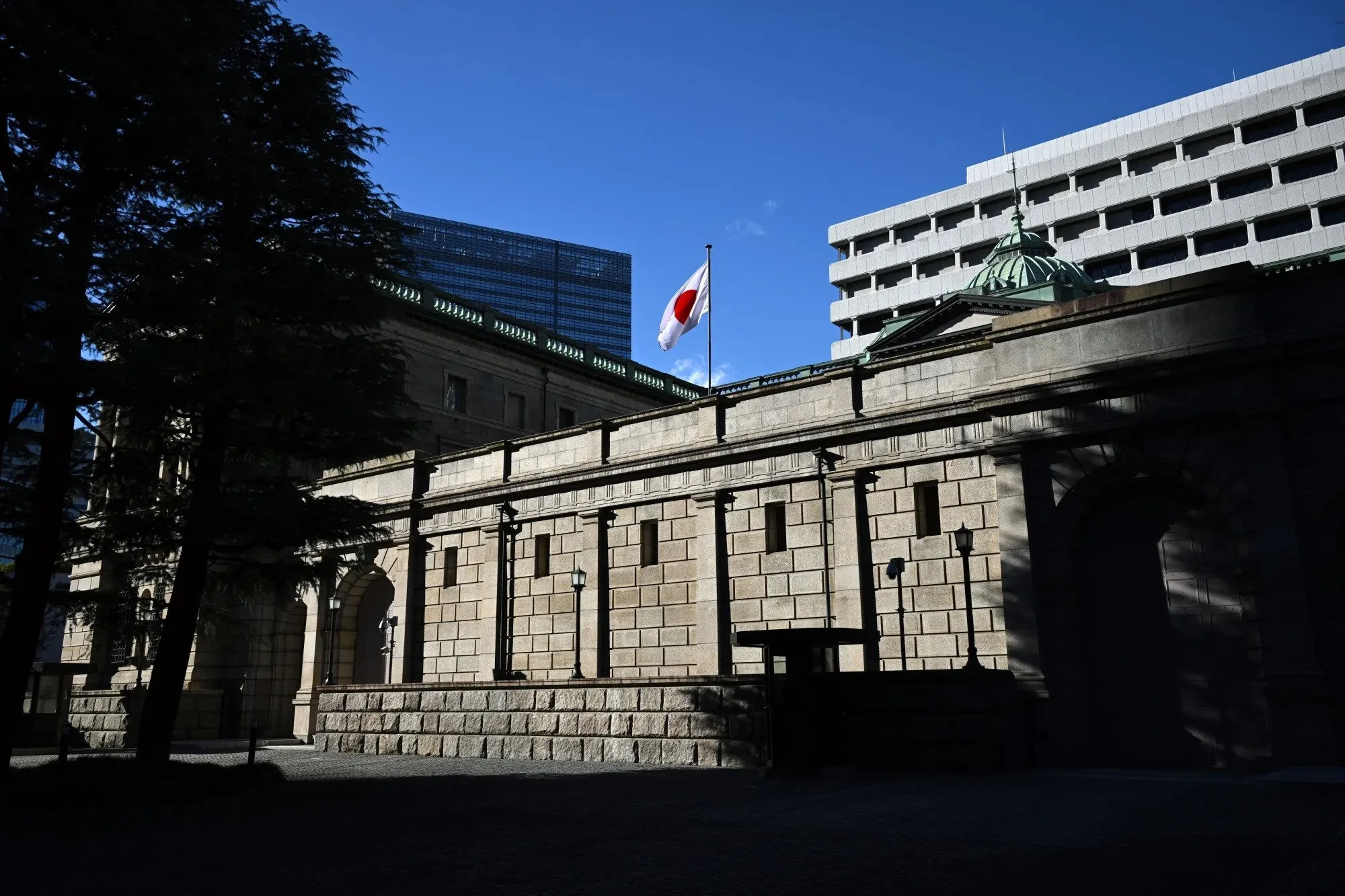
The Japanese government formally took the next step in shaping the future of its monetary policy on Wednesday, February 25, 2026, by nominating two new members to the Bank of Japan’s (BOJ) nine-member Policy Board. The nominations of Toichiro Asada and Ayano Sato come at a pivotal moment as the central bank navigates the "normalization" of interest rates after decades of ultra-easy stimulus.
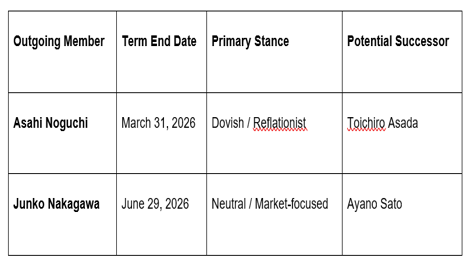
The nominees are set to replace outgoing board members Asahi Noguchi (whose term ends March 31, 2026) and Junko Nakagawa (whose term expires June 29, 2026).
1. The Nominees: Academic Depth and Institutional Expertise
The selection of Asada and Sato is being closely scrutinized by global markets for clues regarding the administration's stance on future rate hikes.
Toichiro Asada: A Professor Emeritus at Chuo University, Asada is a respected academic known for his extensive work on macroeconomic dynamics and mathematical modeling. His background suggests a rigorous, data-driven approach to policy. Historically, his research has touched upon the "debt-deflation" theories, making him well-equipped to analyze the risks of Japan’s transition away from zero rates.
Ayano Sato: Bringing a blend of institutional and market-facing experience, Sato’s nomination is seen as a move to maintain a balanced board. While her specific recent affiliations are being noted by sources, her role is expected to provide the "real-world" economic perspective previously held by Nakagawa.
2. Shifting the Balance: Hawks vs. Doves
The BOJ Policy Board is often categorized into "Hawks" (those favoring higher rates to curb inflation) and "Doves" (those favoring continued easing to support growth).
Replacing a Dove: Outgoing member Asahi Noguchi has been one of the most consistent "reflationist" (dovish) voices on the board. If Asada or Sato take a more neutral or "hawkish" stance, the board’s center of gravity could shift toward more frequent rate hikes.
The Takaichi Factor: The nominations are the first major central bank appointments under Prime Minister Sanae Takaichi, who took office in late 2025. While Takaichi has historically favored expansionary policies, these nominations will be a "litmus test" for whether her administration will allow the BOJ to continue its path toward a 1.0% or 1.75% policy rate by 2027.
3. The Timeline for Approval
Under Japanese law, BOJ board nominees must be approved by both houses of the Diet (Parliament).
Submission: The government submitted the names on February 25.
Hearings: The nominees will undergo questioning by committees in both the House of Representatives and the House of Councillors.
Voting: Given the ruling bloc’s recent landslide victory, the nominations are expected to pass, though opposition parties may use the hearings to grill the nominees on their views regarding the rising cost of living and Yen volatility.


GME Academy Analysis: "Personnel is Policy"
At Global Markets Eruditio, we believe these appointments are as significant as any single inflation print.
Trader's Takeaway for February 2026:
USD/JPY Reaction: The initial market reaction has been one of "watchful waiting." If Asada’s testimony during the Diet hearings reveals a willingness to support a March or April rate hike to 1.0%, expect the Yen to strengthen as the "dovish" Noguchi seat is replaced by a more neutral academic.
The March Meeting: With a U.S.-Japan summit on the horizon and the BOJ meeting on March 18-19, the confirmation of these members will influence the "Summary of Opinions" that traders use to gauge the next move.
Policy Normalization: These appointments suggest the government is not looking to "upend" Governor Kazuo Ueda’s normalization plan, but rather to refine the board’s expertise as they move into a "higher-for-longer" (by Japanese standards) era.
Join our FREE Macro Workshop at Global Markets Eruditio!
Will the new BOJ board members trigger a Yen short squeeze? We’ll analyze the Asada-Sato "Policy Lean" and show you how to trade the Nikkei 225 during this leadership transition.
