

Policy Independence Stressed: Japan’s Deputy Chief Cabinet Secretary Ozaki Defers to BOJ on Monetary Specifics
In a move to reinforce the separation between government fiscal policy and central bank operations, Japan’s Deputy Chief Cabinet Secretary Ozaki stated on February 25, 2026, that the specifics of monetary policy will be left entirely to the Bank of Japan (BOJ).
The statement comes at a sensitive time for the Yen and Japanese government bonds (JGBs), as markets speculate on the timing of further interest rate hikes following years of ultra-loose monetary policy. Ozaki’s comments are seen as an attempt to dampen political noise and reassure international investors of the BOJ's institutional independence.
1. Respecting the Mandate: Government vs. Central Bank
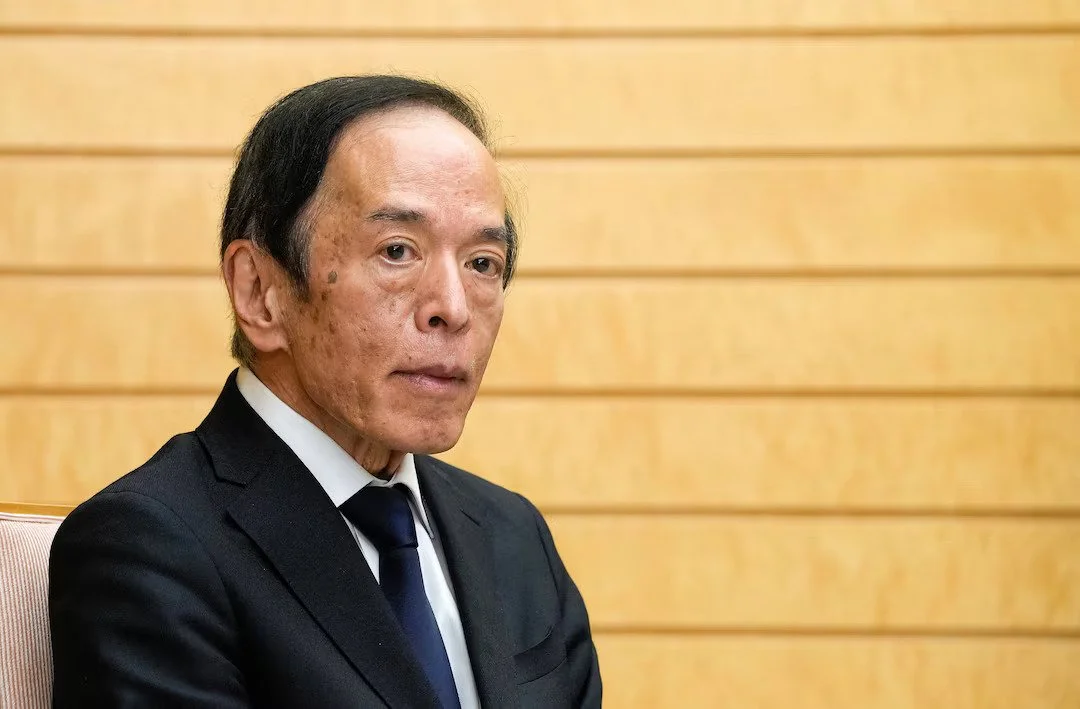
Ozaki’s remarks serve as a "hands-off" signal from the Prime Minister’s office. In Japan, the relationship between the Ministry of Finance and the BOJ has historically been close, but the current administration appears keen on allowing Governor Kazuo Ueda and his team the autonomy to navigate the transition out of negative interest rate environments.
Avoiding Political Interference: By stating that "specifics" are the domain of the BOJ, the government avoids taking direct responsibility for potential market volatility that may arise from rate hikes.
Focus on Price Stability: The BOJ is currently balancing the need to curb inflation (driven by a weak Yen and rising import costs) with the goal of maintaining sustainable economic growth. Ozaki’s deference suggests the government supports the BOJ’s data-driven approach.
2. Market Context: Speculation on the Next Move
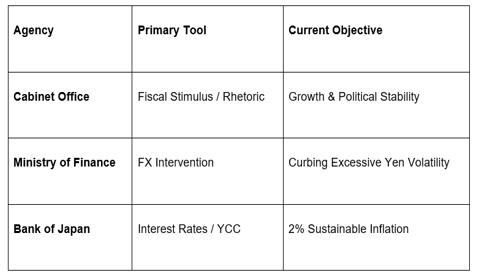
The Yen has faced significant pressure against the Dollar throughout early 2026, leading to discussions about potential intervention or a shift in the BOJ's Yield Curve Control (YCC) or interest rate targets.
The Rate Hike Horizon: Investors are currently pricing in a high probability of a rate adjustment in the second quarter of 2026. Ozaki’s refusal to comment on specifics leaves the "timing" and "magnitude" of such moves squarely in the hands of the BOJ's upcoming policy board meetings.
Bond Market Stability: JGB yields have seen increased volatility. Clear communication regarding policy independence is vital to prevent a "disorderly" sell-off in the Japanese debt market.
3. The Currency Factor: Intervention or Integration?
Ozaki’s comments also touch on the broader "Yen problem." While the government manages currency intervention through the Ministry of Finance, the underlying cause of Yen weakness—the interest rate differential with the U.S. Federal Reserve—can only be addressed by the BOJ.


GME Academy Analysis: "The BOJ’s Quiet Pivot"
At Global Markets Eruditio, we view Ozaki’s statement as a strategic "green light" for the BOJ to act more aggressively if inflation remains sticky.
Trader's Takeaway for February 2026:
USD/JPY Volatility: The pair remains highly sensitive to BOJ rhetoric. Ozaki’s deference to the BOJ increases the "alpha" value of Governor Ueda’s upcoming speeches. If the BOJ signals a hawkish shift without government pushback, expect a rapid strengthening of the Yen.
JGB Yields: We are watching the 10-year JGB yield closely. A central bank left to its own devices is more likely to let market forces dictate yields, potentially leading to a breakout above recent resistance levels.
Nikkei 225 Impact: Japanese equities have benefited from a weak Yen. A more independent, hawkish BOJ could create a headwind for export-heavy companies listed on the Nikkei.
Join our FREE Macro Workshop at Global Markets Eruditio!
Is the "carry trade" finally over? We’ll analyze the BOJ vs. Fed Policy Divergence and show you how to trade the USD/JPY as Japan navigates its return to normal monetary policy.
