

Europe’s "Sleeping Giant" Awakens: Lagarde Lays Out a New Growth Model
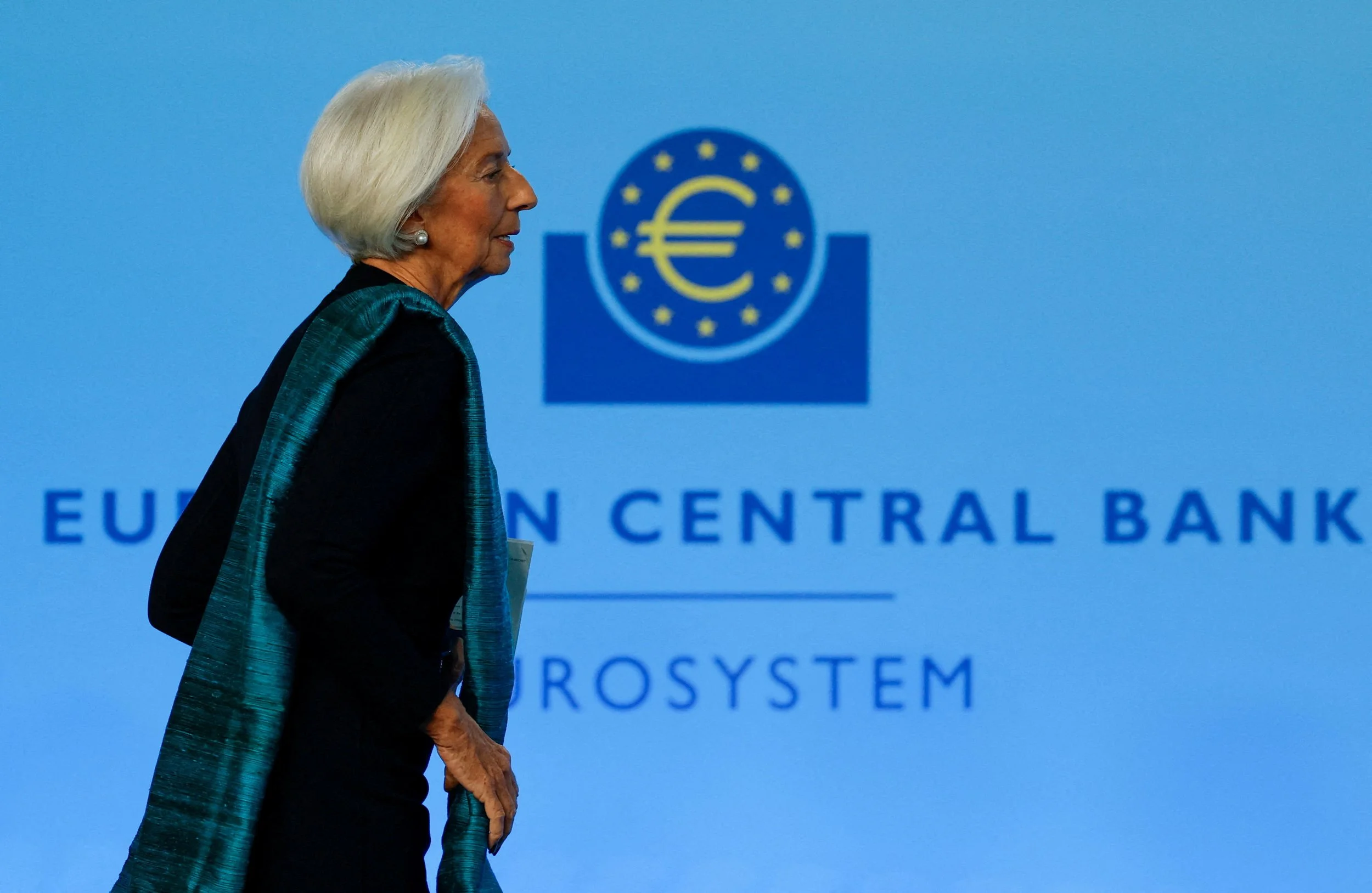
In a landmark speech delivered in Washington D.C. on February 23, 2026, ECB President Christine Lagarde accepted the Paul A. Volcker Lifetime Achievement Award with a defiant message: Europe is shedding its reputation for "dreaded working groups" and inertia.
Lagarde’s address at the NABE Economic Policy Conference signaled a fundamental shift in the Eurozone’s economic DNA—moving away from a reliance on exports toward a powerhouse model driven by internal investment and AI-integrated manufacturing.
1. The Death of the Export-Led Model
For over a decade, Europe relied on global demand to fuel its growth, often "exporting" its savings to the U.S. capital markets. Lagarde declared this era officially over.
Tariff Resilience: With the U.S. moving toward 15% global tariffs and China running a $1.2 trillion surplus, Lagarde noted that external demand is no longer a reliable engine.
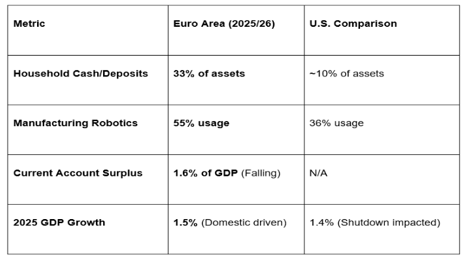
Domestic Demand Rebound: In 2025, Euro area growth of 1.5% was driven entirely by domestic demand.
The €500 Billion Prize: Lagarde argued that if Europe deployed its capital at home to close just one-quarter of the productivity gap with the U.S., it would gain €500 billion per year—far more than the income currently earned on foreign equity holdings.
2. Manufacturing: The Next AI Frontier
While the U.S. leads in "frontier" AI models (software), Lagarde believes Europe will win the "second wave" by embedding AI into complex physical systems.
Industrial Advantage: 55% of EU manufacturing firms already use robotics, compared to just 36% in the U.S.
The Efficiency Edge: European firms adopting AI are already reporting average productivity gains of 4%.
Investor Pivot: The "gloomy" sentiment of 2024 has reversed. By late 2025, 40% of institutional investors planned to increase their allocation to Europe, up from just 8% a year prior.
3. Turning "Size" into "Scale" via Radical Reform
Lagarde admitted that Europe’s 450-million-person market remains fragmented, but highlighted three "game-changing" shifts in how the EU makes decisions:
The "28th Regime": A proposal to create a single European legal framework that companies can "opt into" for cross-border operations, bypassing 27 different national rulebooks.
The "Coalition of the Willing": If all 27 Member States cannot agree on the Savings and Investments Union by June 2026, a smaller group of countries will press ahead regardless.
Unlocking €8 Trillion: European households currently sit on a mountain of cash. Aligning their investment habits with U.S. households could redirect €350 billion annually into market-based investments.


GME Academy Analysis: "The Euro's German Foundation"
At Global Markets Eruditio, we believe Germany’s manufacturing breakthrough is the missing piece of the puzzle for a sustained Euro rally.
Trader's Takeaway for February 2026:
EUR/USD Support: Germany breaking a 44-month manufacturing slump is a massive fundamental "plus" for the Euro. As the Eurozone's largest economy finds its feet, the EUR is likely to outperform other G10 currencies that are dealing with slowing growth (like the CAD).
Industrial Equities: We are moving to Overweight DAX 40 industrials. The 4-year high in manufacturing optimism suggests that the "darkest days" for German factories are over.
ECB Watch: The 3-year high in input costs will make it very difficult for the European Central Bank to cut rates. Expect the "Higher for Longer" narrative to shift from the U.S. toward Frankfurt.
Join our FREE Macro Workshop at Global Markets Eruditio!
Is the German "Mittelsand" finally back? We’ll analyze the Export Order Inflows vs. Energy Costs and show you how to trade the EUR/JPY during this manufacturing "renaissance."
