

The Midnight Relief: Trump Signs $1.2 Trillion Bill to Reopen Government
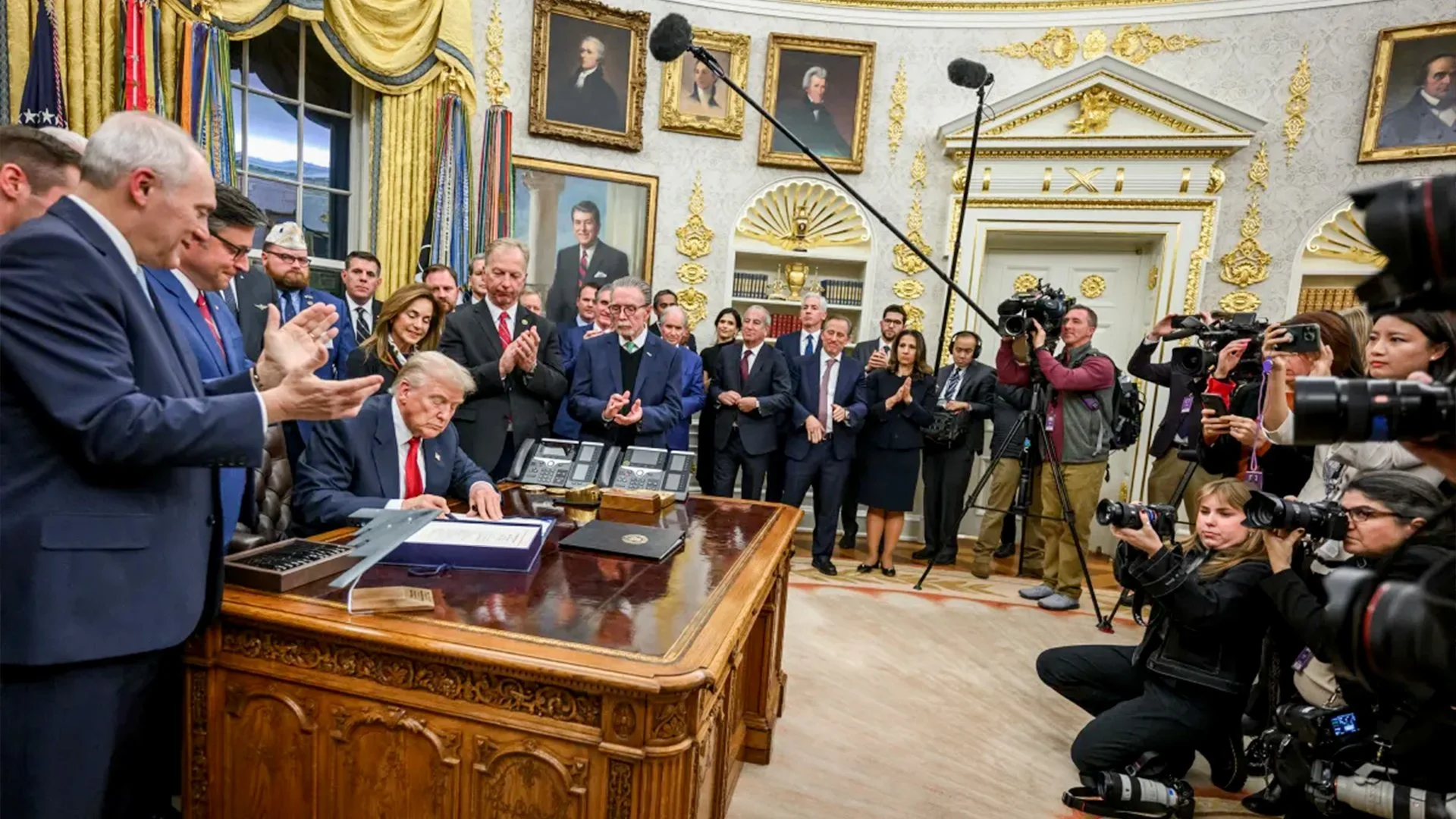
In a swift conclusion to the four-day federal standoff, President Donald Trump signed a $1.2 trillion Consolidated Appropriations Act on the afternoon of Tuesday, February 3, 2026. The signing followed a razor-thin 217-214 bipartisan vote in the House, officially ending the partial shutdown that had paralyzed multiple federal agencies since Saturday.
At the GME Academy, we are watching the market’s "sigh of relief" closely. While the government is reopening, the terms of this deal create a high-stakes "cliffhanger" for mid-February that Forex and Bond traders must not ignore.
1. The Deal: A 10-Day "Peace Treaty".
The legislation signed by the President isn't just a simple reopening; it is a strategic compromise that separates the "easy" funding from the "hard" political battles.
Full Funding: 11 of the 12 annual appropriations bills—covering Defense, Labor, Health, and Transportation—are now fully funded through the end of the fiscal year (September 30, 2026).
The DHS "Carve-Out": To break the deadlock, the Department of Homeland Security (DHS) was given only a two-week stopgap (Continuing Resolution) that expires on February 13, 2026.
The "No Changes" Mandate: Following the President's social media ultimatum, the House passed the Senate's version without amendments, ensuring the White House could sign it "IMMEDIATELY" as promised.
2. The Minneapolis Catalyst: Why it Happened
Unlike the 43-day impasse of 2025, this shutdown was fueled by a specific national tragedy.
The Spark: Negotiations collapsed last Friday after Democrats demanded strict new oversight on ICE and DHS operations following the fatal shootings of American citizens Alex Pretti and Renee Good by federal officers in Minneapolis.
Democrat Demands: House Minority Leader Hakeem Jeffries and Senate Minority Leader Chuck Schumer are insisting on a "Universal Code of Conduct" for federal agents, including mandatory body cameras, the removal of masks during raids, and stricter warrant requirements.
3. Market Reaction: Reopening the "Data Pipe."
For Forex Trading, the end of the shutdown is a massive positive for the US Dollar (USD) for one specific reason: Information Liquidity.
Economic Data Resumption: Shutdowns delay critical reports like Non-Farm Payrolls (NFP) and the CPI. Traders hate flying blind. The reopening ensures these reports will be released on time, allowing the market to accurately price in the Federal Reserve's next moves.
DXY Bounce: The Dollar Index (DXY) saw a modest recovery as "Shutdown Risk" was removed from the immediate horizon.
GDP Impact: Analysts at J.P. Morgan estimate the brief four-day lapse shaved approximately 0.1% off Q1 GDP, but a prolonged shutdown could have been significantly more destructive.
4. What to Watch Next: The February 13 Deadline
The government is open, but the "DHS Showdown" is far from over.
The "Second Cliff": On February 14, the DHS—including Border Patrol and FEMA—faces another potential lapse if a deal on immigration enforcement reforms is not reached.
The Strategy: Speaker Mike Johnson has already indicated he opposes the "judicial warrant" requirement for ICE, while Hakeem Jeffries warns there is "no credible path forward" without accountability.


The GME Academy Analysis: "Trade the Relief, Prep for the Cliff"
At Global Markets Eruditio, we advise traders to treat this as a "Tactical Rebound." The market will enjoy a 10-day period of stability before the February 13 deadline begins to weigh on the Dollar again.
Are You Positioned for the Mid-February Volatility? The "DHS negotiations" will be the primary driver of USD volatility next week. If the rhetoric gets heated, expect safe-haven flows back into Gold and the Swiss Franc.
Join our FREE Forex Workshop. Learn how to trade "Fiscal Cliffs." We’ll show you how to set your stops around Congressional deadlines and how to interpret "Continuing Resolutions" (CRs) as market signals.
