

The Sky-High Standoff: Trump Threatens 50% Tariffs and Decertification of Canadian Aircraft
On the evening of January 28, 2026, President Donald J. Trump sent shockwaves through the global aerospace industry with a high-stakes ultimatum aimed at Ottawa. In a series of Truth Social posts, the President accused Canada of "illegally" blocking the certification of Gulfstream’s newest fleet and announced immediate retaliatory decertification for Bombardier aircraft.
At the GME Academy, we see this as a massive escalation in the 2026 U.S.-Canada trade war. For Forex Trading, this isn't just a corporate dispute; it’s a direct hit to the Canadian Dollar (CAD), as aerospace represents one of Quebec’s largest export sectors.
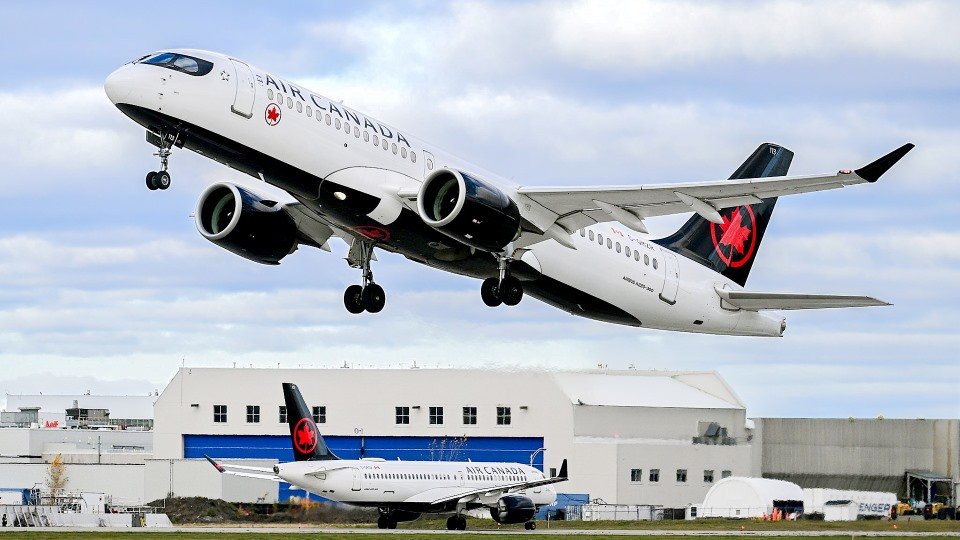
1. The Gulfstream vs. Bombardier Cold War
The root of the conflict lies in a certification bottleneck. Gulfstream (based in Savannah, Georgia) has been seeking Canadian approval for its G500, G600, G700, and G800 jets for years. Trump argues that Transport Canada is intentionally stalling these approvals to give an unfair market advantage to Montreal-based Bombardier, specifically its Global Express line.
Trump’s Retaliation:
Decertification: Trump declared the U.S. is "decertifying" all Bombardier Global Express jets and all aircraft made in Canada until Gulfstream is approved.
The 50% Tariff: If the situation is not "immediately corrected," the U.S. will impose a massive 50% tariff on any Canadian aircraft sold into America.
The Impact: Bombardier's Global Express is a staple of U.S. charter and fractional jet fleets (like NetJets). If enforced, this could ground hundreds of aircraft and halt billions in future sales.
2. Expert Skepticism: Can the President "Decertify" a Plane?
While the announcement caused an immediate spike in market volatility, aviation experts and legal analysts are questioning the President's authority to act unilaterally.
The FAA Barrier: Traditionally, only the Federal Aviation Administration (FAA) can certify or decertify an aircraft based on safety protocols, not trade disputes.
The "Safety vs. Trade" Debate: Experts like John Gradek from McGill University note that decertifying an airplane for trade reasons is "unprecedented" and could compromise global air safety standards.
Economic Backlash: The U.S. military itself uses modified Bombardier Global Express jets (the E-11A BACN) for communications in the Middle East. Decertifying these would hurt U.S. defense interests as much as Canadian exports.
3. Forex Impact: The "Loonie" Under Siege
For Forex Trading for Beginners, the USD/CAD pair (the "Loonie") is currently the most sensitive trade in the world.
Risk Premium: Following Trump's post, the USD/CAD spiked over 80 pips, breaking past the 1.43 level. Traders are pricing in a "Trade War Premium" on the Canadian Dollar.
BoC in a Corner: Bank of Canada Governor Tiff Macklem warned just yesterday that "rules-based trade with the U.S. is over." With aerospace exports at risk, the BoC may be forced to cut interest rates further to protect the economy, which would be Bearish for the CAD.
The "Carney" Response: Canadian Prime Minister Mark Carney has urged the U.S. to "respect Canadian sovereignty," but the market remains skeptical that diplomacy will work with the current administration.


The GME Academy Analysis: "Trade by Truth Social"
At Global Markets Eruditio, we advise traders to treat these announcements as "High-Impact Volatility Events." Whether or not the decertification actually happens, the threat is enough to move the needle. In 2026, the "Golden Dome" of U.S. protectionism is expanding, and Canada is currently in the crosshairs.
Are You Trading the Aerospace Standoff? When the U.S. threatens a 50% tariff, the market moves first and asks questions later. Don't get caught on the wrong side of a Truth Social headline.
Join our FREE Forex Workshop. Learn how to set "Alert-Based Strategies" for political headlines. We’ll show you how to protect your CAD positions using USD/JPY hedges when trade tensions between Trump and Carney reach a boiling point.
