

Berlin Draws a Line: Merz Warns Washington Against Trade Deal "Deterioration"
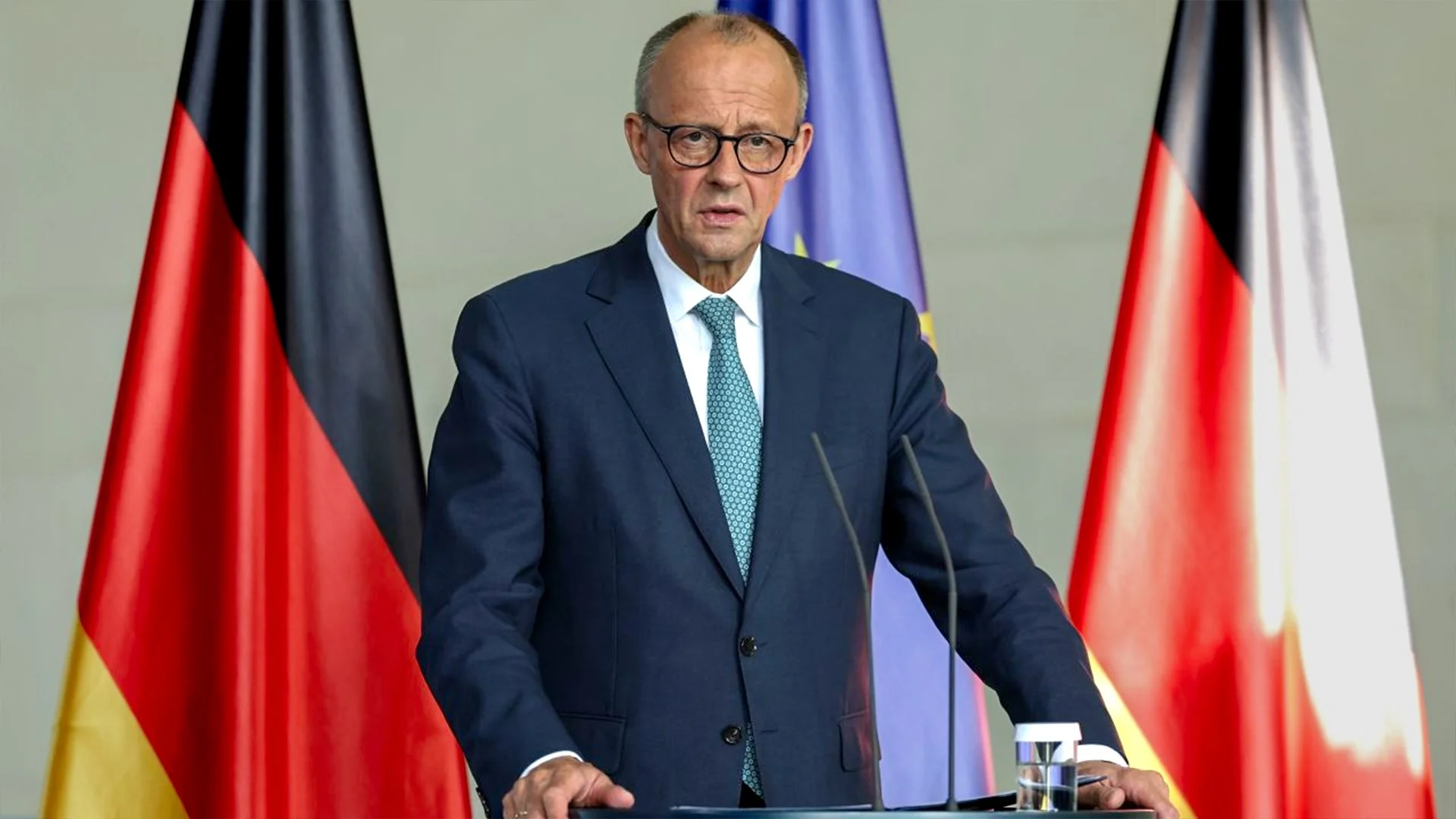
German Chancellor Friedrich Merz issued a stern reminder to Washington on Wednesday, January 28, 2026: the stability of the transatlantic economy rests on honoring existing agreements. Speaking at a press conference in Berlin alongside the Romanian leader, Merz declared that while the "basis for ratification" of the pivotal EU-US Trade Agreement is firmly in place, Europe will not stand by if the terms are undermined by new threats.
"We are not prepared to accept a deterioration of the trade deal," Merz stated, emphasizing that the era of unilateral demands must give way to a "balance of commitments." At the GME Academy, we analyze this as a critical moment for Forex Trading; Germany, the industrial heart of Europe, is signaling that it is ready to move from diplomacy to defensive action if US Tariffs escalate.
1. The Scottish Accord Under Pressure
The current trade framework was established in July 2025 at the "Turnberry Summit" in Scotland, where President Trump and EC President Ursula von der Leyen agreed to a 15% tariff rate on most goods—effectively halving the previous 27.5% rate that had crippled the German automotive sector.
The Current Terms:
US Commitment: Maintaining the 15% rate and avoiding the "nuclear" 25% tariff threat.
EU Commitment: A $750 billion energy purchase agreement and $600 billion in direct investment into the US economy.
Merz’s recent "firmness" comes in response to renewed threats from the White House linked to the Greenland dispute, where the US has suggested increasing tariffs unless Denmark agrees to a sale. Merz reaffirmed that "tariffs have to be replaced by rules," and those rules are non-negotiable.
2. The "Mercosur Alternative": Germany’s Diversification Strategy
Merz isn't just talking; he is diversifying. Throughout January 2026, the Chancellor has been the primary advocate for the EU-Mercosur Deal with South American nations (Brazil, Argentina, Uruguay, and Paraguay).
Despite a "regrettable" vote by the European Parliament to refer the Mercosur deal to the EU Court of Justice, Merz has urged for its provisional application.
The Goal: Reduce reliance on the US market.
The Message: If Washington makes trade "unreasonable," Germany has a multi-billion-dollar alternative ready to go in the Southern Hemisphere.
3. Forex Impact: EUR/USD and the "Trade Bazooka".
For those in Forex Trading for Beginners, the "Merz Line" creates a high-stakes environment for the Euro (EUR).
United Front: Merz warned that any new US tariffs would trigger a "united, calm, measured, and firm" European response. In forex terms, this means "Counter-Tariffs," which typically hurt both the EUR and the USD but cause a spike in Safe Haven demand for the Swiss Franc (CHF).
Growth Downgrades: On the same day as Merz's statement, the German government trimmed its 2026 GDP forecast to 1% (down from 1.3%). Traders are pricing in a "Tariff Risk Premium," keeping the EUR/USD under pressure near the 1.0800 level.
The "Trade Bazooka": If Merz activates the EU's "anti-coercion instrument," we could see €93 billion in retaliatory sanctions. Historically, trade wars lead to lower interest rates, which would be Bearish for the Euro in the short term.


The GME Academy Analysis: "Democracies Do Not Have Subordinates"
At Global Markets Eruditio, we believe Merz is positioning Germany as the "Sovereign Anchor" of Europe. His statement at Davos—"Democracies do not have subordinates"—is a direct challenge to the "America First" doctrine. For traders, this means volatility will no longer be driven just by Fed meetings, but by the "Trade Headlines" coming out of Berlin and Brussels.
Is Your Portfolio Protected Against a Trade War? When the two largest economic blocs in the world clash, standard technical indicators often fail. You need to understand the Fundamental Floor of the Euro.
Join our FREE Forex Workshop. Learn how to trade "Geopolitical Divergence." We will show you how to hedge your USD assets using the Euro and the Swiss Franc when trade tensions hit a boiling point.
