

The Prediction Engine: Machine Learning Models for Price Forecasting
In 2026, the financial markets are no longer just a battle of human intuition; they are a battle of high-dimensional mathematics. Machine Learning (ML) has moved from a "competitive advantage" to a "standard requirement" for price prediction in Forex, stocks, and commodities.
At the GME Academy, we focus on how these models translate abstract data into high-probability trading signals. Understanding the architecture behind the prediction allows you to trust the output while knowing exactly where the "machine" might fail.
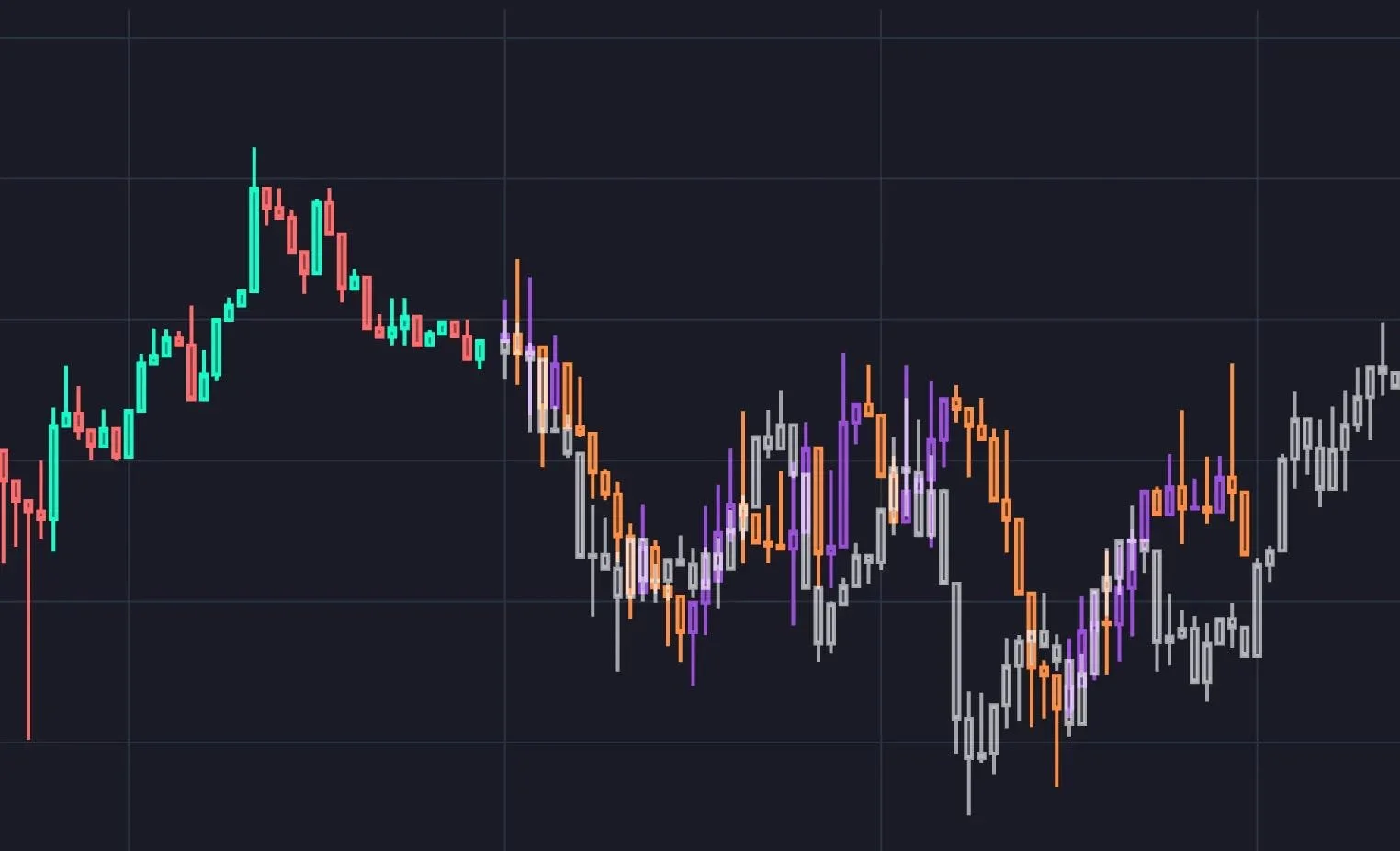
1. The Three Eras of Prediction Models
Financial forecasting models generally fall into three categories, ranging from basic statistics to advanced artificial intelligence:
Statistical Models (ARIMA/Prophet): Best for linear, stationary data. They are the "baseline" used to identify long-term seasonality and basic trends.
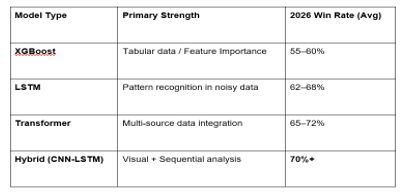
Ensemble Methods (Random Forest/XGBoost): These models combine hundreds of "decision trees" to handle non-linear relationships. They are highly effective for identifying which features (like volume or interest rates) are actually driving the price.
Deep Learning (LSTM/Transformers): The gold standard in 2026. These models simulate human neural pathways to "remember" long-term historical context and identify complex, hidden patterns in volatile data.
2. Deep Learning: The Sequential Powerhouses
For time-series data like the USD/PHP exchange rate, sequential models are essential because the price of "today" is directly dependent on the price of "yesterday."
Long Short-Term Memory (LSTM)
LSTMs are a specialized type of Recurrent Neural Network (RNN) designed to solve the "vanishing gradient" problem—basically, they don't "forget" what happened 100 days ago.
How they work: They use "gates" to decide which information to keep and which to throw away.
Best Use Case: Short- to medium-term price trends where historical patterns are repetitive.
Transformers (The New Frontier)
Originally designed for language (like the AI you're talking to now), Transformers have revolutionized price prediction by using "Attention Mechanisms."
How they work: Instead of processing data step-by-step like an LSTM, they look at the entire history simultaneously to see which specific moments in time are most relevant to the current price.
Best Use Case: High-volatility environments and medium- to long-term forecasting where multiple variables (news + price + macro data) interact.
3. Hybrid Models: Combining Strength
In 2026, the most accurate models are rarely standalone. Hybrid Architectures (like CNN-LSTM) are now the industry favorite:
CNN (Convolutional Neural Networks): Used to extract "spatial" features from price charts (essentially "seeing" patterns like head-and-shoulders).
LSTM/Transformer: Used to process the "temporal" sequence of those patterns over time.
Sentiment Layer: Integrating NLP to adjust the prediction based on real-time news sentiment.
4. Why Predictions Aren't 100% Accurate
Even the most advanced AI in 2026 faces two major hurdles:
Overfitting: When a model learns "noise" (random fluctuations) instead of the actual trend. It looks perfect on a backtest but fails in real-time.
Black Swan Events: Machines learn from the past. When an unprecedented geopolitical event occurs, the model has no historical data to reference, often leading to a "hallucination" in price prediction.

The GME Academy Analysis: "Trading the Meeting"
At Global Markets Eruditio, we analyze OPEC+ meetings as "binary events"—much like an interest rate decision.
Trader's Takeaway for 2026:
Watch the "Compensation" Data: OPEC+ is currently cracking down on members who overproduced in 2025 (like Iraq and Kazakhstan). If these countries actually comply with "compensation cuts," it could provide a surprise boost to oil prices and petro-currencies.
The Q2 Rebalancing: The next major "market-moving" meeting is set for March 2026. This is when the alliance will decide whether to finally release the "frozen" barrels. If they do, expect a sharp sell-off in the CAD and a relief rally for the JPY and PHP.
Volatility Management: Oil-driven currency spikes can be violent. We recommend traders use ATR (Average True Range) indicators to set wider stops during OPEC meeting weeks.
Join our FREE Forex Workshop at Global Markets Eruditio!
Is the "Petro-Dollar" era ending or just evolving? We’ll break down the USD/CAD and USD/NOK correlations and show you how to use the OPEC Monthly Oil Market Report (MOMR) to stay one step ahead of the trend.
