

The Quarterly Pivot: Understanding End-of-Quarter Rebalancing
In the financial markets, the final week of March, June, September, and December is rarely a quiet affair. This period is dominated by End-of-Quarter (EOQ) Rebalancing—a massive, systemic repositioning where institutional giants like pension funds, mutual funds, and sovereign wealth funds adjust their portfolios to maintain their target risk profiles.
As we approach the end of Q1 2026, traders at the GME Academy are preparing for the "Quarterly Pivot." This isn't just about cleaning up the books; it’s a high-stakes transfer of billions of dollars that can trigger some of the most counter-intuitive price moves of the year.
1. The Mechanics: Buying Low and Selling High (By Force)
Most large institutions operate on a strict Strategic Asset Allocation (SAA). A classic example is the 60/40 Portfolio (60% stocks, 40% bonds).
The Drift: If the S&P 500 has a blockbuster quarter (up 15%) while bonds stay flat, by the end of the three months, the portfolio might drift to 68/32.
The Correction: To return to their 60/40 mandate, the fund must sell the outperforming stocks and buy the underperforming bonds.
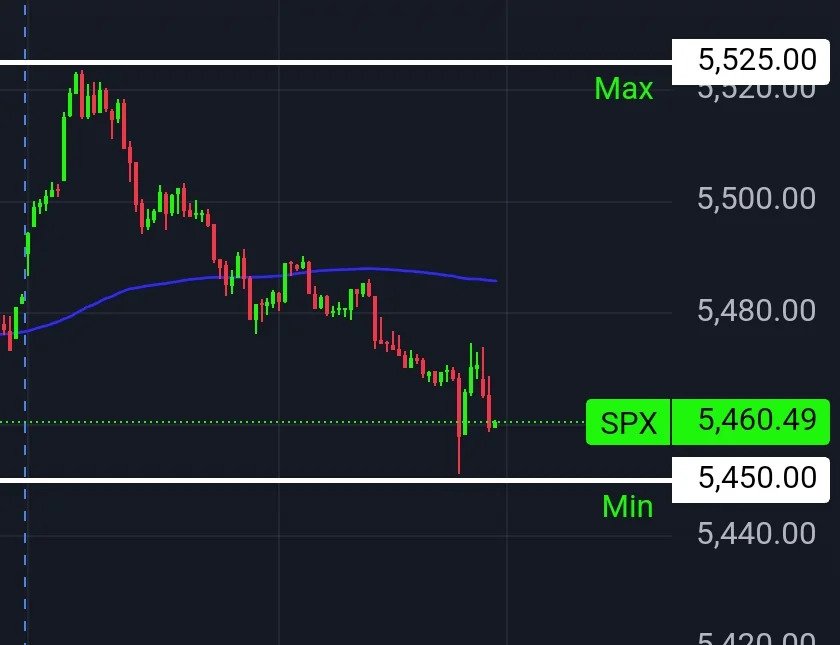
The Result: This creates "Mean Reversion" pressure. You might see a strong stock market suddenly face heavy selling in the last five days of the quarter, even if there is no negative news.
2. The FX Impact: The Dollar "Correction"
The Forex market is the "plumbing" for this rebalancing. When a global fund sells US stocks to buy Japanese bonds, it must also sell USD and buy JPY.
The 2026 Context: According to early February 2026 models from banks like Barclays, the US Dollar is entering the end of Q1 in a "neutral-to-weak" position. If US equities continue to outperform global peers through March, rebalancing models suggest a moderate USD-selling signal toward the end of the month as funds "trim" their winners.
The "Window Dressing" Effect: Beyond rebalancing, some managers engage in "Window Dressing"—selling losing positions before the quarter ends so they don't appear on the final report shown to clients.
3. Index Reconstitution: The S&P 500 Shuffle
End-of-quarter rebalancing often coincides with Index Reconstitution. Major index providers like S&P Dow Jones or FTSE Russell announce changes to their benchmarks typically on the third Friday of the quarter-end month.
Forced Liquidity: When a stock is added to the S&P 500 (as we saw with several AI infrastructure firms in late 2025), thousands of passive ETFs are forced to buy it at the same time.
Volatility Spikes: This concentration of volume leads to "MOC" (Market on Close) order imbalances, where millions of shares are traded in the final seconds of the trading session.
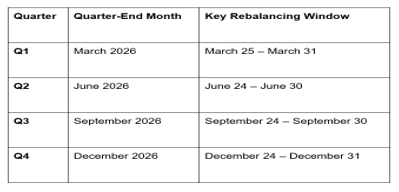
4. Key Rebalancing Dates for 2026
Mark these dates on your calendar. Expect high volatility and potential trend reversals during the "Rebalancing Window" (usually the last 3-5 trading days of these months):


The GME Academy Analysis: "Trading the Reversal"
At Global Markets Eruditio, we teach our students that EOQ rebalancing is the enemy of momentum.
Trader's Takeaway for 2026:
Don't Fight the Flow: If a currency or stock has been trending strongly for three months, be very cautious about entering a "trend-following" trade in the final week of the quarter. The rebalancing "Mean Reversion" will likely push the price in the opposite direction.
Watch the Bonds: Since 2026 is expected to be a year of interest rate normalization, the flow into fixed income during rebalancing will be particularly strong. Watch the 10-Year Treasury Yield; if it drops sharply at the end of March, it’s a sign that rebalancing is in full swing.
USD/PHP Strategy: In the Philippines, the end of the quarter often aligns with corporate tax payments and quarterly reporting. This can lead to temporary "Peso strength" as local firms convert USD holdings to PHP to settle their books.
Join our FREE Forex Workshop at Global Markets Eruditio!
Want to learn how to spot "Smart Money" rebalancing before it happens? We’ll show you how to use Volume Weighted Average Price (VWAP) to identify institutional footprints during the March 2026 quarterly pivot.
