

The Dollar Smile Theory: Why the Greenback Wins in Both Good Times and Bad
In the world of macroeconomics, most currencies follow a simple rule: they strengthen when their home economy is booming and weaken when it’s struggling. The US Dollar, however, is a defiant outlier.
The Dollar Smile Theory—first introduced in 2001 by economist Stephen Jen during his time at Morgan Stanley—explains why the USD tends to appreciate in two completely opposite scenarios. As of February 10, 2026, this framework remains the essential playbook for understanding why the "Greenback" continues to defy gravity, even as the global financial landscape shifts.
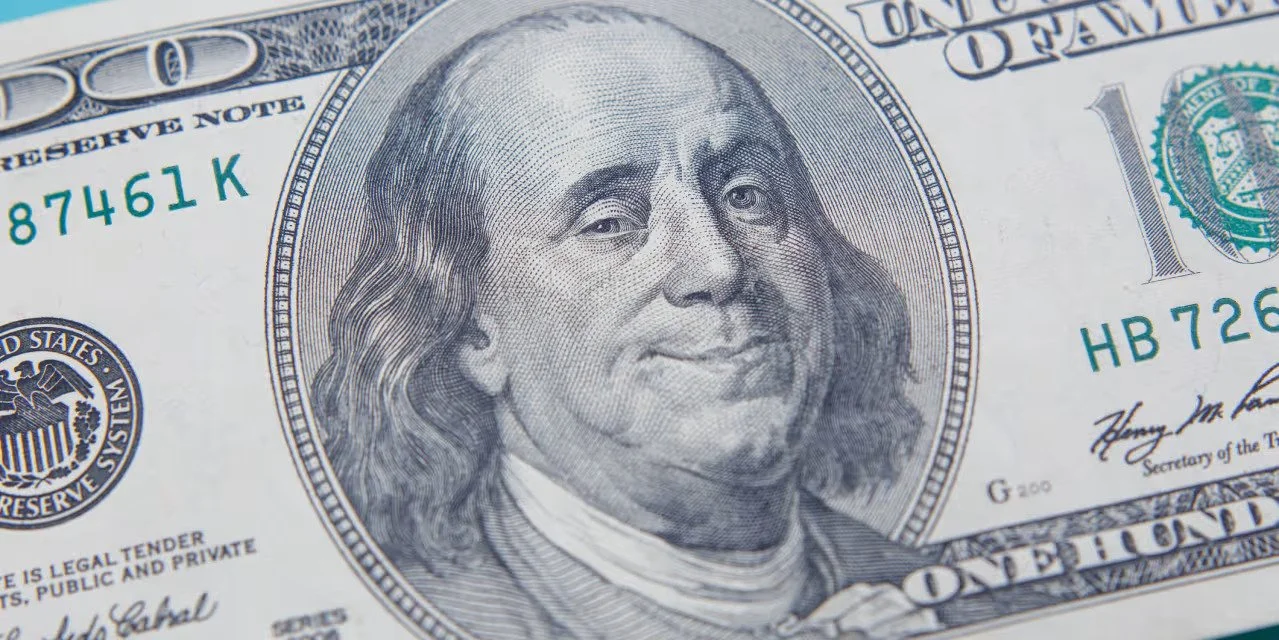
1. The Anatomy of the Smile
The theory is visualized as a U-shaped curve (a "smile") that plots the value of the US Dollar against the health of the US and global economies. It is divided into three distinct phases:
Phase 1: The Left Side — "Fear Mode"
When the global economy enters a recession or faces a sudden "black swan" event (like the geopolitical shocks seen in early 2025), investors panic. In this risk-off environment, everyone rushes to safety. Because the US has the deepest and most liquid financial markets in the world, the Dollar becomes the ultimate safe haven.
The Driver: Flight to quality.
The Result: The Dollar strengthens, even if the US economy itself is technically in a slump.
Phase 2: The Bottom — "The Muddling Middle"
This is the only time the Dollar consistently weakens. When the global economy is stable and growing, but the US is merely "muddling through" without spectacular growth, investors feel confident taking risks elsewhere. They sell their Dollars to buy higher-yielding assets in Emerging Markets (like the Philippines or Brazil) or the Eurozone.
The Driver: Risk appetite and "searching for yield."
The Result: The Dollar depreciates as capital flows out of the US.
Phase 3: The Right Side — "Growth Mode"
When the US economy enters a period of exceptionalism—strong GDP growth, low unemployment, and rising interest rates—the Dollar smiles again. Global capital floods into the US to capture the high returns of the American stock market and the attractive yields of US Treasuries.
The Driver: Interest rate differentials and US outperformance.
The Result: The Dollar appreciates alongside the domestic boom.
2. Is the Smile Frowning in 2026?
While the theory has held firm for decades, current events are testing its traditional shape. In early 2026, some analysts, including Stephen Jen himself, have suggested the smile might be transitioning into a "smirk" or even a "frown."
The Tariff Impact: Following the heavy implementation of US trade tariffs in 2025, the relationship between "risk-off" and "strong dollar" has become more complex. In certain recent instances, global uncertainty actually led to a weaker dollar as investors worried about the long-term impact of US isolationism on its own debt sustainability.
De-Dollarization: The rise of alternative payment systems (like the digital Yuan) and increased gold hoarding by central banks has slightly eroded the "Left Side" of the smile. The "Flight to Quality" isn't as automatic as it used to be.
3. Market Microstructure: The Hidden Gears
The Dollar’s smile isn't just about sentiment; it’s about the "plumbing" of the world economy.
Dollar-Denominated Debt: Most of the world's international loans are denominated in USD. When markets get volatile (Phase 1), companies and nations must scramble to buy Dollars to pay back their debts, creating a massive "squeeze" that drives the price up.
The Fed as Global Central Bank: Because the world relies on the Dollar, the Federal Reserve's interest rate decisions act as the global baseline. When the Fed hikes rates (Phase 3), it effectively sucks liquidity out of the rest of the world and pulls it back to US shores.

The GME Academy Analysis: "Trading the Smile"
At Global Markets Eruditio, we teach our students that the Dollar Smile is a "filter" for news.
Trader's Takeaway for 2026:
The "Mediocre" Play: If you see the US economy starting to stabilize while the rest of the world (EU, China, ASEAN) is booming, start looking for short positions on the DXY (Dollar Index). We are at the bottom of the smile.
The "Recession" Paradox: Don't be fooled into thinking a US recession will automatically kill the Dollar. If that recession spreads globally, the "Left Side" of the smile will kick in, and the Dollar could ironically reach new highs.
Watch the USD/PHP: For our Filipino traders, remember that a "smiling" dollar usually means a weaker Peso. Whether the US is booming or the world is burning, the pressure on the ₱60:$1 mark remains a constant threat.
Join our FREE Forex Workshop at Global Markets Eruditio! Is the US Dollar about to break its smile? We’ll look at the Real Effective Exchange Rate (REER) and show you how to spot the structural shifts that signal the end of a multi-year currency cycle.
