

Bank of Canada Faces Tariff Shock: Can Lower Rates Shield the Canadian Dollar from Structural Damage?
Cautious Optimism Amid Global Headwinds
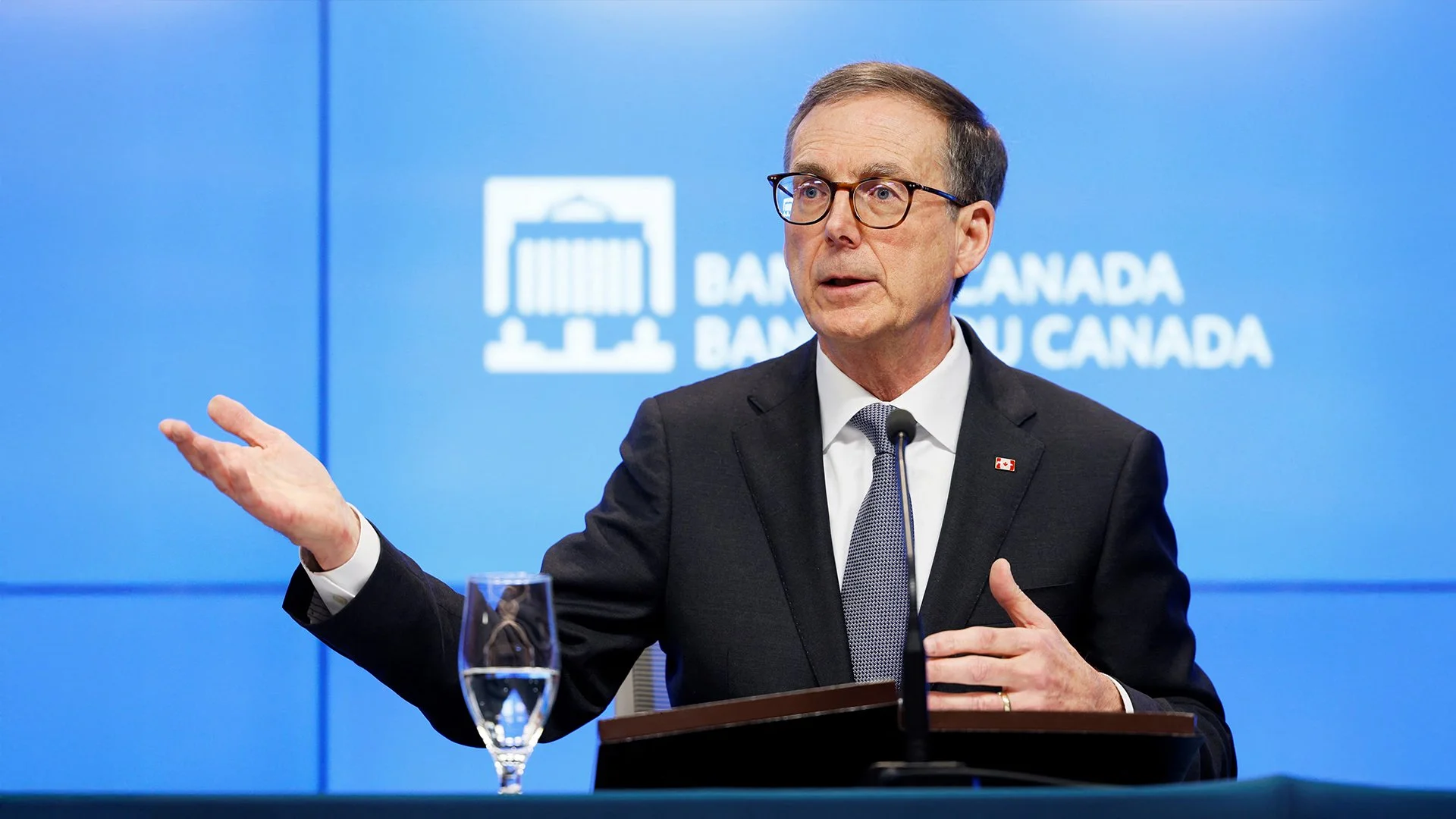
The Bank of Canada’s (BoC) latest address before the Senate Standing Committee on Banking, Commerce and the Economy painted a complex picture of the nation’s economic trajectory. Governor Tiff Macklem, joined by Senior Deputy Governor Carolyn Rogers, emphasized that the central bank’s recent decision to lower the policy interest rate by 25 basis points to 2.25% reflects both economic weakness and contained inflationary pressures.
This marks the second consecutive rate cut, a move signaling that the BoC is prioritizing growth support over inflation containment, especially as Canada grapples with the lingering fallout of U.S. trade tariffs and global uncertainty.
The Tariff Effect: A Double-Edged Sword
Governor Macklem’s opening remarks were blunt: “U.S. tariffs and trade uncertainty have weakened the Canadian economy.”
While trade tensions have suppressed price growth, they’ve also added operational costs for businesses—particularly in trade-sensitive sectors such as autos, steel, aluminum, and lumber.
The result? A paradoxical mix of sluggish growth and cost-pushed inflation. The BoC expects these forces to roughly offset each other, keeping inflation near its 2% target in the medium term.
For forex traders, this duality means watching both CAD strength and the USD/CAD pair closely. A weaker Canadian economy could place downward pressure on the loonie, especially if the U.S. economy remains comparatively resilient.
Monetary Policy Meets Structural Transition
Perhaps the most striking statement from Macklem was his acknowledgment that this downturn is not merely cyclical, but structural.
The U.S. trade conflict has fundamentally reshaped Canada’s economic capacity, dampening productivity and curbing potential output.
In simpler terms, even as conditions stabilize, Canada’s economy may not fully return to its pre-tariff path.
This structural limitation challenges the ability of monetary policy to stimulate demand without stoking inflation — a key balancing act for central banks in today’s globally intertwined markets.
Weak Labour Market, Sticky Inflation
The data presented during the hearing underscore the fragility of Canada’s recovery.
GDP contracted by 1.6% in Q2, largely due to declining exports and business investment.
Unemployment remains at 7.1%, with job losses concentrated in trade-dependent sectors.
Core inflation remains sticky around 3%, but underlying momentum is fading, suggesting gradual disinflation ahead.
For traders and analysts, these indicators imply a gradual but uneven recovery — one where CAD volatility may persist amid shifting global conditions.


Looking Ahead: Monetary Easing and Market Impact
The BoC’s forward guidance suggests that further rate cuts are unlikely in the short term unless the data worsen materially. Policymakers believe the current stance is appropriate to balance inflation control and economic support.
Still, the central bank remains ready to respond if inflation deviates from its path. For Forex trading beginners, this is a critical signal: BoC decisions often ripple across global markets, influencing not just the USD/CAD, but also cross-pairs like GBP/CAD and EUR/CAD.
In the medium term, if growth remains sluggish and inflation eases, the Canadian Dollar could soften, especially against currencies backed by stronger economies.
Building Confidence in Uncertain Times
The BoC’s overarching goal remains ensuring confidence in price stability, even amid geopolitical uncertainty and trade realignment. For traders, investors, and policymakers alike, the takeaway is clear — while monetary policy can smooth the adjustment, it cannot erase the long-term scars of trade disruption.
This message resonates beyond Canada: every economy, especially those dependent on global trade, must prepare for long-term structural shifts that reshape markets and currency values alike.
Join the Forex Learning Movement
At Global Markets Eruditio (GME Academy), we believe understanding macroeconomic policy and central bank dynamics is key to successful trading. Whether you’re tracking the USD/CAD, EUR/USD, or GBP/JPY, staying informed helps you turn volatility into opportunity.
Join our FREE Forex workshop today and learn how to interpret central bank moves, read economic data, and trade with confidence in any market environment.
