

The North Star: FOMC Reaffirms 2% Inflation Anchor Amid 2026 Uncertainty
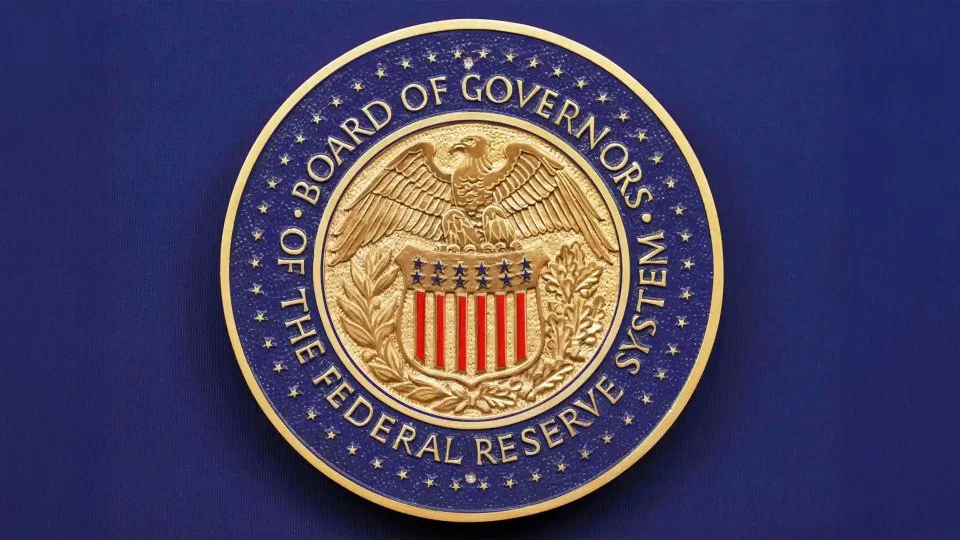
On January 27, 2026, the Federal Open Market Committee (FOMC) took a decisive step to anchor global financial expectations by unanimously reaffirming its "Statement on Longer-Run Goals and Monetary Policy Strategy." While the markets were laser-focused on the January 28 interest rate decision (where the Fed ultimately held rates steady at 3.50%–3.75%), this reaffirmation acts as the "Constitution" of U.S. monetary policy. At the GME Academy, we view this document as the ultimate "Fundamental Anchor." For Forex Trading, it defines the rules of the game for the US Dollar (USD) across the next decade.
1. The 2% Mandate: Not a Ceiling, but a Target
The Federal Reserve reiterated that an inflation rate of 2 percent—measured by the annual change in the Price Index for Personal Consumption Expenditures (PCE)—is the "sweet spot" for a healthy economy.
Why 2%?
Predictability: It allows households and businesses to make long-term plans without fearing sudden price shocks.
The "Anchor" Effect: By "acting forcefully" to keep expectations at 2%, the Fed prevents a deflationary spiral (where prices fall and spending stops) or hyperinflation.
Forex Impact: In Forex Trading for Beginners, when the Fed reaffirms its 2% target while inflation is currently "elevated" (as it is in early 2026), it signals a Hawkish bias. This supports the USD because it means interest rates will likely stay "higher for longer" until that 2% goal is met.
2. Maximum Employment: A "Broad-Based and Inclusive" Goal
Perhaps the most significant part of the strategy is how the Fed defines Maximum Employment. Unlike inflation, there is no single number (like 4% unemployment) that defines success.
Inclusive Growth: The Fed views maximum employment as a "broad-based and inclusive goal," meaning they look at more than just the headline unemployment rate. They look at labor participation across different demographics.
Non-Measurable: Because the labor market changes due to technology (like AI) and demographics, the Fed refuses to set a fixed target. This gives them the "flexibility" to keep interest rates low even if unemployment is very low, provided inflation doesn't spike.
3. The Policy Tools: Moving Beyond the "Lower Bound".
The statement reaffirms that the Federal Funds Rate is the primary tool. However, the Committee made it clear they are prepared to use their "full range of tools" if the economy hits a wall.
The 2026 Toolkit:
Administered Rates: Using the Interest on Reserve Balances (IORB) to control the floor of the market.
Forward Guidance: Communicating future moves clearly to "reduce economic and financial uncertainty."
Balance Sheet Management: Reinvesting principal payments from Treasury holdings to maintain "ample reserves" in the banking system.
4. Financial Stability: The Third Pillar
A new emphasis in the 2026 reaffirmation is the link between Price Stability and a Stable Financial System. The Fed explicitly states that achieving its goals depends on a system that isn't prone to "shocks" or "contagion."
For traders at Global Markets Eruditio, this means the Fed is watching "Systemic Risk" (like the bank vs. stablecoin war) just as closely as they watch the CPI report. If the financial system is at risk, the Fed will pivot, even if inflation hasn't hit 2% yet.

The GME Academy Analysis: "Credibility is the Real Currency"
The FOMC Strategy Statement is about Credibility. If the world believes the Fed will do whatever it takes to hit 2% inflation, the USD remains the world's reserve currency. The moment that credibility slips, the "Petrodollar" and "USD Dominance" (which we discussed recently) come under threat.
Are You Trading the Fed's Playbook? The Fed's "Long-Run Goals" are the ultimate roadmap for the USD. Understanding this document is the difference between guessing where the market is going and knowing where the "Smart Money" is anchored.
Join our FREE Forex Workshop. Learn how to decode FOMC statements in real-time. We’ll teach you how to spot the subtle changes in "Fed-speak" that signal the next major move in the EUR/USD and USD/JPY.
