

The "Fine-Tuning" Phase: Why Barkin’s Balanced Outlook is the New Forex Compass
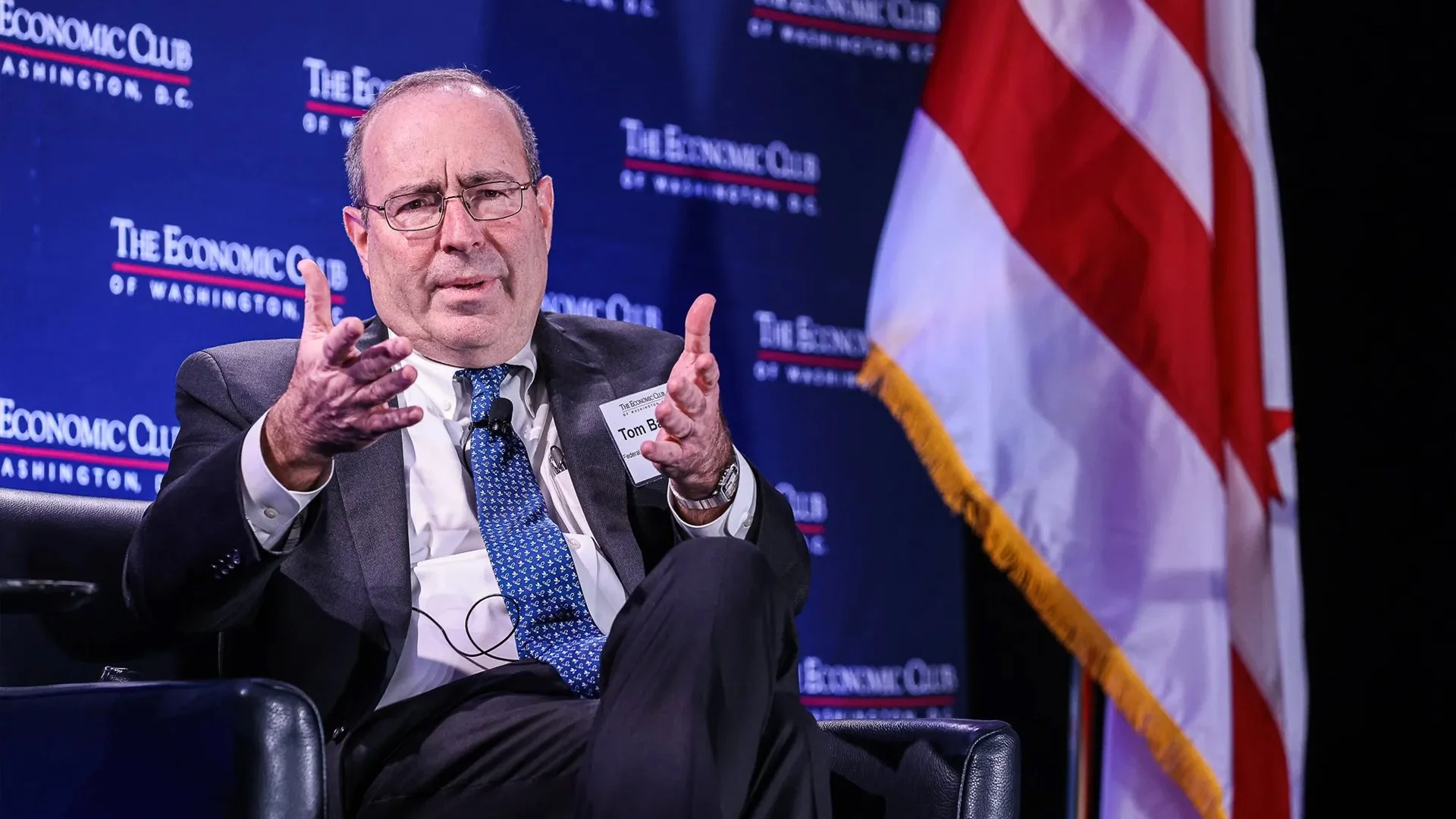
In the high-stakes world of central banking, words are chosen with surgical precision. This week, Richmond Federal Reserve President Thomas Barkin provided a masterclass in this "fedspeak," describing the U.S. economy as being in a "delicate balance."
Speaking after the release of the December CPI data, Barkin noted that while unemployment has ticked up, it does not appear to be "ticking out of control." Simultaneously, he acknowledged that while inflation remains above the 2% target, it is not currently "accelerating."
For the community at Global Markets Eruditio, Barkin’s comments signal a shift from the aggressive rate hikes of the past to a more nuanced period of "fine-tuning." For those mastering Forex trading for beginners, this means the era of "easy trades" based on massive rate shifts is evolving into a game of data-dependent precision.
The Dual Mandate Tightrope: 4.4% Unemployment vs. 2.7% Inflation
The Federal Reserve has a "dual mandate": stable prices and maximum employment. Barkin’s latest remarks suggest that for the first time in years, both sides of that mandate are in direct tension.
The Labor Market: The unemployment rate has risen to 4.4% (and touched as high as 4.6% in late 2025). While this is still historically low, the "tick up" is significant because it marks a shift away from the "labor shortage" era. Barkin described the current state as a "low-hiring, low-firing" world—a period of cautious equilibrium.
The Inflation Front: December’s CPI came in at 2.7%. While this is an "encouraging" sign that inflation isn't rebounding, it is still nearly a full percentage point above the Fed's 2% goal.
"Finely Tuned" Policy: What This Means for the US Dollar (USD)
Barkin emphasized that interest rates are now within the "neutral range"—meaning they are neither stimulating nor restricting the economy. Because of this, he argues that further rate changes must be "finely tuned."
In Forex trading, this "fine-tuning" translates to lower volatility in the short term but higher sensitivity to every new data point. If the next jobs report shows unemployment jumping to 4.7%, the market will immediately price in a rate cut to save the labor market. Conversely, if inflation "sticks" at 2.7% or edges higher, the US Dollar (USD) will likely strengthen as traders realize the Fed can't afford to lower rates yet.
The Ripple Effect: CAD, EUR/USD, and Global Crosses
When a Fed official like Barkin speaks of a "prolonged pause," the impact is felt far beyond American borders:
USD/CAD: With the U.S. and Canada sharing a highly integrated energy and trade sector, Barkin's "steady as she goes" approach provides a stable floor for the USD against the Canadian Dollar (CAD), especially if oil prices remain volatile.
EUR/USD: The Euro often struggles when the Fed signals a "higher-for-longer" stance. Barkin’s refusal to call for immediate cuts keeps the "yield advantage" in the U.S.'s favor.
GBP/JPY: In a "low-hiring, low-firing" environment, global risk appetite is often muted. This can lead to a consolidation phase for the GBP/JPY, as traders wait for a clearer signal before committing to a major trend.

GME Academy Insight: Trading the "Fog"
Barkin previously described the economic environment as "driving through fog." At GME Academy, we teach our students that when visibility is low, you don't slam on the gas or the brakes—you slow down and use your "high beams" (technical and fundamental analysis).
Barkin’s view that the "fog is lifting" in 2026 suggests that while the path is bumpy, it is becoming more predictable. The "fine-tuning" of the Fed means that the US Dollar is in a "value-seeking" phase, where it will react more to real-world productivity and less to speculative panic.
Refine Your Strategy with Global Markets Eruditio
Are you ready for a "data-dependent" market? In this environment, your ability to read the fine print in employment and inflation reports is your most valuable asset.
Join our FREE Forex Workshop this week! Our experts will show you how to trade the "neutral rate" environment and identify the high-probability setups that emerge when the Fed goes on pause.
