

The Invisible Hand in Your Head: Breaking the Dopamine Loop of Trading Addiction
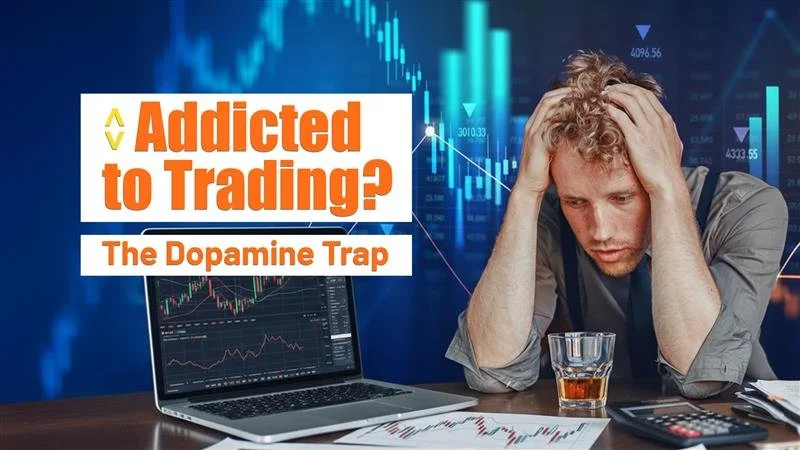
Have you ever found yourself staring at a USD chart late into the night, your heart racing as a single candle flicker determines your mood for the next four hours? If you have, you aren’t just battling the market; you are battling your own biology.
While many enter the world of Forex trading for beginners with dreams of financial freedom, few are prepared for the neurological "hook" that the markets can set. This isn’t just about money—it’s about dopamine.
 https://images.squarespace-cdn.com/content/619b666b5842697e2af69258/a9d57b27-4fad-4532-874a-89133d6a85bc/P477.02.jpg?content-type=image%2Fjpeg
The Neurochemistry of the "High"
Dopamine is often misunderstood as the "pleasure chemical," but in reality, it is the chemical of anticipation. In the brain of a trader, dopamine levels spike not when the profit is realized, but during the uncertainty before the trade closes.
When you are watching the EUR/USD pair dance near your take-profit level, your brain's reward center—the nucleus accumbens—is flooded with dopamine. This creates a state of hyper-focus and euphoria.
The Variable Reward Trap: Much like a slot machine, Forex offers "variable ratio reinforcement." Because you don’t know when the next win will come, your brain stays in a permanent state of high-alert seeking, making the behavior incredibly difficult to stop.
Why Forex Is the "Perfect" Addiction
Unlike the stock market, which has clear opening and closing bells, the Forex market is a 24-hour beast. This constant availability removes the "natural breaks" that might otherwise allow a trader’s neurochemistry to reset.
1. The Cross-Economy Rush
Traders often move from single-economy news, like a sudden shift in the CAD (Canadian Dollar) due to oil prices, to high-volatility cross-economy pairs like GBP/JPY. The "Dragon," as traders call the GBP/JPY, is famous for its massive swings. To a dopamine-driven trader, this volatility isn't a risk to be managed; it’s a hit of adrenaline to be chased.
2. The Illusion of Control
This is where the GME Academy becomes vital. Without proper education, traders fall into the "Illusion of Control." They believe that because they have studied a chart, they have "conquered" the randomness. When a trade goes green, the brain credits "skill," releasing massive dopamine. When it goes red, the brain blames "bad luck" or "market manipulation," protecting the ego and keeping the loop intact.
Signs You are Trading for the "Hit," Not the Profit
If you recognize these behaviors, the dopamine loop may have taken the wheel:
Overtrading: Opening positions just to "feel" something when the market is quiet.
Revenge Trading: Immediately jumping back into the US Dollar pairs after a loss to "get it back."
Ignoring the Plan: Having a strategy but abandoning it the moment the price starts moving fast.
The "Near-Miss" Effect: Feeling a rush even when you almost won, which encourages you to trade again immediately.

Rewiring Your Brain for Professional Success
At Global Markets Eruditio, we teach that the best traders are often the ones who find trading "boring." If your heart is pounding, you are gambling, not trading. To break the loop, you must shift your focus from the outcome of a single trade to the integrity of your process.
Professionalism in Forex trading means treating the USD or the EUR/USD as tools for capital preservation, not as tickets to a chemical high. By implementing strict risk management and "forced breaks," you allow your prefrontal cortex—the logical part of your brain—to regain control over your impulsive reward center.
Take Back Control of Your Trading Journey
The transition from a "dopamine chaser" to a disciplined market analyst is the hardest step any trader will take. But you don't have to do it alone. Understanding the mechanics of the market—and your own mind—is the foundation of the GME Academy approach.
Ready to stop gambling and start strategizing?
Join our FREE Forex Workshop this week. We’ll dive deep into the technicals of major currency pairs and, more importantly, the psychological frameworks you need to stay disciplined in a 24-hour market.
